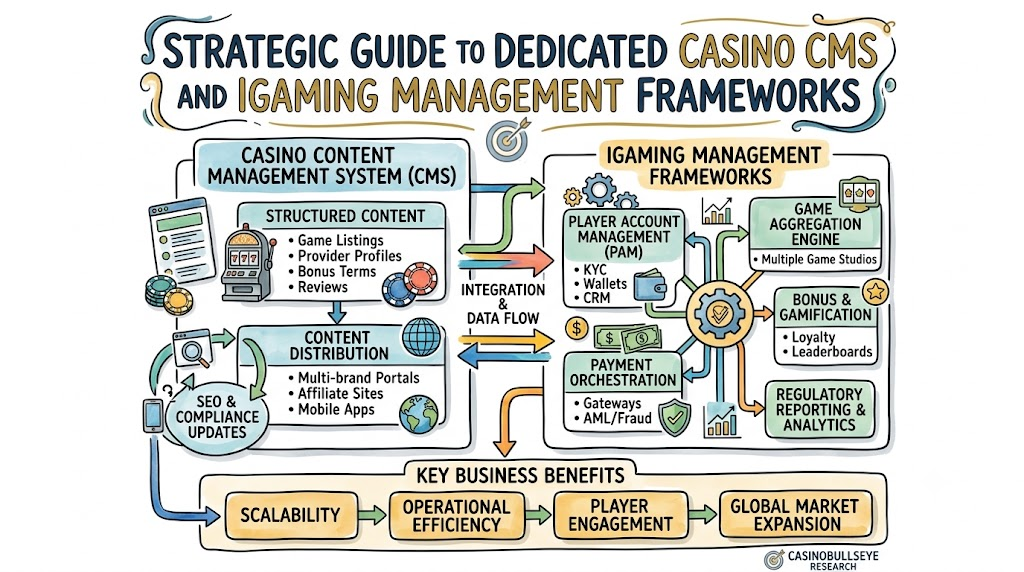
Digital gaming brands require specialized technical infrastructure to manage high-velocity data feeds, maintain multi-jurisdictional compliance, and execute high-volume player transactions smoothly. Standard web platforms fail when processing intensive database queries and intricate affiliate schemas. Because of this technical bottleneck, proactive operators, media groups, and affiliate developers consistently upgrade their infrastructure to safeguard platform reliability and accelerate business growth.
CasinoBullseye serves as an authoritative evaluation resource where gaming professionals, engineers, and digital marketers explore modern software options. By examining backend workflows, integration standards, and dynamic web frameworks, the platform gives teams the insights they need to build secure, highly scalable gaming portals.
What Is a Casino CMS?
Unlike traditional blogging engines, a dedicated casino CMS features a purpose-built relational database model created explicitly for gaming directories, review hubs, and multi-brand affiliate networks. This platform organizes complex, multidimensional gaming datasets effortlessly without requiring custom, third-party plugin scripts.
Content managers connect slot titles, promotional codes, operator profiles, and regulatory credentials inside a single, unified workspace. When an operator updates its bonus wagering terms, a single system adjustment automatically pushes fresh data to every relevant comparison chart and review across your entire publishing network.
These platforms also maximize search visibility and technical compliance from day one. Automated schema generators, fast database indexing, and native geolocation modules ensure your platform meets localized marketing standards while securing top organic rankings.
How Casino Management Software Works
Enterprise casino management software unifies essential administrative, financial, and promotional operations into a single command center. The processing core executes thousands of player wagers, wallet deposits, and session authentications concurrently without latency.
Continuous risk analysis algorithms track live gaming activity to detect multi-accounting, promotional abuse, and suspicious payment patterns immediately. This automated surveillance protects operational profit margins while preserving player trust.
Simultaneously, the software connects user activity directly to dynamic engagement tools. As players wager, the system evaluates their behavior, calculates reward levels, issues personalized bonuses, and runs required responsible gaming checks automatically.
Understanding iGaming Software
The term iGaming software describes the comprehensive network of servers, algorithmic engines, and communication protocols that power digital betting platforms. This framework connects random number generators, remote game servers, identity verification modules, and financial switches into an integrated operational engine.
These systems ensure continuous uptime during high-demand events like major sports championships. Redundant server architecture maintains smooth gameplay, reduces page render times, and processes payouts instantly across multiple regions.
Integrated compliance systems actively enforce regional legal requirements. The software tracks user locations via precision geofencing, enforces deposit caps, and adjusts game availability to match jurisdictional rules.
Key Features of Modern Casino Software
High-capacity casino software uses a decoupled infrastructure that separates customer-facing frontends from heavy transactional databases. This setup maintains rapid page responsiveness even during intense marketing pushes.
- API-First Frameworks: Connects third-party game studios, live dealer feeds, and payment gateways through standardized API endpoints.
- Rapid Player Verification: Accelerates user onboarding through automated identity checks and document validation tools.
- Dynamic Regional Filtering: Displays appropriate currencies, legal notices, and game libraries to match user locations automatically.
- Unified Business Dashboards: Tracks gross gaming revenue, player retention rates, and campaign performance in real time.
- Automated Incentive Engines: Manages deposit matches, free spin bundles, and cashback rewards without manual administrative input.
Casino CMS vs. Traditional CMS
Standard publishing platforms struggle to handle relational gaming data, often relying on unstable plugins that introduce security risks and slow down page loading. A dedicated casino content management system provides built-in tools designed specifically for the digital gaming industry.
- Data Structure Capabilities: Generic platforms use flat posts and basic static pages, whereas specialized casino website software provides native relational schemas connecting games, bonuses, and operators.
- Regional Targeting Controls: Standard systems rely on external scripts, while dedicated gaming software includes built-in geographic filtering for legal notices, currencies, and languages.
- Compliance Management: Generic tools require manual notice updates, whereas specialized engines automatically inject regional terms, conditions, and age gates.
- System Efficiency: Standard platforms experience database latency under heavy query loads, while dedicated gaming systems use streamlined database structures designed for rapid page delivery.
Adopting a purpose-built system removes code bloat and allows editorial teams to produce detailed, accurate review portals in minutes.
What Is an iGaming CMS?
An enterprise iGaming CMS provides an advanced publishing environment built for high-traffic gambling portals, betting networks, and affiliate hubs. The software structures detailed gaming data into reusable, dynamic layout elements.
Writers and editors build interactive slot ranking tables, live odds displays, and bonus comparison modules without writing code. The platform automatically updates operator information, wagering requirements, and regulatory credentials across multiple localized sites.
Role-based access permissions also protect enterprise publishing pipelines. Administrators set specific editing rights for content writers, SEO specialists, and legal reviewers, preventing unauthorized modifications to sensitive affiliate links or legal disclosures.
Role of Casino Platform Software
Behind every smooth betting experience, casino platform software acts as the primary engine for daily operations. This central layer unifies user accounts, payment processing, regulatory reporting, and studio integrations.
The platform coordinates high-speed data exchanges between third-party studio servers and internal financial ledgers. Every bet, reel spin, and payout flows through this hub, ensuring mathematical fairness and precise account tracking.
As user traffic expands, the platform scales computing resources dynamically to prevent service interruptions. Operators enter newly regulated markets smoothly, knowing their backend infrastructure handles rising transaction volumes securely.
How Casino Website Software Supports Content Teams
Modern casino website software automates repetitive administrative tasks, allowing editorial teams to focus on producing high-value analysis and boosting conversion rates. Automated data pipelines connect affiliate comparison blocks directly to centralized operator databases.
- Rapid Table Creation: Assembles responsive, filterable bonus ranking tables in seconds using modular interface blocks.
- Centralized Asset Libraries: Stores game banners, studio logos, and screenshot assets in an organized, searchable hub.
- Broken Link Monitoring: Continuously tracks affiliate URLs and alerts administrators whenever redirection errors occur.
- Automated SEO Structures: Generates structured schemas, review summaries, and rich snippets automatically.
These automated workflows eliminate manual errors while accelerating publishing speed across competitive digital markets.
Types of Casino Management Systems
Gaming businesses choose specific administrative frameworks based on their scale, physical presence, and licensing strategy. Understanding these options helps organizations choose the right platform for their technical goals.
- Turnkey Online Architectures: Complete packages combining web hosting, payment gateways, management dashboards, and player support for rapid deployment.
- White-Label Solutions: Fully managed operational packages that allow brands to operate under a provider’s master gaming license.
- Omnichannel Management Platforms: Hybrid systems that synchronize land-based casino floor systems with online player accounts and reward tiers.
- Affiliate Tracking Systems: Dedicated performance portals designed to monitor promotional traffic, track multi-tier commission models, and manage affiliate payouts.
Important Features to Evaluate
Selecting enterprise gaming tools requires careful analysis of system scalability, licensing adaptability, and vendor engineering support. Evaluating the following criteria protects long-term technical investments.
- Regulatory Adaptability: The software must adapt quickly to changes in local licensing rules, gaming taxes, and player safety mandates.
- Comprehensive Payment Routing: Direct integrations with credit card processors, digital wallets, and regional bank networks maximize deposit conversion rates.
- Enterprise Infrastructure Security: End-to-end encryption protocols, active firewalls, and routine penetration tests protect critical operations.
- Extensible Developer Toolkits: Clear REST API documentation allows internal software engineers to build custom frontend experiences and proprietary digital tools.
Reviewing these core factors early prevents expensive platform migrations and protects the organization from disruptive service outages later.
How iGaming Software Platforms Connect Different Systems
Modern iGaming software platforms serve as central integration hubs, using lightweight microservices to connect separate third-party services into an integrated operational environment.
+-------------------------------------------------------------------+
|                     iGaming Core Platform                         |
+-------------------------------------------------------------------+
       |                  |                    |                  |
       v                  v                    v                  v
+--------------+   +--------------+     +--------------+   +--------------+
| Game Server  |   |   Payment    |     |   CRM and    |   |  Compliance  |
| Integrations |   |   Gateways   |     |  Marketing   |   |   and KYC    |
+--------------+   +--------------+     +--------------+   +--------------+
Event-driven webhooks distribute real-time data across all connected subsystems simultaneously. When a player registers, the compliance engine verifies identity credentials instantly while the CRM system launches personalized onboarding sequences.
Similarly, payment confirmation events route data directly to accounting ledgers and fraud detection engines. This synchronized data flow eliminates operational delays, removes data silos, and guarantees a seamless experience across every user channel.
Choosing the Right Casino Technology
Choosing the right technology stack requires aligning system capabilities directly with your business model and long-term expansion roadmap.
- For Affiliate Publishers and Media Networks: Choose an advanced casino content management system that excels at taxonomy control, localized comparison tables, and fast page speeds.
- For Emerging Gaming Brands: Select turnkey casino management systems that bundle licensing, game libraries, and payment gateways into a single streamlined package.
- For High-Volume Enterprise Operators: Build upon custom, headless iGaming software platforms to secure total control over user interfaces and proprietary data assets.
- For Land-Based Venues Launching Online: Implement omnichannel casino platform software that connects physical venue reward systems to online player accounts effortlessly.
Matching your business model with the appropriate technology layer prevents wasted capital and supports steady digital expansion.
How CasinoBullseye Helps You Research Casino Technology
CasinoBullseye simplifies technical discovery by offering objective system reviews, technical breakdowns, and architecture guides covering modern gaming systems. Rather than sorting through vague vendor claims, digital teams gain clear visibility into platform performance, database structures, and integration capabilities.
The platform also analyzes content management tools, operational frameworks, and new affiliate software from an engineering perspective. Digital professionals learn exactly how different platforms manage database loads, regional compliance, and localization requirements.
Whether you plan to launch a specialized gaming directory or upgrade an enterprise operational platform, CasinoBullseye provides the clear insights needed to choose reliable, long-term software solutions.
Frequently Asked Questions
- Which digital solutions does CasinoBullseye review?
The platform evaluates specialized content management systems, backend management engines, core platform architectures, and digital publishing tools created for the gaming industry.
- Why do specialized casino platforms outperform generic website tools?
Dedicated systems incorporate native gaming data structures, affiliate tracking, promotional schemas, and automated regulatory disclaimers without depending on fragile third-party add-ons.
- Do modern gaming platforms support multilingual and multi-currency operations?
These platforms provide native internationalization tools that allow publishers to translate content, display localized currencies, and satisfy regional advertising mandates seamlessly.
- Why do operators require robust API integration in their core software?
Standardized API endpoints enable operators to add new game studios, banking gateways, identity validation services, and CRM software without modifying the central platform code.
- Does CasinoBullseye build custom software for clients?
CasinoBullseye operates strictly as an analytical research and educational resource, publishing comprehensive technical comparisons, architecture guides, and platform evaluations.
- In what ways does casino website software boost organic search rankings?
The software embeds schema markup automatically, delivers fast page load speeds, creates clean database hierarchies, and handles dynamic URL redirects smoothly.
- How do turnkey systems differ from white-label options?
Turnkey platforms deliver software infrastructure for use under your own corporate license, whereas white-label packages allow your business to operate under the vendor’s master gaming license.
- How do management platforms enforce player protection standards?
Built-in compliance modules monitor player behavior, enforce deposit maximums, execute mandatory reality checks, and synchronize with national self-exclusion registries automatically.
- Can digital publishers operate multiple portal brands from a unified interface?
Multi-tenant architectures allow marketing teams to manage content, bonus comparison grids, and conversion tracking links across several distinct domains from a single administrative dashboard.
- Who gains the most value from the technical guides on CasinoBullseye?
Digital casino operators, affiliate marketers, content managers, software engineers, and executive strategists looking for clear, unbiased assessments of modern gambling technology derive the greatest value.
Securing a sustainable competitive advantage in digital gaming depends on selecting the right technological foundation. Deploying dedicated content management systems alongside scalable backend management platforms removes workflow friction, fulfills regulatory mandates, and guarantees world-class player experiences. CasinoBullseye provides the analytical clarity and system comparisons that modern operators and publishers need to make informed, future-proof software decisions.
