Introduction
Navigating a serious cranial or neurological diagnosis presents immediate clinical and emotional hurdles for families. Medical jargon often obscures vital treatment details during urgent searches for specialized surgical care. BrainSurgeryHospitals resolves this dilemma by translating intricate surgical approaches, imaging modalities, and clinical pathways into direct, practical language.
Patients discover specialized treatment alternatives, top-tier surgical facilities, and board-certified clinicians through systematically organized guides. Access to verified medical facts enables caregivers to make proactive choices at every stage. This comprehensive roadmap delivers essential benchmarks for assessing neurosurgical centers, understanding modern procedures, and executing structured recovery plans.
Understanding Neurosurgery and Brain Care
Skilled neurosurgeons diagnose, operate on, and manage intricate disorders across the central and peripheral nervous systems. These medical experts treat delicate brain tissue, spinal pathways, and cranial nerves with sub-millimeter precision. Modern clinical teams combine manual dexterity with real-time digital navigation systems to preserve vital cognitive and motor functions.
Surgical teams routinely treat complex vascular anomalies, traumatic head injuries, and skull base lesions. Multidisciplinary clinicians collaborate closely to establish individualized clinical roadmaps for every patient. Gaining a solid understanding of these core principles helps patients take active control of their treatment journey.
How to Research Brain Surgery Hospitals
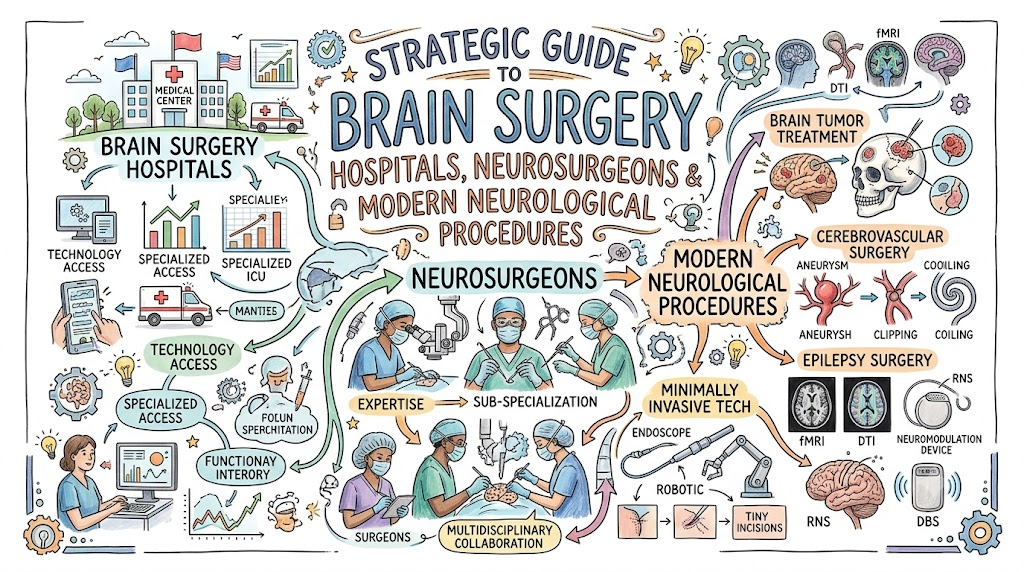
Locating an optimal surgical center requires evaluating institutional performance metrics, clinical outcomes, and hospital infrastructure. High-volume medical centers achieve lower complication rates because their surgical teams refine complex techniques across hundreds of cases annually. Dedicated neuro-intensive care units provide round-the-clock clinical supervision from subspecialized neuro-intensivists and specialized critical care nurses.
Leading facilities invest heavily in intraoperative MRI suites, stereotactic frames, and robotic guidance tools to maximize patient safety. Comprehensive in-house rehabilitation departments demonstrate a facility’s dedication to long-term functional recovery. Evaluating these structural indicators helps families choose outstanding surgical institutions.
| Evaluation Metric | High-Performing Hospital Indicator | Standard Facility Indicator |
|---|---|---|
| Surgical Volume | 500+ complex neurosurgeries annually | Under 150 procedures annually |
| ICU Care | Dedicated 24/7 Neuro-ICU | General Mixed Intensive Care Unit |
| Technology | Intraoperative MRI & Neuronavigation | Standard Operating Microscopes |
| Team Model | Integrated Multidisciplinary Board | Individual Specialist Care |
Choosing Neurosurgery Hospitals and Specialists
Selecting premier neurosurgery hospitals requires direct verification of board certifications and surgical subspecialty fellowships. Patients should prioritize lead surgeons who dedicate their practice to the specific condition requiring treatment. For instance, cerebrovascular neurosurgeons handle complex arterial defects, whereas neuro-oncologists specialize in cranial tumor resections.
Clear communication between the specialist and patient builds mutual trust and eliminates ambiguity before surgery. Top neurosurgeons outline operative steps, potential risks, and anticipated recovery phases with transparent clarity. Choosing seasoned brain surgeons guarantees surgical precision and dependable postoperative oversight.
- Subspecialty Fellowship: Choose specialists with verified fellowship training in your specific condition.
- Board Certification: Confirm active credentials through national neurological surgery boards.
- Multidisciplinary Tumor Boards: Confirm that panels of oncologists, radiologists, and surgeons review cases jointly.
- Case Experience: Ask surgeons about their direct procedure counts over the preceding year.
Brain Tumor Treatment and Surgery
Clinical teams design brain tumor treatment strategies around each tumor’s histological subtype, size, and precise anatomical position. Benign and malignant growths demand distinct surgical approaches to isolate diseased tissue while shielding healthy brain structures. Dedicated brain tumor surgery hospitals utilize high-definition microsurgery to resect tumors while maintaining speech and motor pathways.
Surgeons often combine surgical resection with stereotactic radiosurgery and targeted medical therapies. Real-time intraoperative functional mapping allows brain surgeons to excise abnormal tissue safely around high-risk neurological areas. This coordinated multi-disciplinary strategy extends survival times and protects baseline quality of life.
Brain Aneurysm Surgery
A cerebral aneurysm forms a fragile, bulging pouch on a weakened arterial wall that presents dangerous rupture risks. Advanced neurological centers provide both open microsurgical clipping and catheter-based endovascular coiling solutions. Experienced neurosurgeons assess the aneurysm’s dimensions, wall stability, and geometry before choosing the ideal clinical approach.
In microsurgical clipping, the surgeon places an ultra-precise titanium clip across the aneurysm neck to isolate blood flow completely. In endovascular coiling, an interventionalist navigates micro-catheters through the vasculature to deposit platinum coils inside the bulge. Prompt intervention prevents catastrophic intracranial hemorrhages and secures stable blood circulation.
Epilepsy Surgery
Epilepsy surgery delivers durable clinical relief when medical therapies fail to stop persistent seizures. Clinical teams run extensive diagnostic monitoring, including long-term video-EEG telemetry and high-resolution imaging, to isolate the seizure origin point. Neurosurgeons then resect, ablate, or modulate the specific neural circuitry producing the abnormal electrical discharges.
Modern approaches include targeted focal resections, laser interstitial thermal therapy, and responsive neurostimulation device implants. Clinical studies confirm that timely surgical intervention reduces or eliminates debilitating seizures entirely. Patients frequently recover daily independence, return to work, and enjoy enhanced quality of life.
Minimally Invasive Brain Surgery
Technological advancements allow surgeons to replace traditional large craniotomies with minimally invasive brain surgery. Operative teams reach deep cranial lesions through natural anatomical corridors like the nasal passages or tiny keyhole incisions. As a direct benefit, patients experience minimal tissue disruption and accelerated healing phases.
High-resolution endoscopes and computerized navigation systems steer micro-instruments with millimeter accuracy. This approach prevents unnecessary brain retraction and preserves adjacent neural networks. Patients spend fewer days in the hospital and resume daily routines much faster.
The Role of Diagnostic Testing
High-precision diagnostic workups form the core of every successful neurosurgical plan. Advanced 3T MRI scans, volumetric CT imaging, and functional imaging reveal crucial anatomical details. Cerebral digital subtraction angiograms provide dynamic, real-time roadmaps of cranial blood flow and vessel structure.
These high-resolution scans determine operative access routes and define safe surgical margins. Functional brain mapping outlines critical speech and motor zones before the surgeon makes an incision. Comprehensive diagnostic testing allows the operative team to navigate delicate cranial architecture safely.
When a Neurosurgery Second Opinion May Help
Obtaining a neurosurgery second opinion offers valuable reassurance and alternative clinical perspectives before complex operations. An independent neurosurgeon reviews primary imaging files, verifies pathology analyses, and assesses less-invasive treatment options. This outside review confirms whether conservative medical observation or surgical intervention serves the patient best.
Leading medical centers encourage independent case reviews as standard clinical best practice. External consultations help families organize clinical records, confirm diagnostic findings, and ask targeted questions. Taking this proactive step ensures informed and confident decision-making during major health events.
Questions to Ask Brain Surgeons and Neurosurgeons
Direct dialogue with surgical specialists clarifies procedural goals and recovery expectations. Patients should bring written questions to consultations to cover every clinical detail thoroughly. Direct questions give individuals complete visibility into surgical methods, potential complications, and expected outcomes.
- How many times have you performed this specific operation over the past year?
- Which surgical technique best suits my condition, and what advantages does it provide?
- What specific complications could arise, and how does your team manage them?
- Do you use intraoperative neuromonitoring and real-time image guidance during the operation?
- What average recovery timeline and hospital stay should I anticipate?
Preparing for Treatment
Organized preoperative preparation lowers stress levels and ensures an efficient hospital admission. Patients finish baseline blood panels, adjust current prescriptions under physician oversight, and organize critical medical records. Preparing a quiet, ground-level recovery space at home supports comfortable healing after discharge.
Mental readiness provides essential resilience throughout the operative timeline. Connecting with loved ones, support organizations, and care coordinators builds emotional strength. Prepared patients manage their hospital stay with composure and transition smoothly back to daily life.
Recovery and Follow-Up
Achieving a full recovery after cranial surgery requires patience, structured medical checkups, and focused physical therapy. Neurosurgeons schedule routine surveillance imaging to monitor structural healing and detect late complications early. Dedicated physical, speech, and occupational therapists help patients rebuild vital cognitive and motor functions.
Prescribed physical activity stimulates blood circulation and lowers the risk of secondary medical problems. Family encouragement and transparent communication with the medical team speed up rehabilitation milestones. Following postoperative medical instructions protects surgical results and supports long-term recovery.
Using BrainSurgeryHospitals for Healthcare Research
BrainSurgeryHospitals offers a structured, accessible platform for researching neurosurgical options and specialty medical centers. The portal translates complex clinical concepts into practical educational articles for patients and families. Users research leading facilities, learn about modern treatment protocols, and prepare for specialist appointments effectively.
The platform bridges the gap between intricate medical data and patient understanding by summarizing key neurosurgical insights. Individuals acquire the foundational knowledge needed to discuss treatment strategies confidently with their surgeons. This educational resource supports families through every stage of their neurological care journey.
Frequently Asked Questions About BrainSurgeryHospitals
- Where can families find comprehensive neurological guides on BrainSurgeryHospitals?The platform provides detailed educational resources explaining neurological disorders, surgical methods, hospital capabilities, diagnostic tools, and specialist search strategies.
- How does the platform assist in finding specialized neurosurgery hospitals?Users evaluate hospital volume benchmarks, advanced operating room technologies, intensive care capabilities, and specialized multidisciplinary programs.
- Can patients use the platform to understand brain tumor treatment options?Patients review extensive guides covering open resections, stereotactic radiosurgery, multidisciplinary tumor boards, and functional brain mapping.
- Does BrainSurgeryHospitals provide information on minimally invasive brain surgery?The platform details keyhole craniotomies, endonasal endoscopic procedures, laser thermal ablation, and computerized navigation techniques.
- How does the platform help users prepare for a neurosurgery second opinion?It helps individuals organize diagnostic scans, gather pathology reports, identify appropriate subspecialists, and draft clear clinical questions.
- What resources are available for individuals researching brain aneurysm surgery?Readers access comparative guides on microsurgical clipping, endovascular coiling techniques, vascular center qualifications, and recovery timelines.
- Is the information on BrainSurgeryHospitals suitable for epilepsy surgery research?The portal offers clear overviews of presurgical video-EEG monitoring, focal resections, laser ablation, and neurostimulation devices.
- Can caregivers find practical guides for postoperative care and recovery?Caregivers find step-by-step discharge checklists, physical therapy schedules, warning signs of complications, and long-term recovery strategies.
- Does BrainSurgeryHospitals replace direct medical advice from a doctor?No, the platform provides educational information exclusively and directs users to consult licensed neurosurgeons for clinical diagnosis and treatment plans.
- How can patients best prepare questions for brain surgeons using the platform?Users download practical question frameworks focusing on surgeon volume, operative risks, intraoperative monitoring tools, and rehabilitation phases.
Final Thoughts
Arming yourself with verified clinical knowledge fundamentally shifts how you approach complex neurosurgical care. Partnering with elite surgical teams and technologically advanced hospitals maximizes clinical efficacy while protecting quality of life. Digital research tools like BrainSurgeryHospitals guide families through complex surgical options, ensuring targeted consultations with medical specialists. Prepared patients, clear clinical communication, and comprehensive rehabilitation programs create the optimal environment for lasting neurological recovery.
