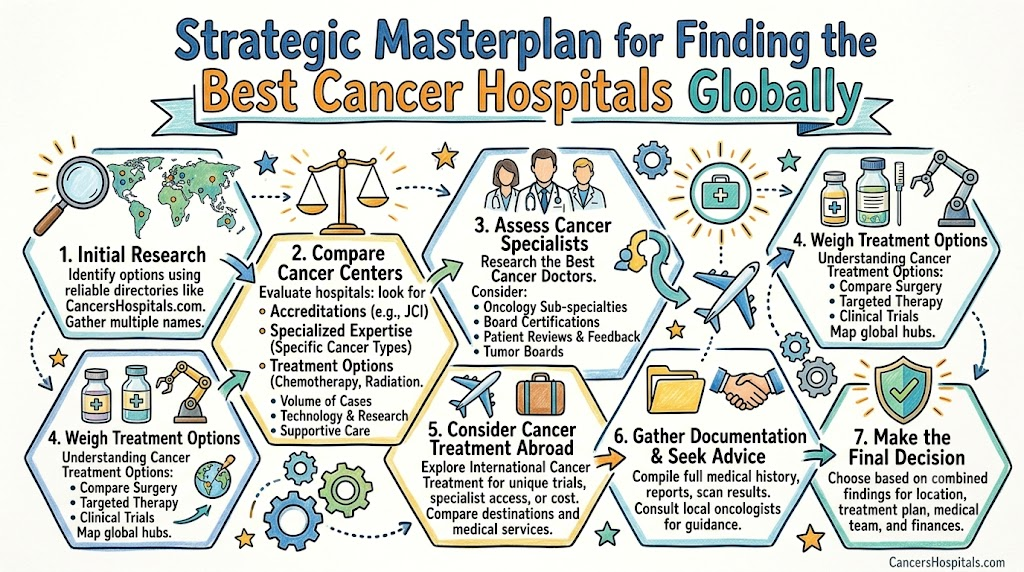
A complex health diagnosis demands immediate, informed action from families seeking the highest standard of medical care. When you clearly define your clinical priorities early, you navigate the global healthcare landscape with total confidence. Diligent research transforms an otherwise overwhelming search into a focused, step-by-step strategy for long-term health.
The best cancer treatment hospitals consistently deliver outstanding clinical outcomes by combining groundbreaking technology with highly specialized medical teams. Therefore, exploring dedicated cancer hospitals and oncology hospitals helps you identify targeted therapies and world-class physicians without unnecessary delays. Taking decisive charge of your healthcare journey guarantees exceptional support and optimal recovery.
What Should You Look for in Cancer Hospitals?
First, verify that prospective centers maintain an integrated multidisciplinary framework for clinical decision-making. The best hospital for cancer treatment unites medical oncologists, surgical specialists, and radiation experts into regular tumor boards to evaluate every individual case. This cooperative approach ensures that your therapeutic plan incorporates multiple specialist viewpoints and thorough clinical scrutiny.
Additionally, confirm that prospective cancer treatment hospitals maintain recognized international accreditations and manage high procedural volumes. Stringent quality certifications prove that a facility follows strict surgical safety protocols, advanced hygiene standards, and verified clinical pathways. Furthermore, institutions that treat large numbers of patients annually achieve lower complication rates and superior recovery times.
- Collaborative Tumor Boards: Multidisciplinary teams evaluate complex cases together to build balanced, personalized therapeutic plans.
- Global Safety Certifications: International healthcare accreditations validate strict procedural safety standards and superior clinical care.
- Comprehensive Support Services: Dedicated centers provide integrated physical therapy, specialized oncology nutrition, and emotional guidance.
Understanding Cancer Treatment Options
Modern clinical oncology utilizes highly specialized, targeted treatment strategies rather than broad, one-size-fits-all regimens. Today, innovative targeted therapies and immunotherapies destroy malignant cells directly while preserving healthy surrounding tissue. Therefore, comprehensive genetic testing and molecular diagnostics guide clinicians toward precise, effective therapeutic regimens.
Furthermore, state-of-the-art radiation delivery platforms direct high-potency energy beams straight at tumors with sub-millimeter precision. Because these systems protect healthy adjacent organs, patients experience significantly milder side effects and recover much faster. Always consult your oncology team to determine which modern therapeutic approaches align best with your exact pathology.
| Treatment Category | Primary Mechanism | Key Clinical Advantage |
|---|---|---|
| Precision Immunotherapy | Activates the body’s natural immune defenses | Delivers lasting tumor control with reduced systemic toxicity |
| Targeted Molecular Therapy | Blocks specific cancer-promoting genetic signals | Halts abnormal cell proliferation without damaging normal cells |
| Stereotactic Radiosurgery | Delivers ultra-focused radiation beams to lesions | Protects adjacent organs and shortens overall recovery timelines |
| Minimally Invasive Surgery | Employs robotic consoles and micro-instruments | Minimizes operative blood loss, decreases pain, and expedites discharge |
How to Compare the Best Cancer Treatment Hospitals
To assess the best cancer hospitals in the world effectively, you must evaluate audited performance indicators and verified clinical outcomes. Focus on five-year survival statistics and documented annual case volumes for your specific condition. Medical centers that routinely manage complex or rare pathologies naturally cultivate deeper diagnostic accuracy and surgical precision.
Next, inspect the facility’s on-site infrastructure, such as dedicated critical care units and advanced molecular pathology laboratories. Top-tier centers deliver rapid turnarounds for complex biomarker panels, genomic sequencing, and second opinions. You can follow this practical four-step method to evaluate every candidate facility:
- Verify Specific Procedure Volumes: Ensure the institution routinely manages high annual case numbers for your exact diagnosis.
- Review On-Site Medical Technology: Confirm that the hospital maintains dedicated PET-CT scanners, robotic surgical suites, and linear accelerators.
- Assess Sub-Specialty Expertise: Check that the center employs dedicated surgical teams who specialize exclusively in your anatomical area.
- Examine Care Coordination Services: Pick institutions that provide dedicated patient navigators to manage records, appointments, and logistics seamlessly.
Researching the Best Cancer Doctors
Your primary specialist’s clinical background strongly influences the ultimate success of your overall treatment plan. Prioritize the best cancer doctors who focus exclusively on your particular diagnostic subtype rather than general oncology practitioners. A sub-specialized physician understands subtle pathological variations, newly approved therapies, and emerging clinical trials.
In addition, check whether your specialist actively conducts clinical research or holds leadership roles in international oncology societies. Seasoned specialists frequently publish peer-reviewed papers, lead groundbreaking clinical trials, and refine novel surgical methods. Establishing open, direct dialogue during your initial consultation ensures you understand every aspect of your treatment plan.
- Dedicated Sub-Specialization: Seek physicians who dedicate their everyday clinical practice entirely to your specific condition.
- Active Research Leadership: Premier clinicians frequently lead clinical trials and publish innovative therapeutic findings.
- Transparent Communication: Your doctor must explain complicated clinical options in simple terms and answer all questions directly.
When Should You Consider Cancer Treatment Abroad?
Seeking cancer treatment abroad offers a dependable solution when local treatment options remain insufficient or unavailable. Many patients travel across borders to gain early access to cutting-edge clinical trials, novel drug therapies, or specialized surgical tools. Thus, international cancer treatment broadens your available therapeutic choices and prevents dangerous delays.
Moreover, leading global medical centers often deliver cost-effective care packages without sacrificing clinical safety or modern standards. Patients who pursue medical travel also benefit from expedited scheduling, bypassing long local waiting lists for major operations and specialty consultations. Thorough logistical planning ensures your overseas medical journey remains safe, smooth, and stress-free.
Exploring Cancer Hospitals Around the World
Premier oncology destinations across North America, Europe, and Asia deliver outstanding medical care through continuous technological innovation and clinical research. For example, prominent healthcare centers throughout the United States and Western Europe routinely develop groundbreaking immunotherapies and intricate robotic operations.
Simultaneously, major medical hubs across Asia combine sophisticated medical platforms with rapid appointment availability and attentive patient care. Many top-tier hospitals operate full-service international patient departments that handle language translation, travel itineraries, and comfortable local lodging. Consequently, global healthcare networks make advanced oncology solutions accessible to patients everywhere.
How CancersHospitals Can Help With Your Research
Gathering dependable medical details independently often requires countless hours of exhausting effort. CancersHospitals simplifies this essential evaluation phase by consolidating comprehensive information on world-class facilities, experienced oncology specialists, and modern therapeutic options into one intuitive directory.
Through this centralized resource, patients can review facility credentials, inspect specialized technology suites, and compare therapeutic alternatives across various countries. By organizing complex medical data into clear, accessible formats, CancersHospitals enables patients and their families to make well-grounded healthcare choices.
Questions to Ask Before Choosing a Hospital
Before committing to a specific medical facility, prepare a targeted set of direct questions for your introductory consultation. Ask how frequently their multidisciplinary tumor board meets to review ongoing patient responses and modify therapies. Furthermore, verify the center’s round-the-clock emergency protocols and intensive care readiness for unexpected complications.
You should also request a fully transparent, comprehensive financial breakdown covering your entire therapeutic itinerary. Insist on itemized cost projections that include diagnostic imaging, surgical fees, hospital stays, post-operative care, and supportive medications. Clarifying clinical and financial expectations early allows you to direct all your focus toward recovery and healing.
- How many times per year does your team perform this specific surgical procedure?
- How frequently will your multidisciplinary team review and update my treatment strategy?
- What emergency medical services and dedicated intensive care units operate during off-hours?
- Can you provide a clear, itemized financial estimate encompassing all tests, operations, and medications?
Frequently Asked Questions About CancersHospitals
- How does CancersHospitals assist patients seeking advanced care abroad?
The platform delivers structured research directories, helping individuals review premier healthcare centers, experienced oncology specialists, and innovative clinical therapies worldwide.
- In what way does CancersHospitals simplify the evaluation of global medical facilities?
It aggregates vital institutional data, technological assets, and clinician credentials into clean profiles so families can compare their choices side by side.
- Can users identify specialized oncology surgeons using the platform?
Yes, the directory enables users to filter and identify seasoned physicians based on their specific cancer sub-specialty and required clinical procedures.
- Does CancersHospitals provide official medical diagnoses or prescription plans?
No, the website serves as an independent informational directory for research purposes and encourages patients to consult licensed medical specialists for clinical diagnoses.
- Can families research cross-border medical travel through the directory?
Yes, the directory showcases accredited hospitals across multiple international destinations, allowing families to evaluate global healthcare options effortlessly.
- Which specific therapeutic modalities does the directory cover?
You can explore detailed information on chemotherapy regimens, targeted molecular treatments, advanced radiation techniques, robotic surgeries, and innovative immunotherapies.
- How does the platform organize clinical data for rapid review?
It presents structured summaries highlighting medical equipment, specialist backgrounds, multidisciplinary review boards, and departmental strengths in an easy-to-scan layout.
- Can individuals with rare diagnoses find specialized treatment centers on the platform?
Yes, the directory highlights leading facilities equipped with the advanced diagnostics and specialized clinical teams needed to treat complex or rare presentations.
- Does the platform explain cutting-edge oncology technologies clearly?
Yes, it breaks down advanced medical modalities such as stereotactic radiosurgery, robotic systems, and molecular tumor profiling to keep patients thoroughly informed.
- What crucial action should patients take after completing their initial research on the website?
Reach out to your selected healthcare facilities directly to schedule formal specialist consultations and submit your complete medical records for personalized evaluations.
Final Thoughts
Taking proactive ownership of your hospital selection process establishes the foundation for a successful recovery journey. Thorough clinical research connects you directly with skilled specialists, cutting-edge therapies, and compassionate care teams matched to your unique diagnosis. Always choose healthcare institutions that demonstrate proven clinical outcomes, collaborative multidisciplinary teams, and dedicated patient support. Leveraging comprehensive healthcare research directories gives you the clarity and peace of mind needed to achieve the best possible medical outcome.

