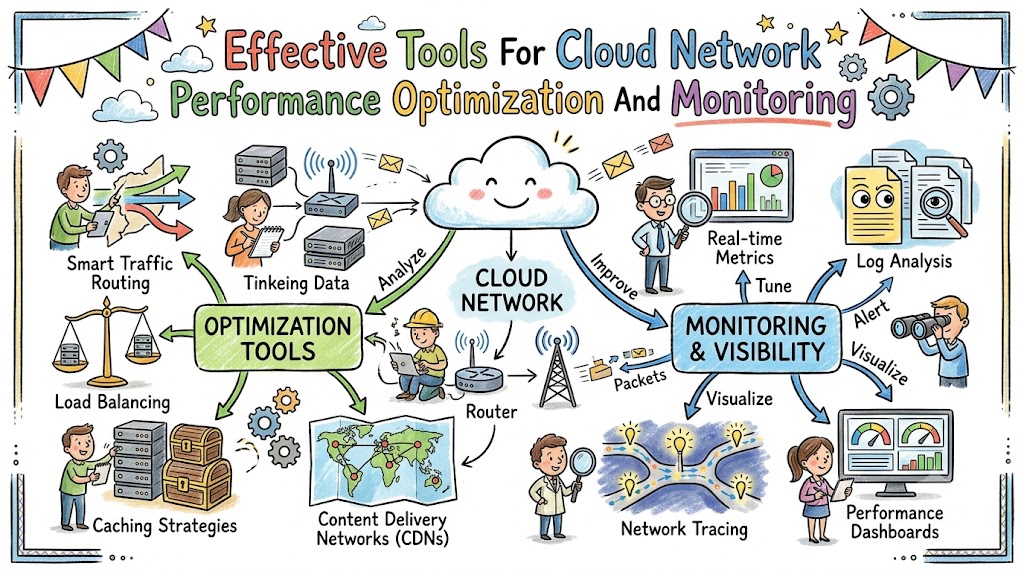
Managing a modern infrastructure footprint requires consistent visibility into complex distributed environments where tiny packet transmission lags can ruin user experiences. When enterprise application ecosystems scale across multi-cloud infrastructure networks, engineering teams inevitably encounter complex data pathways that require precise management. System slowdowns often occur silently, hiding inside misconfigured virtual private networks or congested network paths between primary cloud compute centers. To overcome these data distribution hurdles, companies must implement high-performance monitoring configurations that illuminate hidden data bottlenecks. Proactively analyzing real-time traffic patterns helps operations teams resolve packet transmission lags before they impact business transactions.
To achieve flawless digital execution, modern organizations utilize specialized optimization engines provided by Cloudopsnow to clean up virtual communication layers. Selecting appropriate monitoring software allows developers to analyze exact traffic routing pathways and minimize round-trip packet transport delays. When infrastructure footprints expand across global boundaries, engineering teams need specialized utilities that translate messy telemetry into clear architectural insights. This deep-dive manual reviews the essential technical mechanisms, core tools, and structural roadmaps necessary to establish ultra-fast, modern cloud networks.
Key Operational Concepts You Must Know
The Anatomy of Telemetry and Traffic Analysis
Modern cloud monitoring relies completely on capturing comprehensive telemetry streams consisting of infrastructure metrics, continuous transaction logs, and distributed traces. Packet capture utilities inspect the foundational layers of system traffic, exposing precise data transmission routes and highlighting protocol inefficiencies. Analyzing flow logs helps network architects see exactly how data moves across complex virtual paths and between isolated cloud subnets. Consequently, having deep telemetry data allows engineering teams to identify the real sources of network performance drops.
To maintain stable data delivery rates, engineering teams must look beyond simple server uptime tracking. True system visibility requires real-time analysis of packet loss trends, connection retransmissions, and transit jitter across data centers. Gathering these detailed performance indicators gives developers the visibility needed to optimize internal application performance. Ultimately, deep traffic visibility turns raw infrastructure logs into actionable data for ongoing system refinement.
Decoupling Synthetic Testing from Real User Monitoring
Synthetic testing helps systems engineers evaluate network paths by simulating synthetic user interactions from various global test centers. These automated tests run continuously, measuring system availability and baseline response speeds before any real traffic reaches the platform. This proactive checking allows teams to discover broken routing configurations or regional cloud service drops early. Therefore, running synthetic simulations helps operations teams maintain consistent baselines for critical digital environments.
- Synthetic Monitoring: Best for baseline performance tracking, finding deployment regressions, and evaluating isolated API availability.
- Real User Monitoring (RUM): Captures actual browser experiences, tracking real-world device performance and regional connectivity variations.
- Hybrid Analysis: Combines both strategies to provide full coverage, helping teams spot network issues across different consumer internet providers.
In contrast, Real User Monitoring captures the actual performance and network speeds experienced by real customers using your software. RUM utilities track live user interactions, logging localized browser processing delays, local network speeds, and device performance metrics. Comparing synthetic test data with real-world user metrics allows companies to identify systemic connection bottlenecks. Balancing these dual monitoring methodologies gives engineers a comprehensive understanding of global application delivery health.
Platform Implementation vs. Culture — What’s the Real Difference?
| Operational Vector | Technical Platform Integration | Engineering Culture & Mindset |
| Tool Deployment | Installing tracing agents, setting up monitoring databases, and configuring automated cloud collection nodes. | Sharing common operational goals, running open code reviews, and breaking down organizational team silos. |
| System Visibility | Creating deep analytical dashboards, tracking performance metrics, and indexing application access logs. | Evaluating business service impacts, standardizing service objectives, and respecting performance parameters. |
| Problem Mitigation | Launching auto-scaling actions, running traffic failovers, and generating automated system alerts. | Holding non-punitive incident reviews, analyzing systemic architecture issues, and improving response handbooks. |
| System Refinement | Updating system kernel values, enabling modern web protocols, and adjusting edge caching parameters. | Teaching performance awareness early, prioritizing code efficiency, and treating speed as a feature. |
Technical Deployments vs. Organizational Habits
Platform implementation involves setting up the software tools, cloud network routing policies, and automated management frameworks that run applications. Engineers dedicate significant time to adjusting database parameters, writing deployment code, and configuring cloud load balancers. While these software tools are critical, they only provide the mechanical framework for managing system infrastructure. Without a supportive team environment, advanced monitoring software often becomes an expensive source of unused analytical alerts.
Conversely, a performance-first engineering culture shapes how humans build, monitor, and maintain these complex cloud architectures. A healthy culture encourages developers to care about code efficiency and take full ownership of production stability. When engineering teams build open, collaborative environments, they naturally design software that runs beautifully on cloud infrastructure. Consequently, blending technical tool mastery with a proactive mindset creates an adaptable foundation for maintaining low-latency applications.
Connecting Advanced Tooling to Everyday Engineering
To unlock the full power of monitoring platforms, organizations must connect their technical tooling directly to daily operational processes. Purchasing advanced observability software offers little practical benefit if team members lack clear procedures for managing real-time alerts. Similarly, automated deployment pipelines lose their effectiveness when slow, manual approval processes block necessary software fixes. Successful organizations carefully design their technical workflows to maximize the impact of their monitoring utilities.
Building this connection requires regular technical training, collaborative team meetings, and clearly documented architectural guidelines. When software developers understand how database queries impact network traffic, they write lighter code that reduces computing overhead. This shared understanding turns monitoring platforms into helpful tools that help teams ship code quickly and safely. Ultimately, connecting smart technology with efficient human processes ensures excellent, long-term system performance.
Real-World Use Cases of Modern Operations
Enhancing Performance for High-Frequency FinTech Portals
Financial transaction systems require incredibly fast data execution to process trades accurately without suffering from price slippage. Even minor network delays can cause massive financial discrepancies when executing millions of automated stock transactions globally. To maintain sub-millisecond execution times, engineering teams build optimized private networks and deploy stripped-down cloud computing instances. These specialized settings bypass traditional operating system overhead, helping financial transaction data move at physical fiber-optic speed limits.
Furthermore, financial platforms place their core computing resources directly inside the same data facilities used by major stock exchanges. This precise geographic placement reduces the physical travel distance of data packets down to a few meters. Engineers also use advanced traffic mapping tools to remove unnecessary routers and apply custom hardware acceleration techniques. This focused optimization ensures that transaction records process instantly, giving financial systems a vital competitive edge in high-volume markets.
Managing Global Retail Platforms Through Holiday Shopping Surges
Global e-commerce platforms experience massive traffic spikes during seasonal holiday discount events and flash sales. During these busy windows, high network latency cuts sales directly because frustrated buyers quickly abandon slow checkouts. Operations engineers prepare for these sudden traffic waves by deploying multi-region cloud servers and geo-replicated database systems. This distributed setup spreads user traffic evenly across multiple global centers, keeping page responses fast during peak hours.
To protect critical checkout workflows, retail platforms cache product catalogs and user shopping carts close to consumers. They run small code functions at the network edge to check coupon codes and block malicious bots before they hit main databases. Automated auto-scaling rules also monitor network traffic continually, adding extra computing capacity the moment traffic begins to climb. This proactive management keeps the shopping experience fast and reliable, saving potential revenue during critical business hours.
Optimizing Real-Time Interactive Telehealth Networks
Modern telehealth systems require stable, continuous data feeds to support clear video consultations and real-time medical device tracking. Sudden packet drops or network jitter can disrupt medical assessments, making virtual consultations difficult for doctors and patients. To ensure high-quality connections, infrastructure teams host media streaming nodes at the very edge of major consumer internet networks. This architecture keeps video and audio data paths short, delivering clear communication across varying connection types.
- Anycast Destination Mapping: Routes patient video feeds to the closest operational media server automatically to reduce transmission lag.
- Stream Priority Configuration: Places voice and video packets ahead of secondary background data transfers to avoid communication stutter.
- Edge Frame Optimization: Processes video frames locally at regional edge centers before synchronizing records with central medical archives.
Operations teams track these live streaming paths constantly using advanced analytics tools that flag routing issues early. If an internet provider route slows down, the monitoring system instantly redirects the video data through a cleaner path. This real-time adjustments keep virtual medical appointments stable and secure, even when public internet channels face heavy regional congestion. Maintaining this high network quality gives healthcare providers a trustworthy platform for delivering remote clinical services.
Common Mistakes in Operations Engineering
Misconfiguring Traffic Gateways and Load Balancers
A frequent and costly error in cloud architecture is misconfiguring global load balancers and entry traffic gateways. Engineers often direct global user traffic through a single central load balancer located thousands of miles away from consumers. This flawed setup forces data packets to take long, circular paths across the globe just to complete simple security checks. As a result, connection setup times increase, introducing noticeable delays that slow down the entire software application.
Additionally, neglecting to turn on modern transmission protocols on your main gateways creates severe performance blockages. Older communication protocols force web browsers to open multiple connection channels, causing data queues and heavy security handshake overhead. Operations teams should always terminate secure connections near users using distributed edge networks. Making this adjustment reduces initial handshake delays and helps applications deliver assets to user devices much faster.
Ignoring Regional Layouts and Data Proximity
Another widespread issue is ignoring physical geography when selecting cloud regions for compute engines and core databases. Engineering teams often launch their cloud instances in default locations without analyzing where their actual clients live. This lack of planning forces user requests to travel across oceans unnecessarily, introducing high physical propagation delays. No amount of software tuning can fix the physical delays caused by placing servers far away from your users.
To solve this problem, operations teams must study user traffic patterns and locate resources in matching cloud data centers. For international audiences, using a multi-region deployment approach ensures that application components live close to local user hubs. Deploying modern data synchronization services allows regional databases to stay updated without slowing down local user actions. This geographic planning forms the baseline for any successful low-latency cloud infrastructure.
Relying on Standard Public Internet Routing Tiers
Many companies leave their cloud network settings on default values, assuming cloud providers will automatically route data perfectly. Unfortunately, standard routing paths often prioritize general cost-savings over raw connection speed and packet stability. This means your application data might cross congested public networks, experiencing unpredictable packet drops and unstable response times. Trusting default public routes leaves your core business systems vulnerable to the chaotic traffic shifts of the open internet.
To achieve dependable performance, engineering teams should use premium network tiers that pass data through private global fiber lines. These dedicated corporate networks bypass public internet congestion, providing stable transit times and highly predictable network performance. Furthermore, building custom internal routing tables and using specialized data protocols helps eliminate unnecessary network processing steps. This intentional control over your routing paths keeps your cloud applications safe from public network slowdowns.
How to Become an Operations Expert — Career Roadmap
Mastering Network Topologies and Operating System Basics
To become an elite operations expert, you must first build a deep understanding of core network protocols and operating system internals. You need to study the layers of the TCP/IP stack, routing mechanics, and modern UDP-based transport protocols. Understanding how operating systems manage network connections, handle memory buffers, and schedule processor tasks is essential for tuning systems. This foundational knowledge allows you to troubleshoot complex performance issues that automated cloud tools often hide from view.
- Linux Tuning: Learn to navigate the Linux kernel settings, modifying connection queues and buffer limits using the
sysctlcommand utility. - Traffic Analysis: Gain deep proficiency with packet capture engines like Wireshark to analyze connection drops and routing errors firsthand.
- Resource Optimization: Study how system interrupts, context switches, and open file limits impact overall data throughput capabilities.
In addition, spend time learning how modern container networks interact with host operating systems through virtual bridges and namespaces. Understanding these low-level paths helps you build container setups that avoid performance drops during periods of high traffic. This deep technical knowledge separates top-tier system architects from engineers who only know how to use basic cloud dashboards.
Gaining Broad Experience with Infrastructure Automation
Modern infrastructure management relies entirely on code-driven automation; therefore, mastering Infrastructure as Code (IaC) utilities is essential for your career. You should become highly skilled with declarative configuration software like Terraform to build and manage intricate cloud architectures safely. Writing clean, reusable infrastructure code allows you to deploy matching environments across different cloud providers without making manual mistakes. This practice ensures that your network routing, security walls, and load balancers deploy perfectly every single time.
Beyond basic provisioning, you must master configuration management tools and automated delivery pipelines to optimize your development workflows. Learn to build automated testing directly into your deployment pipelines to check network rules before they go live. This automated approach eliminates manual setup errors, ensures security rules are followed, and shortens deployment timelines. Consequently, your engineering team can update systems rapidly while keeping the production environment stable and fast.
Building Deep Competency in Observability and Metrics
An operations expert must be able to gain clear visibility into complex, distributed software setups using robust observability systems. You need to become an expert at collecting, matching, and interpreting the three pillars of observability: metrics, logs, and traces. Learn to build advanced tracking setups using Prometheus, Grafana, and modern distributed tracing frameworks to map out data pathways. These tools allow you to find the exact software function or network link causing system delays.
Furthermore, focus on establishing meaningful performance objectives that match the actual experience of your end users. Learn to separate everyday system noise from critical alerts, designing notification rules that catch genuine anomalies early. This analytical skill ensures that your engineering team focuses on solving major systemic issues rather than chasing false alerts. Ultimately, deep observability skills turn messy system data into clear, actionable plans that keep your platform running smoothly.
FAQ Section
- What is the difference between network latency and bandwidth capacity?Network latency measures the time delay encountered as a packet travels from its origin to its destination, while bandwidth defines the maximum volume of data that can move through that path per second. A wide data connection can still suffer from poor performance if the individual packets take too long to travel the distance. To optimize systems effectively, engineers must manage both capacity and transmission speed.
- How do Anycast distribution systems improve regional connection speeds?Anycast systems share a single IP address across multiple global data facilities, automatically sending user requests to the closest physical center. This setup shortens the distance data packets must travel, removes intermediate routing hops, and bypasses congested public transit networks. It provides automatic traffic failover while ensuring low latency for an international user base.
- Why do classic connection handshakes slow down modern cloud software?Classic network connections require multiple back-and-forth validation messages between the client device and the server to build a secure channel. This multi-step process adds noticeable delay before actual data can start moving, especially over long global distances. Modern protocols solve this issue by combining connection setup and security validation into a single rapid step.
- Can buying more network bandwidth resolve application delays?No, increasing bandwidth only expands your network’s data carrying capacity; it does not speed up the travel time of individual data packets. If your application delays stem from long physical distances or complex routing paths, expanding the data line leaves performance unchanged. Solving latency requires placing data resources closer to users or cleaning up your routing paths.
- How does an internal Service Mesh impact processing latency inside clusters?A Service Mesh manages communication between internal microservices, adding advanced traffic routing, encryption controls, and deep metrics visibility. Although it introduces a tiny bit of processing overhead via sidecar proxies, it prevents major latency spikes through smart load balancing and rapid failure isolation. This architecture keeps internal system communications highly visible, organized, and stable under load.
Final Summary
Achieving ultra-low network latency requires a careful strategy that blends deep technical knowledge with automated infrastructure management. Minimizing application delays requires constant attention to routing paths, smart geographical placement, and modern connection protocols. By avoiding basic configuration mistakes and using distributed edge systems, engineering teams can keep their platforms running smoothly at scale. Ultimately, making performance optimization a core part of your engineering habits results in reliable, fast applications that keep users happy.
