Introduction
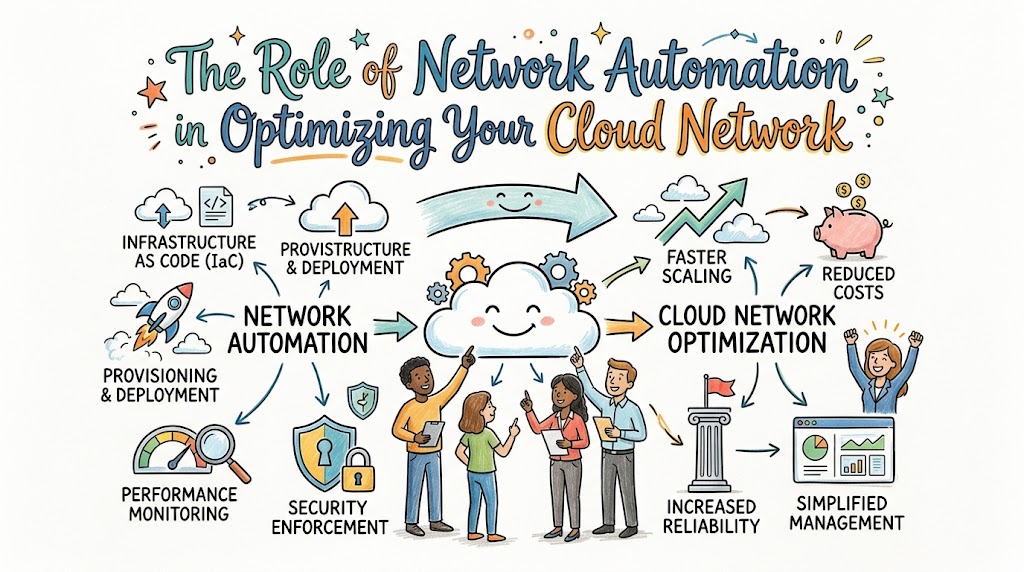
In today’s digital-first world, cloud networking has become the backbone of modern business operations. As organizations increasingly migrate their workloads to the cloud, the complexity of managing network infrastructure has grown exponentially. This is where network automation steps in as a game-changing solution. Network automation refers to the process of automating the configuration, management, testing, deployment, and operation of physical and virtual network devices within your cloud environment. It eliminates manual processes, reduces human errors, and enables faster response times to network changes.
At Cloudopsnow, we understand that network automation is not just about deploying scripts or using configuration management tools. It represents a fundamental shift in how organizations approach their cloud networking strategy. By leveraging automation, businesses can achieve unprecedented levels of efficiency, scalability, and reliability in their cloud operations. Whether you are a small startup or a large enterprise, network automation can transform your cloud infrastructure into a self-healing, intelligent system that adapts to changing demands in real-time.
The journey toward network automation requires careful planning, the right tools, and a cultural shift within your IT teams. It involves everything from basic scripting to advanced artificial intelligence-driven network operations. As we explore this topic in depth, you will discover how network automation can help you optimize costs, improve performance, and enhance security across your cloud network. The modern cloud environment demands automation, and those who embrace it will gain a significant competitive advantage in today’s fast-paced digital marketplace.
Understanding Network Automation in Cloud Environments
Network automation in cloud environments represents the convergence of traditional networking principles with modern cloud-native technologies. At its core, automation replaces manual, repetitive tasks with programmatic processes that can execute at machine speed. This transformation is essential because cloud networks are inherently dynamic, with resources constantly being provisioned, scaled, and decommissioned based on demand. The traditional approach of manually configuring network devices simply cannot keep pace with this level of dynamism.
Modern cloud providers offer extensive APIs that allow network administrators to programmatically control every aspect of their network infrastructure. These APIs enable the creation of infrastructure-as-code templates that define network configurations, security policies, and routing rules in declarative files. When combined with continuous integration and deployment pipelines, these templates can automatically update network configurations whenever changes are made to the codebase. This approach ensures that network configurations remain consistent across development, testing, and production environments.
The benefits of network automation extend far beyond just operational efficiency. Automated networks can detect and respond to anomalies in real-time, reducing the mean time to resolution for network issues. They can also optimize traffic routing based on current conditions, improving application performance and user experience. Furthermore, automation enables better resource utilization by dynamically adjusting network capacity based on workload demands. As organizations adopt microservices architectures and containerized applications, network automation becomes even more critical for managing the complex communication patterns between services.
Key Operational Concepts You Must Know
Infrastructure as Code (IaC)
Infrastructure as Code is the foundational concept for network automation in cloud environments. IaC involves managing and provisioning network resources through machine-readable definition files rather than manual configurations. These definition files can be version-controlled, reviewed, and tested just like application code. Tools like Terraform, AWS CloudFormation, and Azure Resource Manager have become essential for implementing IaC in cloud networks.
Continuous Integration and Continuous Deployment (CI/CD)
CI/CD pipelines automate the testing and deployment of network configuration changes. When combined with IaC, CI/CD ensures that network changes undergo proper validation before being applied to production environments. This reduces the risk of configuration errors and enables faster rollout of network updates. Automated testing within CI/CD pipelines can catch potential issues early, preventing costly outages and security vulnerabilities.
Network Function Virtualization (NFV)
NFV decouples network functions from proprietary hardware, allowing them to run as software instances on standard servers. This virtualization enables network functions like firewalls, load balancers, and routers to be deployed and scaled dynamically. Automation plays a crucial role in managing these virtualized functions, orchestrating their deployment, scaling, and lifecycle management.
Software-Defined Networking (SDN)
SDN separates the network control plane from the data plane, centralizing network intelligence in software controllers. This separation enables programmatic control of the network through open APIs. Automation tools can interact with SDN controllers to implement complex network policies, optimize traffic flows, and respond to network conditions in real-time.
Network Monitoring and Observability
Modern network automation requires comprehensive monitoring and observability capabilities. These systems collect telemetry data from network devices and use advanced analytics to detect anomalies, predict failures, and optimize performance. Automation can trigger corrective actions based on monitoring data, creating self-healing network environments that minimize downtime.
Security Automation
Security automation integrates network security into the automated provisioning process. This includes automatically applying security policies, implementing zero-trust architectures, and responding to security incidents. Automation ensures consistent security posture across all network segments and reduces the risk of human error in security configuration.
Configuration Management
Configuration management tools maintain network devices in a desired state. These tools detect configuration drift and automatically correct deviations from the intended configuration. This capability is essential for maintaining compliance and ensuring network reliability in dynamic cloud environments.
Orchestration
Orchestration coordinates multiple automated tasks to achieve complex network objectives. It manages dependencies between tasks, handles error conditions, and ensures that network operations proceed in the correct sequence. Orchestration is particularly important for multi-cloud and hybrid cloud environments where networks span different providers and technologies.
Platform Implementation vs. Culture — What’s the Real Difference?
Understanding Platform Implementation
Platform implementation refers to the technical deployment of network automation tools, infrastructure, and systems within your organization. This includes selecting and configuring automation platforms, developing scripts and templates, and integrating automation with existing network infrastructure. Implementation is tangible, measurable, and often the focus of initial automation initiatives. Organizations typically invest significant resources in acquiring the right tools, building automation frameworks, and establishing technical foundations.
The technical aspects of platform implementation include setting up version control systems for infrastructure code, establishing CI/CD pipelines for network changes, and implementing monitoring and observability solutions. Implementation also involves creating automation libraries, developing custom scripts for specific use cases, and integrating with cloud provider APIs. Organizations must consider scalability, security, and performance when designing their automation platform.
The Cultural Transformation
However, platform implementation alone does not guarantee successful network automation adoption. The cultural aspect represents how people perceive, approach, and embrace automation within their daily work. A culture that values automation encourages innovation, risk-taking, and continuous learning. It promotes collaboration between network engineers, developers, and operations teams, breaking down traditional silos that hinder progress.
Cultural transformation involves changing mindsets from manual processes to automated workflows. Network engineers must transition from being individual contributors to becoming automation developers and architects. Teams need to adopt DevOps principles, treating network configurations as code and embracing continuous improvement. Management must support the cultural shift by providing training, encouraging experimentation, and rewarding automation successes.
The Synergy Between Implementation and Culture
The real difference between platform implementation and culture lies in their outcomes. Implementation provides the technical capabilities, while culture determines how effectively those capabilities are used. A sophisticated automation platform is useless if teams lack the skills or motivation to leverage it properly. Conversely, a strong automation culture can drive innovation even with limited tools, as teams find creative solutions to automation challenges.
Successful organizations recognize that implementation and culture must evolve together. As the automation platform matures, the culture should adapt to take advantage of new capabilities. This symbiotic relationship creates a virtuous cycle where improved automation enables cultural growth, which in turn drives further automation innovation. Organizations that neglect either aspect will struggle to achieve the full benefits of network automation.
Overcoming Cultural Resistance
Cultural resistance often manifests as fear of job displacement, lack of trust in automation, or comfort with familiar manual processes. Addressing these concerns requires clear communication about automation’s benefits and its role in augmenting rather than replacing human capabilities. Organizations should create opportunities for hands-on learning, demonstrate quick wins, and celebrate automation achievements to build momentum.
Real-World Use Cases of Modern Operations
Automated Network Provisioning
Modern operations teams use automation to provision network resources on demand, reducing deployment times from weeks to minutes. When developers request new environments, automated workflows create the necessary network infrastructure, configure security policies, and establish connectivity. This enables rapid innovation while maintaining consistent network configurations across all environments.
Intelligent Traffic Optimization
Automation enables dynamic traffic routing based on real-time conditions such as latency, bandwidth utilization, and application performance. Automated systems can detect congestion and route traffic through alternate paths to maintain optimal performance. This is particularly valuable for global applications serving users across different geographic regions.
Automated Security Policy Enforcement
Security automation ensures consistent enforcement of security policies across the entire network. When new threats emerge or compliance requirements change, automated systems can update security configurations across thousands of network devices simultaneously. This significantly reduces the window of vulnerability and ensures rapid response to security incidents.
Self-Healing Networks
Modern operations leverage automation to create self-healing network environments. Monitoring systems detect anomalies and trigger automated remediation workflows when issues arise. Common remediations include restarting failed network services, adjusting routing tables, or scaling network capacity. Self-healing networks reduce downtime and minimize the need for manual intervention.
Automated Compliance Auditing
Regulatory compliance requires continuous verification of network configurations against established standards. Automated auditing tools scan network configurations, identify deviations, and generate compliance reports. This eliminates the manual effort of periodic audits and provides real-time visibility into compliance posture.
Multi-Cloud Network Management
Organizations operating across multiple cloud providers use automation to maintain consistent network policies and connectivity. Automation tools abstract provider-specific APIs, enabling unified management across different clouds. This simplifies operations and reduces the complexity of managing diverse cloud environments.
Capacity Planning and Optimization
Automated capacity planning analyzes historical trends and predicts future network requirements. This enables proactive scaling of network resources to meet growing demands while avoiding overprovisioning. Automation can also identify underutilized resources and recommend optimization strategies to reduce costs.
Disaster Recovery Automation
Automated disaster recovery workflows ensure rapid recovery of network services in case of failures. Predefined runbooks automate failover to backup networks, restore configurations, and verify service availability. This reduces recovery time objectives and ensures business continuity even during major incidents.
Common Mistakes in Operations Engineering
Over-Automating Without Proper Planning
One of the most prevalent mistakes is attempting to automate everything simultaneously without a clear strategy. Organizations often rush into automation without understanding their current processes, identifying automation opportunities, or establishing success metrics. This shotgun approach leads to fragmented automation implementations that create more problems than they solve. Successful automation requires careful planning, starting with high-impact, low-complexity tasks and gradually expanding scope.
Neglecting Version Control
Many operations teams fail to properly version control their automation scripts and infrastructure definitions. Without version control, changes become difficult to track, rollback, or audit. This leads to configuration drift and makes it challenging to maintain consistent environments. Version control should be considered mandatory for all automation code, enabling collaboration, change tracking, and reproducible deployments.
Insufficient Testing
Automation implementations often suffer from inadequate testing, leading to catastrophic failures in production. Teams must develop comprehensive test suites covering configuration validation, performance benchmarks, and security verification. Testing should occur in isolated environments before any automation changes reach production. Automated testing within CI/CD pipelines can catch issues early, preventing costly outages.
Ignoring Error Handling and Rollback
Poor error handling leads to automation failures that cascade through the network, causing widespread disruptions. Automation scripts must include proper error detection, logging, and rollback mechanisms. When automation encounters unexpected conditions, it should gracefully fail and revert to known-good states rather than continuing with uncertain outcomes.
Lack of Documentation
Insufficient documentation prevents teams from understanding, maintaining, or modifying automation implementations. This creates single points of failure when key personnel leave the organization. Comprehensive documentation should cover automation architecture, design decisions, usage instructions, and troubleshooting guides. Documentation should be treated as a critical deliverable, not an afterthought.
Ignoring Security
Security considerations are often overlooked in automation design, creating vulnerabilities that attackers can exploit. Automation tools and scripts must follow security best practices, including secure credential storage, proper authentication, and least privilege access. Organizations should conduct regular security reviews of their automation implementations and incorporate security into their automation development lifecycle.
Poor Monitoring and Observability
Without proper monitoring, teams cannot detect when automation fails or assess its effectiveness. Automation systems should generate logs, metrics, and traces that provide visibility into their operation. This data enables troubleshooting, performance optimization, and continuous improvement of automation processes.
Resistance to Change
Some organizations adopt automation technologies but fail to change their processes and culture to leverage them effectively. This results in “shadow automation” where teams continue manual processes alongside automated ones, undermining the benefits of automation. Successful automation requires organizational change management and a commitment to transforming how work is performed.
How to Become an Operations Expert — Career Roadmap
Foundation Phase (0-2 Years)
Start by building strong fundamentals in networking, operating systems, and cloud computing. Earn certifications like CCNA, CompTIA Network+, and AWS Certified Solutions Architect to validate your knowledge. Master basic scripting with Python or PowerShell, and learn configuration management tools like Ansible or Terraform. Focus on understanding network protocols, security fundamentals, and cloud service models.
During this phase, you should gain hands-on experience with cloud providers, practicing with free tier services and personal projects. Develop strong troubleshooting skills and understand how to use monitoring and diagnostic tools. Build proficiency in Linux/Unix command line and basic automation scripting. Join online communities and contribute to open-source projects to gain practical experience.
Intermediate Phase (2-5 Years)
Deepen your expertise in infrastructure as code, CI/CD pipelines, and automated testing. Learn advanced automation tools like AWS CDK, Pulumi, or similar frameworks that enable infrastructure provisioning through programming languages. Master SDN concepts and understand how they apply to cloud networking. Develop expertise in container networking and service mesh technologies like Istio or Linkerd.
Pursue professional certifications like AWS Certified DevOps Engineer, CCNP, or similar credentials that demonstrate advanced knowledge. Take on automation projects at work, starting with small tasks and gradually increasing complexity. Learn to design automation systems that are scalable, secure, and maintainable. Develop skills in performance optimization and cost management for cloud networks.
Senior Phase (5-8 Years)
At this level, focus on architecture and design of large-scale automation systems. Learn to build automation platforms that support multiple teams and environments. Understand how to integrate automation with monitoring, observability, and incident management systems. Develop expertise in multi-cloud and hybrid cloud networking, understanding how to automate across diverse environments.
Lead automation initiatives within your organization, mentoring junior team members and establishing automation best practices. Contribute to the automation community through blog posts, conference presentations, or open-source contributions. Develop strong project management and communication skills, as you will need to coordinate automation efforts across teams and departments.
Expert Phase (8+ Years)
Become a recognized authority in network automation, capable of designing automation strategies that align with business objectives. Influence organizational culture to embrace automation and DevOps principles. Develop expertise in emerging technologies like AI-driven networking, intent-based networking, and self-healing systems. Contribute to industry standards and shape the future of network automation.
At this level, focus on strategic leadership, advising executives on automation investments and digital transformation initiatives. Develop skills in organizational change management and how to drive automation adoption across enterprises. Build your personal brand through public speaking, writing, and community leadership. Consider moving into consulting or advisory roles where you can help organizations transform their automation capabilities.
FAQ Section
What is network automation in cloud computing?
Network automation in cloud computing involves using software tools and scripts to automatically configure, manage, and operate network devices and services within cloud environments. It replaces manual processes with programmable systems that can provision resources, enforce policies, and respond to network conditions without human intervention.
How does network automation improve cloud network optimization?
Network automation improves optimization by enabling real-time adjustments to network configurations based on current conditions. It can automatically scale resources, reroute traffic, enforce security policies, and implement performance improvements. Automation also enables continuous monitoring and adjustment, ensuring networks remain optimally configured for changing workloads.
What are the key tools used for network automation?
Key tools include infrastructure as code platforms like Terraform and AWS CloudFormation, configuration management tools like Ansible and Puppet, CI/CD pipelines like Jenkins and GitLab CI, and cloud provider SDKs. Additional tools include network monitoring solutions, security automation tools, and orchestration frameworks like Kubernetes for container networking.
Is network automation difficult to implement?
Implementation difficulty varies based on organization size, existing infrastructure, and team expertise. Starting small with basic automation tasks and gradually expanding scope reduces implementation challenges. Success requires proper planning, team training, and a culture that supports automation adoption.
How does network automation impact security?
Network automation enhances security by ensuring consistent policy enforcement, rapid response to threats, and reduced human error. Automated systems can continuously monitor for vulnerabilities and automatically apply patches or configuration changes. Security automation also enables quick implementation of zero-trust architectures and network segmentation.
What skills are needed for network automation careers?
Essential skills include networking fundamentals, cloud computing knowledge, scripting and programming (Python, Bash), infrastructure as code tools, CI/CD practices, and automation frameworks. Soft skills like problem-solving, communication, and change management are equally important for success in automation roles.
Can small businesses benefit from network automation?
Yes, small businesses can significantly benefit from network automation by reducing operational overhead, minimizing manual configuration errors, and improving network reliability. Cloud-native automation tools often have affordable pricing models, making them accessible for organizations of all sizes.
How does network automation handle multi-cloud environments?
Network automation handles multi-cloud environments by abstracting provider-specific APIs and providing unified management interfaces. Automation tools can maintain consistent policies across clouds, facilitate workload migration, and enable hybrid connectivity between different cloud providers.
What is the difference between network automation and orchestration?
Network automation focuses on individual tasks like device configuration or policy application. Orchestration coordinates multiple automated tasks to achieve complex workflows, managing dependencies and sequencing between different automation actions to achieve business objectives.
How often should network automation be updated?
Network automation should evolve continuously as business requirements change, new threats emerge, and technologies advance. Regular reviews of automation effectiveness help identify improvement opportunities. Infrastructure as code should be maintained like application code with version control and continuous improvement processes.
Final Summary
Network automation represents a fundamental transformation in how organizations manage their cloud network infrastructure. By replacing manual processes with programmatic systems, businesses can achieve unprecedented levels of efficiency, reliability, and scalability. Throughout this comprehensive guide, we have explored how network automation optimizes cloud networks across multiple dimensions, from provisioning and configuration to security and performance optimization.
We examined key operational concepts including infrastructure as code, CI/CD pipelines, and software-defined networking that form the foundation of modern automation implementations. The distinction between platform implementation and cultural transformation emerged as crucial, emphasizing that technology alone cannot deliver automation success. Cultural adoption and organizational change management are equally important for realizing the full potential of network automation.
Real-world use cases demonstrated the practical applications of automation in areas like automated provisioning, self-healing networks, and multi-cloud management. Common mistakes provided valuable lessons on what to avoid, including over-automation, insufficient testing, and poor documentation. The career roadmap outlined a path from foundational knowledge to expert status, showing how professionals can develop the skills needed for automation-focused roles.
As cloud networks continue to grow in complexity and scale, automation will become increasingly essential for maintaining competitive advantage. Organizations that embrace network automation now will be better positioned to adapt to future technologies and business requirements. The journey toward automated cloud networks requires commitment, investment, and perseverance, but the rewards in terms of operational excellence and business agility are well worth the effort.

