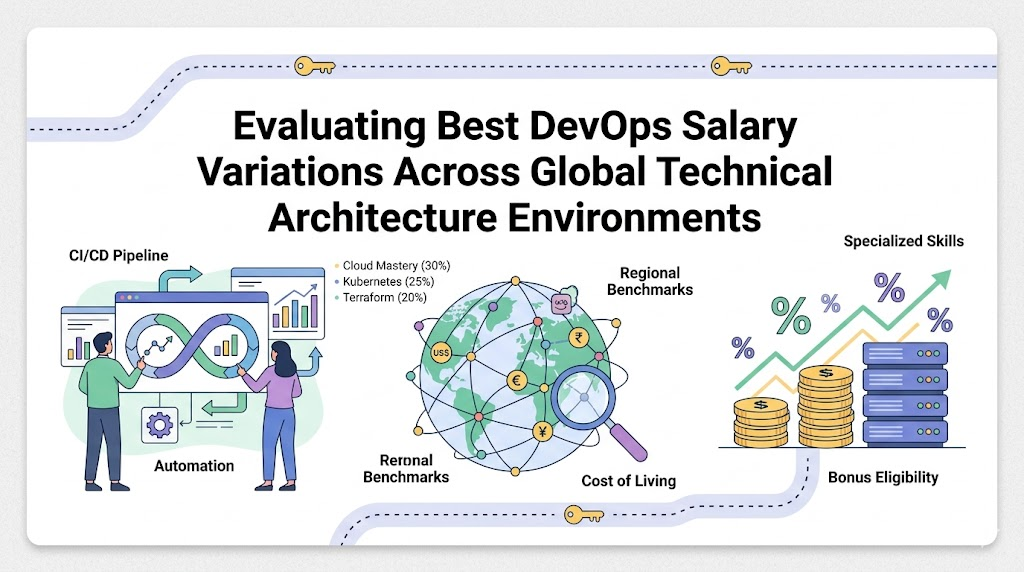
Engineering compensation structures remain notoriously difficult to navigate because they change constantly based on scale, architecture complexity, and specialized skills. Evaluating your true Best DevOps Salary involves decoding complex internal level systems, geographical location, and localized market premiums. Technical professionals often struggle to understand their true market value because standard title definitions remain incredibly fluid across organizations. This detailed guide offers a transparent, data-driven framework to help systems engineering professionals, architects, and hiring teams baseline global compensation tiers effectively.
If you want to benchmark your compensation against global engineering metrics, navigating the comprehensive overview provides an analytical baseline for various infrastructure positions. The data indicates that infrastructure compensation is fragmenting into three distinct tiers: high-scale product organizations that leverage heavy equity packages, enterprise systems that focus on structured performance bonuses, and IT service firms driven strictly by regional rate cards. Navigating these layers requires an understanding of how distinct skill sets map directly to global compensation frameworks.
What Is a DevOps Salary?
The Core Purpose of DevOps Salary
A structured engineering compensation model aligns a professional’s technical ownership with measurable business risk. Organizations do not scale pay scales simply because an engineer memorizes tool syntaxes or maintains baseline deployment pipelines. Instead, compensation structures reflect the direct financial impact of system uptime, operational risk management, and cloud infrastructure efficiency. A properly optimized compensation plan ensures that an engineer’s financial rewards scale alongside their operational blast radius and architecture ownership.
How the DevOps Salary System Works
Modern engineering pay scales operate on a tier-based matrix that combines geographic location, core platform responsibilities, and standardized internal levels. Organizations establish a baseline compensation target using localized market research data and then adjust that base using specific technical domain premiums. For instance, an infrastructure specialist who moves from basic pipeline automation to comprehensive platform engineering typically commands a notable structural premium. The system evaluates the complexity of distributed systems an individual manages rather than tracking their total years of general IT experience.
Eligibility Standards vs. Selection Criteria
Engineering candidates frequently confuse basic operational competence with market-differentiating selection criteria. Basic eligibility standards require an engineering professional to possess fundamental script automation capabilities, manage version control platforms, and understand standard cloud environments. Conversely, top-tier compensation selection criteria focus on an engineer’s ability to drive cross-team architecture standards, lead major system incident resolutions, and manage cloud capacity economics. Meeting the baseline requirements secures an initial technical screening, but demonstrating selection excellence dictates the ultimate compensation boundary.
DevOps Salary Components: The Building Blocks
Age Factors in DevOps Salary
Within technical engineering frameworks, professional longevity only impacts compensation if it correlates directly with systems architectural maturity. Junior tiers execute isolated configuration tasks under direct supervision while building foundational operational habits. Mid-level engineers independently design infrastructure components and manage standard deployment setups without requiring constant oversight. Senior and staff tiers command maximum market value by owning entire organizational architectures, mentoring engineering groups, and mitigating wide-ranging system risks.
Educational Evaluation for DevOps Salary
Formal academic credentials serve as an initial baseline, but continuous specialized technical verification carries far more weight in modern compensation design. Standard degrees establish fundamental computer science principles, yet modern enterprise teams prioritize practical infrastructure validation. Demonstrating verified mastery of advanced cloud design, container orchestration systems, and complex security architectures establishes higher baseline pay tiers. Practical engineering capabilities always override theoretical background when organizations compute final compensation values.
Performance Standards and Benchmarks
Modern engineering organizations tie premium pay bands to clear operational outcomes rather than simple task completion metrics. High-performing infrastructure professionals actively track service level objectives, drive systemic toil reduction, and accelerate deployment velocities. Organizations run regular engineering performance evaluations to measure how effectively an engineer improves platform adoption across development teams. Sustaining high operational availability while optimizing system delivery times positions an engineer at the top of their target market range.
Professional Experience Verification
Validating technical experience requires proving deep ownership of complex production environments under real-world stresses. Recruiters and hiring panels verify an engineer’s true seniority by investigating their hands-on contribution to large-scale system migrations and active incident response command. Managing distributed systems across multiple computing zones provides concrete verification of an engineer’s capabilities. True technical experience translates to systemic problem-solving under pressure, which remains a primary driver for premium engineering pay.
Primary Frameworks Governing DevOps Salary
The Detailed Score Breakdown
Calculating an engineering compensation profile involves evaluating a matrix of multiple technical domains, each contributing a specific weighting to the baseline pay structure. Specialized skills yield clear percentage premiums above the standard baseline infrastructure market rate.
- Security Platform Engineering: Yields a premium of fifteen to thirty-five percent due to the high demand for policy-as-code automation and secure development lifecycles.
- Platform Product Design: Adds a premium of five to twenty percent by focusing on internal developer platform adoption and standardized golden paths.
- Site Reliability Engineering (SRE): Commands an extra zero to fifteen percent premium by prioritizing error budgets, telemetry architectures, and systematic incident responses.
- Cloud Infrastructure Delivery: Serves as the core baseline tier, anchoring standard market compensation configurations across mainstream industries.
Real-World Application Scenarios
An engineer working within a localized enterprise environment might focus entirely on maintaining basic application delivery pipelines and standard virtual compute instances. This operational profile anchors their compensation close to standard regional mid-market baselines. However, migrating that same professional into a high-scale product organization changes the compensation formula completely. If that engineer takes ownership of global edge delivery networks or builds multi-region failover automation, their compensation architecture expands to include substantial equity stakes and high-tier base performance rewards.
International Pathways for DevOps Salary
Key Categories and Classes
Engineering compensation paths branch into distinct operational categories depending on the core business model of the employing organization. Digital native product companies treat infrastructure engineers as core software professionals, mapping their salary tracks directly to software engineering matrices. Regulated enterprise institutions, including major banking and healthcare groups, emphasize stability and structure, offering high base salaries paired with extensive performance bonuses. Technical service providers and consulting agencies utilize distinct, rate-card-driven compensation structures tied to external client delivery metrics.
Comparative Results Summary
Analyzing global markets reveals that structural compensation models vary significantly based on local tax frameworks, equity adoption, and regional business scales. Certain markets focus almost exclusively on high base salaries, whereas other tech hubs rely heavily on long-term equity structures to attract senior architecture talent. Understanding these regional structural realities allows engineering professionals to evaluate the complete value of an international compensation package rather than focusing solely on gross cash numbers.
Advanced Regional Requirements for DevOps Salary
Different global technology hubs enforce unique local operational standards and professional registration parameters that directly shape local compensation designs. In highly structured European markets, engineering roles tie closely to formal collective bargaining agreements and regional professional classifications. This structuring provides excellent base security and comprehensive social benefits but restricts the extreme salary variance seen in less regulated tech sectors.
Conversely, fast-growing technology centers in Asia and the Middle East prioritize rapid infrastructure scaling and localized tech development. These regions frequently structure compensation packages with significant tax-free base salaries, housing stipends, and performance-linked bonuses to draw international expertise. Furthermore, working within heavily regulated fields like government defense or public healthcare requires specific national security clearances and localized data governance compliance certifications. Possessing these specialized regional verifications instantly separates an engineer from the broader market pool, unlocking protected salary tiers unavailable to standard applicants.
The Global Landscape of DevOps Salary
Global engineering compensation features distinct market variations across different geographic regions. The table below outlines annual base salary ranges across several major technology markets, converted to a standardized currency baseline for comparative clarity.
| Country | Primary Role Baseline Range (USD) | Advanced Specialized Premium Range (USD) | Core Market Structuring Focus |
| United States | $92,058 – $143,840 | $108,628 – $169,731 | High Equity Integration / Scaled Product Compensation |
| Switzerland | $114,682 – $179,191 | $135,325 – $211,445 | High Base Cash / Strict Cost of Living Alignment |
| Netherlands | $71,629 – $111,921 | $84,523 – $132,066 | Comprehensive Social Benefits / Balanced Base Structure |
| Singapore | $71,319 – $111,436 | $84,157 – $131,495 | Rapid Tech Scale / Regional Corporate Hub Premium |
| France | $64,408 – $100,638 | $76,002 – $118,753 | Structured Employment Protection / Regulated Base Tiers |
| United Arab Emirates | $63,247 – $98,824 | $74,632 – $116,612 | Tax-Free Base Salary Structure / Expat Allowance Bundles |
| Poland | $47,310 – $73,921 | $55,825 – $87,227 | High-Growth Engineering Center / Enterprise Cost Efficiency |
| India | $18,424 – $28,788 | $21,740 – $33,969 | Scaled Talent Market / Premium Product Center Bifurcation |
Benefits of Utilizing a DevOps Salary
Cost Efficiency
Leveraging a formalized salary architecture allows organizations to budget their infrastructure costs with absolute precision. Companies that map technical roles to clear compensation bands eliminate the chaotic overpayment scenarios that occur during emergency hiring cycles. This structural clarity prevents internal salary compression and keeps overall engineering operational costs completely sustainable over multi-year business horizons.
Instant Reality Checks
For engineering professionals, an objective compensation framework provides an immediate reality check regarding their actual market standing. Instead of relying on vague internet rumors or non-verified self-reported data, engineers can audit their specific skill profile against formalized market data. This transparency helps professionals quickly identify whether their current salary matches their actual technical blast radius and operational liabilities.
Strategic Long-Term Planning
Establishing structured salary ladders allows both engineering managers and individual contributors to plan long-term career growth with confidence. Engineers see exactly which technical domains unlock the next compensation tier, encouraging them to master high-value paradigms like platform security or cloud cost economics. Managers utilize these same structures to build clear promotion roadmaps, significantly reducing team turnover and stabilizing core engineering retention.
Step-by-Step Guide to Mastering DevOps Salary
Gathering Necessary Documents
Mastering the compensation evaluation process requires assembling a verifiable portfolio of your technical achievements and contributions.
1.Compile Performance Metrics:Requires ~3 hours.
Gather detailed data on your system availability tracking, historical deployment frequencies, and concrete telemetry outcomes from your recent projects.
2.Document Architecture Changes:Requires ~2 hours.
List every major cloud infrastructure migration, platform optimization framework, or security automation system that you personally led or designed.
3.Collect Training Validations:Requires ~1 hour.
Organize all active cloud architecture validations, advanced security credentials, and specialized engineering course completions into a single repository.
4.Assemble Leveling Evidence:Requires ~2 hours.
Match your documented technical contributions directly against standard market engineering leveling guidelines to establish your clear target tier.
Practicing the Core Assessments
Before entering formal compensation discussions, an engineer must practice articulating their technical impact using clear business language. Professionals must translate complex architectural achievements—such as rebuilding container orchestration configurations—into measurable financial returns like reduced infrastructure spend or faster software delivery cycles. Practicing this narrative ensures that you present your technical skill set as a major driver of corporate efficiency during high-level review sessions.
Checking Market Demand Lists
Markets shift continuously, causing specific engineering specialties to command immense premiums while more common operational profiles stabilize. Professionals must routinely review regional engineering demand lists to verify the current market value of their specific toolsets and methodologies. Identifying a surge in demand for infrastructure-as-code security or cloud cost engineering allows you to position your profile exactly where organizations face their greatest hiring scarcities.
Adding Secondary Factors
A complete compensation profile extends far beyond gross base cash figures alone. Engineers must mathematically factor in secondary components, including long-term equity vestings, annual performance bonuses, health insurance structures, and remote flexibility allowances. Weighing these secondary variables accurately prevents professionals from walking away from excellent holistic compensation frameworks that might feature a slightly lower baseline cash figure.
Calculating the Final Result
The final calculation requires combining your technical level, your regional market index, and your specialized domain premiums into a target compensation range. Establishing a firm, data-backed range protects you from entering negotiations with unrealistic expectations while ensuring you never accept an offer below your true market value. This calculated final figure serves as your objective anchor during all upcoming career transitions and internal promotion reviews.
Strategies to Optimize Your DevOps Salary Score
The Performance Enhancement Strategy
Optimizing your market value requires shifting your daily operational focus from basic task execution to broad platform ownership. Engineers must actively seek out systemic problems within their organization, such as developer workflow bottlenecks or fragile deployment loops, and deploy scalable solutions. Transitioning into an internal platform owner who delivers automated “paved roads” for other developer groups instantly shifts your profile into a premium compensation tier.
Bonus Qualification Advantages
Securing premium pay bands requires acquiring specialized qualifications that remain scarce within the general talent pool. Earning advanced validations in complex distributed systems design or cloud information security environments validates your capability to handle high-risk infrastructure setups. These advanced specializations act as automated qualifiers that push an applicant’s resume past standard screening filters and directly into premium tier review tracks.
Specialized Opportunity Pathways
Targeting organizations facing massive scaling challenges or highly complex regulatory requirements offers a rapid path to salary optimization. Industries like global financial technology, distributed healthcare networks, and high-scale software-as-a-service platforms depend entirely on fault-tolerant architecture infrastructure. Positioning your career path within these high-stakes domains allows you to command top-of-market compensation packages due to the immense business risks associated with system downtime.
Common Mistakes in the DevOps Salary Process
An exceedingly frequent mistake made by technical professionals is significantly overestimating their technical attribute tier based purely on tool familiarity. Simply knowing how to write basic configuration files or trigger automated pipelines does not make an applicant a senior engineer. When candidates demand top-tier staff compensation without possessing the corresponding systems architecture design experience, they drop out of recruitment pipelines entirely.
Another major misstep involves misinterpreting specific industry engineering classification codes during external job searches. A “DevOps Engineer” in a traditional legacy enterprise often handles completely different operational liabilities than an SRE or a Platform Engineer in a modern digital native product firm. Applying to roles without matching your actual day-to-day production ownership to the specific architectural maturity of the target company leads to mismatched offers and frustrated negotiations.
Finally, relying on outdated compensation metrics or expired market data reports severely damages an engineer’s negotiation leverage. Economic landscapes and corporate hiring budgets shift rapidly over short horizons. Entering a compensation review using outdated salary benchmarks makes a candidate look out of touch with current economic realities, causing them to either leave substantial money on the table or price themselves out of excellent opportunities.
Real-Life Case Scenarios Using DevOps Salary
The Early Career Scenario
An engineer enters the technology sector with basic scripting capabilities and a foundational understanding of version control systems. They secure an associate infrastructure role focused primarily on monitoring system alerts and maintaining basic application deployment pipelines under senior supervision. Their initial compensation anchors near the standard entry-level regional baseline. By systematically learning container fundamentals and mastering infrastructure-as-code tools, they quickly position themselves for an intermediate promotion within less than two years.
The Experienced Professional Scenario
An intermediate systems professional spends multiple years managing cloud setups, building comprehensive delivery pipelines, and independently resolving production incidents. They understand how to optimize standard virtual infrastructure and regularly assist development groups with configuration tasks. By auditing their profile against a global salary framework, they realize their compensation sits below modern platform engineering medians. They intentionally pivot toward owning organizational platform design, which unlocks a senior title change and a substantial jump in their base salary tier.
The Specialized Hero Scenario
A seasoned infrastructure architect specializes deeply in cloud data security automation and advanced distributed reliability frameworks. They step into an organization plagued by frequent system outages and complex cloud expenditure overruns. The specialist completely restructures the company’s edge delivery architecture, establishes rigorous telemetry standards, and drives down annual cloud infrastructure costs by thirty percent. Because their technical interventions directly safeguard millions in corporate revenue, their compensation structure scales past traditional limits, incorporating high-value executive bonuses and significant long-term equity assets.
Frequently Asked Questions (FAQs)
- How do organizations calculate standard engineering compensation bands?Companies establish baseline pay structures by merging regional market data, internal engineering levels, and specialized technical domain premiums.
- Does possessing specific cloud certifications instantly guarantee a higher starting salary?Certifications pass initial recruitment filters, but true salary placement depends on your demonstrated capability to manage complex production systems.
- What is the typical salary premium for a dedicated DevSecOps engineer?Specialized security platform engineers generally command a fifteen to thirty-five percent premium over standard infrastructure baselines due to talent scarcity.
- How does platform engineering compensation differ from traditional operations roles?Platform engineers build internal products for developer teams, mapping their pay scales closer to software engineering structures than legacy IT tracks.
- Should I prioritize a higher base cash salary or an extensive equity package?High base cash ensures immediate financial security, while extensive equity packages in scaling product firms offer massive long-term wealth accumulation potential.
- How significantly does geographic location impact remote engineering pay scales?Many elite firms pay top-of-market rates regardless of location, but mid-market organizations enforce strict regional bands tied to local living costs.
- What operational metrics do managers track during internal salary reviews?Evaluators measure your direct impact on system availability, deployment velocity, service level objectives, and general infrastructure cost optimizations.
- Can an engineer transition to a high pay tier without moving into management?Modern technology companies utilize parallel individual contributor tracks, allowing staff and principal architects to match managerial compensation packages.
- What is the most effective way to counter a low initial salary offer?Present verifiable engineering data showing your direct impact on uptime, system cost reductions, and architectural ownership to justify your target tier.
- How often should a technical professional benchmark their market compensation value?Conducting an objective market review once every year ensures your compensation keeps pace with evolving industry demands and your expanding skill set.
- Do enterprise banking institutions pay better than early stage product startups?Enterprise banks consistently offer superior base cash salaries and structured bonuses, whereas early stage startups provide high-risk, high-reward equity structures.
- What happens to my market value if I only operate legacy infrastructure systems?Operating legacy architectures restricts your profile to stagnant market segments, lowering your long-term earning potential compared to modern cloud-native specialists.
CONCLUSION
Understanding the intricate mechanics of global engineering compensation models allows technical professionals to take complete control of their career trajectories. True market value stems directly from your ability to mitigate business risk, build resilient systems, and optimize developer efficiency across an organization. Instead of chasing fleeting title updates, focus your energy on mastering highly scarce architectural domains like platform security, advanced reliability engineering, and cloud capacity economics. Grounding your career advancement in clear operational achievements and objective market data ensures that your financial compensation scales naturally alongside your technical impact.
