Introduction
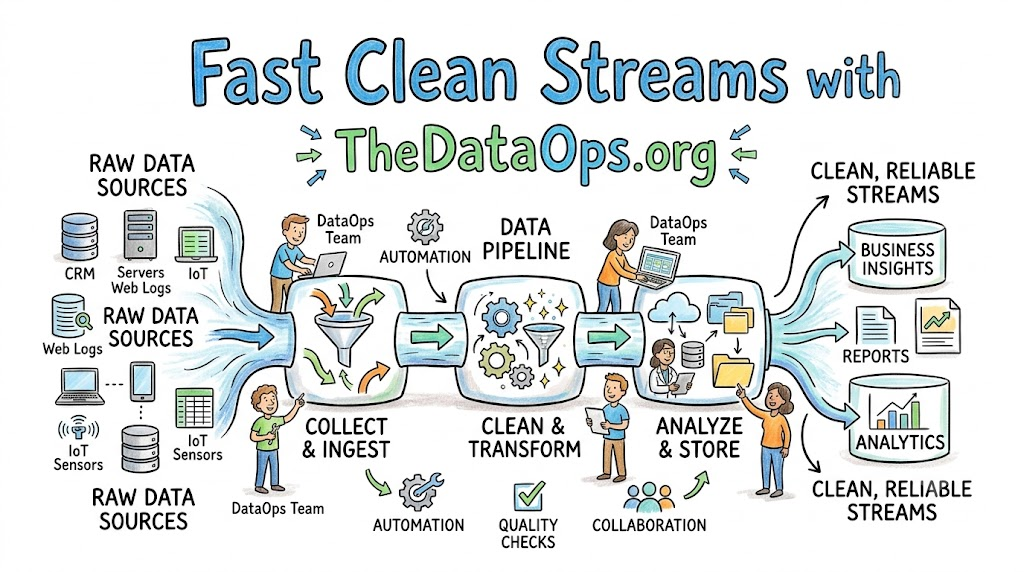
Phones, games, and websites produce billions of facts every day. We call all these facts data. Yet raw facts look like a messy heap of puzzle pieces.
Offices want neat facts to make winning choices before lunch. They dread system freezes and incorrect figures. So, clever teams build smooth tracks to move files across machines without trouble.
You can discover how to build those sturdy tracks. TheDataOps.org is a specialized learning and knowledge platform. It guides you to clean, check, and move facts with great joy.
New learners start making cool projects on day one. You discover how to wipe out computer mistakes right away. Also, you create automated loops that run safely by themselves.
Short lessons turn big coding jobs into fun puzzles. Because every page stays friendly, you pick up skills in no time.
Why Digital Railroads Matter
Imagine your digital records as tiny train cars on a long track. If mud blocks the iron rail, the train crashes and spills the cargo. Clean tracks keep the cars rolling smoothly all day.
Engineers hook handy software programs together to carry files between teams. These tools fetch facts from the internet, scrape off dirt, and draw clear pictures. Then, business chiefs study the pictures and pick bright paths forward.
Agile work habits keep these digital trains running on schedule. Team members meet each morning, test tiny code pieces, and squash small bugs together. Because teammates share quick reviews, small errors never morph into big disasters.
Software expert Maria Santos gave a wonderful speech about this topic. She noted that happy teams build clean paths that people trust. When computers shoulder the dull chores, workers finish their days with huge smiles.
How Hand Clicks Cause Trouble
Lots of offices still pass important records around by clicking mouse buttons by hand. Tired clerks paste figures into giant spreadsheets late at night. But human hands slip, and people make natural mistakes.
A famous coat boutique lost a fortune during a chilly weekend sale. A sleepy clerk typed an incorrect price into a sales document. Because nobody built safety alarms, shoppers bought cozy winter parkas for one single dollar.
Studies show that messy sheets burn thirty percent of a worker’s energy. Brilliant coders spend entire afternoons fixing typos instead of designing fun apps. This slow manual clicking traps great businesses in the past.
Next, smart leaders swap out slow typing for automated tools. They train their staff to set up sturdy tracks that never need sleep.
Supercharge Skills with DataOps Training
You can master sharp tech powers through DataOps Training classes. These active lessons teach you how to route files without painful hiccups. You write simple programs on your home laptop right away.
First, you open a new workspace and write a short starter script. Next, you link live streams of numbers into tidy tables. Because you solve fun hands-on riddles, your confidence grows every single day.
Students fix realistic errors rather than reading giant textbooks. You see how big shopping sites keep carts running during sales. Also, helpful coaches offer prompt tips whenever your code gets stuck.
This active practice turns beginners into sharp builders. You grasp all the essential steps without memorizing confusing corporate buzzwords.
Claim Your Official DataOps Certification
A respected DataOps Certification shows company managers that you have real tech talent. It proves that you can mend broken tracks when time runs thin. Hiring leaders look for this badge on job applications.
To earn this award, you repair broken computer tracks during a timed game. You pinpoint the hidden glitch and fix the code quickly. Because the test uses real problems, employers respect your final score.
Certified workers often land a twenty percent pay raise right away. They join exciting squads that build future-ready cloud setups. So, passing this test opens doors to wonderful jobs everywhere.
You can study each week whenever you find free moments. Regular practice turns hard coding tasks into easy daily habits.
Enjoy an Easy DataOps Course
A friendly DataOps Course guides your learning journey step by step. It starts with simple concepts before moving to tricky puzzles. You never get lost because every lesson links to the last one.
Here is how you can finish the full track:
- Create basic text files and arrange your folders neatly.
- Write small Python scripts to clean up messy text rows.
- Build a moving track with built-in safety rules.
- Launch your finished project to a safe cloud server.
Because each lesson stays short, you stay energized and eager to build. You finish the class with a neat folder of completed projects.
Get Direct Help via DataOps Consulting
Big firms regularly hire DataOps Consulting pros for expert guidance. These advisors inspect slow networks and spot hidden traps. Then, they draw simple plans to speed up the whole system.
A regional health clinic used these advisory services to fix patient check-in records. Their doctor charts took ten painful hours to load every morning. With simple routing tweaks, the wait time dropped to fifteen minutes.
Advisors also teach workers how to test their work before saving it. They help teams build strong daily habits that stop costly mistakes. So, the company saves huge buckets of cash every month.
Outside advice gives busy teams the spark they need. You fix deep problems without stopping your regular daily business.
Top Picks for DataOps Tools
Great builders pick the best DataOps Tools to do awesome work. Some tools push numbers along, while others run safety tests. Each program does one job very well.
Top helpers include Apache Airflow, Kafka, Spark, and Kubernetes. You also run Jenkins to check code and Grafana to watch metrics. Also, simple Python code lets you shape messy tables in seconds.
| Program Name | Main Job | Best Feature |
|---|---|---|
| Apache Airflow | Plan Runs | Starts jobs right on time |
| Apache Kafka | Send Messages | Streams live numbers fast |
| Grafana | Show Metrics | Draws bright picture boards |
| Jenkins | Test Updates | Catches typos right away |
Because these programs work as a team, your paths stay super tough. Each program passes files forward like runners in a school relay race.
Settle into a DataOps Platform
A dependable DataOps Platform brings all your tools under one single roof. It works like a clean computer desk for your entire group. You check path speeds, tables, and test results on one screen.
Modern platforms join file gathering, data cleaning, and health watches seamlessly. Because everyone looks at the same dashboard, teammates stop arguing over missing facts. Everyone shares the same trustworthy charts every morning.
Groups pick between free open tools and full paid software sets. The best pick matches your budget and your current group size.
A shared workspace cuts out messy email chains and long meetings. So, work travels from your laptop to customers without silly delays.
Gain Speed with Data Pipeline Automation
Typing by hand makes silly errors and slows down your day. But Data Pipeline Automation lets computers do the boring work for you. The software fetches, sorts, and checks files on a set schedule.
We use continuous checks to test every line of freshly written code. If a file looks corrupted, the computer stops the line at once. Then, it sends an alert to the engineer on call.
Next, smart schedulers start each job in a strict, safe order. Job two waits quietly until job one finishes without a single mistake. Because of these rules, your records stay totally clean.
Automation frees your mind to focus on fun, creative goals. You spend your day building neat tools instead of babysitting slow files.
Full Clarity with Data Observability
You cannot fix a leaky pipe if you cannot find the hole. This simple truth explains why Data Observability matters so much today. It lets you peer deep inside your pipes while numbers zoom past.
Engineers track five simple signs to keep their systems healthy:
- Freshness: Did the morning numbers show up on time?
- Volume: Did you get the right count of customer rows?
- Distribution: Do the numbers look normal or super weird?
- Schema: Did someone rename a column without telling you?
- Lineage: Where did this file start and who reads it next?
Because you track these five signs, you catch quiet errors early. Your team patches bugs before anyone else spots a problem.
Spotless Rows with Data Quality Management
Bad inputs always make bad outputs for your team. Strong Data Quality Management blocks junk files at the front door. You set up strict filters that reject broken rows right away.
For instance, an address box must always include a real city name. If the city box is completely blank, the filter catches it. Then, the computer puts that broken row into a timeout box.
Teams run checks across every single stage of a record’s journey. They test files as they arrive and right before managers read them. Because of this care, executive reports always show the truth.
Clean records create deep trust across every department in your company. People depend on your boards because your math is always spot on.
Meet the DataOps Engineer
A skilled DataOps Engineer designs, builds, and guards modern data highways. They connect creative app coders with smart business thinkers. This exciting career offers great pay and lots of fun puzzles to solve.
Different engineering jobs require different superpowers to succeed:
| Job Title | Main Duty | Best Skill to Learn |
|---|---|---|
| Junior Engineer | Fix Small Bugs | Basic Python Scripts |
| Pipeline Architect | Build Systems | Cloud Server Layouts |
| Quality Lead | Stop Bad Rows | Automated Rule Writing |
| System Watcher | Track Speeds | Live Metric Boards |
Next, you can pick the specialty that fits your personal dreams best. Every single role helps keep company information moving along smoothly.
Assemble a Pipeline in Four Steps
Putting together your very first automated highway is easier than you think. You do not need fancy gear to learn the basics.
First, write a short computer script that pulls numbers from a web page. Save these facts inside a basic spreadsheet on your laptop.
Second, add an automated rule to screen your new data. Command your computer to check that every age number is greater than zero.
Third, use a scheduler tool to automate your script. Tell the software to run the check every night while you sleep.
Now, your data moves and tests itself without any human help. You just launched a real automated path with built-in safety gates.
How One Clinic Fixed Its Morning Rush
Look at how a neighborhood medical office saved its daily calendar. The clinic struggled to verify patient health cards before morning appointments. Doctors waited around because old files loaded too slowly on their screens.
The staff decided to build a simple automated path with built-in safety rules. They created an alert system that refreshes coverage files every five minutes.
If an insurance card number looks too short, the system alerts the nurse right away. The nurse asks the patient for the correct card before the doctor enters the room.
Because of this quick fix, patient wait times dropped by seventy percent. Doctors see families on schedule, and nurses feel much less stress.
Simple automation turned a slow medical office into a super fast clinic. Clean paths make life better for real people every single day.
Frequently Asked Questions About TheDataOps.org
Who gets the biggest help from TheDataOps.org?
Curious beginners, software coders, and team managers gain practical skills through clear tutorials and lessons.
Can people start without any coding background?
Yes, beginners with basic computer skills can start with simple projects and grow step by step.
Do students try out real industry tools?
Yes, you build paths using standard programs like Airflow, Docker, Python, Kafka, and Kubernetes.
How do automated tests protect daily reports?
Automated tests flag corrupt rows and stop broken scripts before bad numbers enter company charts.
What tasks does an engineer do every morning?
Engineers build data paths, write automated test rules, monitor server health, and fix bottlenecks.
Why do modern groups need observability tools?
Observability alerts you the moment files run late, rows go missing, or table layouts change unexpectedly.
Do the courses use real company examples?
Yes, every course uses practical case studies based on real web stores, video apps, and banks.
Can businesses book custom team consulting sessions?
Yes, experienced advisors inspect internal systems and show teams how to set up reliable workflows.
How many hours should I study each week?
Most students spend four to six hours each week and finish core projects in a month.
Do learners need an expensive, heavy laptop?
No, any basic modern laptop can run the practice exercises and cloud platforms smoothly.
The Bright Road Ahead
Modern industries crave tidy facts more than ever before. Companies everywhere hunt for clever thinkers who can stop system crashes.
When you pick up these practical tricks, you become a valued office hero. You erase hours of boring typing by letting clever scripts do the heavy lifting.
You can build fast pipelines, verify facts, and track operational health with complete ease. Begin your next big adventure today and unlock new talents with TheDataOps.org.
