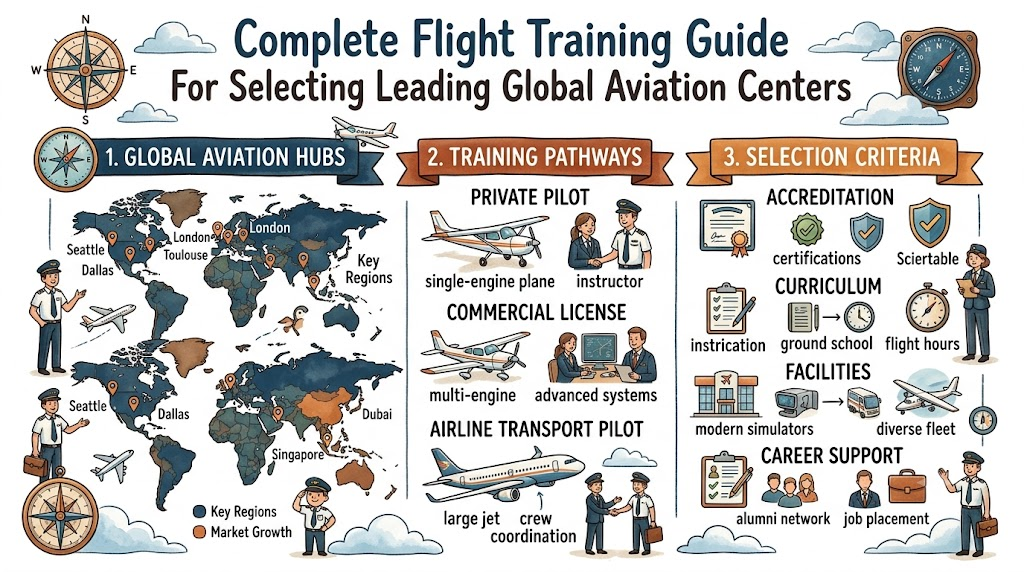
Introduction
Launching an aviation career demands precise planning, financial investment, and world-class instruction. Aspiring aviators often feel overwhelmed when researching aviation training programs across diverse international flight hubs. BestPilotsSchool simplifies this entire discovery process by organizing comprehensive fleet data, syllabus benchmarks, and campus profiles into accessible tools. Prospective pilots evaluate the best pilot schools side by side to ensure their chosen facility matches their long-term flight aspirations. By conducting structured preliminary research, you protect your capital and build a direct route to professional cockpits.
Why Choosing the Right Pilot School Matters
Selecting an aviation training facility determines your technical proficiency and aeronautical judgment for decades to come. Major commercial airlines closely inspect your training history, giving preference to graduates who train under uncompromising safety standards.
Furthermore, reputable flight organizations maintain active cadet recruitment pipelines with commercial carriers to place top graduates quickly. Highly skilled instructors mentor you through challenging weather scenarios, precision instrument approaches, and complex emergency drills.
Enrolling in the best flight schools sharpens your cockpit instincts and elevates your long-term aviation career prospects.
Understanding Different Types of Flight Schools
Aviation academies deliver flight training through distinct regulatory frameworks tailored to different student schedules, budgets, and career timelines:
| Training Structure | Syllabus Delivery | Ideal Student Profile | Target Career Outcome |
|---|---|---|---|
| Accelerated Academy (Part 141) | Structured, full-time curriculum | Career changers and full-time cadets | Fast-track airline qualification |
| Modular Program (Part 61) | Flexible, self-paced flight lessons | Working professionals | Budget-controlled commercial certificates |
| Aviation University Degree | Multi-year academic study plus ratings | High school graduates | Bachelor’s degree with flight ratings |
Independent flight clubs also provide foundational flight lessons for introductory certificates. Choosing the right framework depends on your timeline, financing strategy, and overall aviation career goals.
Commercial Pilot License Training Explained
Earning a commercial certificate involves rigorous ground school academics alongside advanced practical flight maneuvers. Ground instructors teach aerodynamics, aviation weather systems, air traffic navigation, and civil aviation regulations in deep detail.
Meanwhile, student aviators log dedicated flight time across solo flights, night cross-country journeys, and complex multi-engine operations. You must execute strict commercial maneuvers and emergency procedures with total precision during your practical flight test.
Successfully completing comprehensive commercial pilot license training qualifies you to command aircraft professionally and earn revenue.
How to Compare the Best Pilot Schools
Evaluating prospective aviation academies requires looking past advertising claims and analyzing verifiable operational standards:
- Instructor Availability: Confirm low student-to-instructor ratios to avoid costly flight scheduling bottlenecks.
- Modern Aircraft Fleets: Choose institutions that maintain aircraft equipped with modern glass-cockpit avionics systems.
- On-Site Maintenance Hangars: Dedicated certified mechanics ensure high dispatch reliability and immediate aircraft repairs.
- Regional Flying Weather: Bases located in areas with high annual visual flight days enable consistent flight hour building.
Systematically auditing prospective institutions against these operational metrics guarantees an efficient flight training experience.
Best Flight Schools Should Match Your Career Plan
Every pilot candidate begins flight training with distinct professional ambitions and target flight decks. Some aviators target corporate jet charters, while others aim for cargo transport or major airline cockpits.
Consequently, your chosen flight facility must provide modern training assets that mirror your desired career track. Aspiring airline pilots should select academies featuring glass-cockpit multi-engine aircraft and structured jet transition courses.
Aligning your training base with your long-term flying goals accelerates your progression toward professional flight decks.
What Makes the Best Commercial Pilot Training Schools Different?
Elite aviation academies distinguish themselves by incorporating airline-grade standard operating procedures into daily operations. Specifically, the best commercial pilot training schools utilize certified flight simulators to teach complex instrument flight rules and severe weather navigation safely.
Chief flight instructors enforce standardized checklists across all pre-flight inspections, flight operations, and post-flight debriefs. Furthermore, strong industry partnerships allow high-performing students to secure preliminary airline employment interviews before completing their courses.
These high operational standards prepare candidates to transition smoothly into commercial transport jet cockpits.
How Much Does Pilot Training Cost?
Pursuing professional flight training involves a significant financial commitment that requires transparent, detailed budgeting:
- Initial Flight Phases: Single-engine aircraft rentals, fuel surcharges, ground school materials, and dual flight instruction fees.
- Advanced Instrument Phases: Complex aircraft hours, multi-engine ratings, navigation subscriptions, and simulator sessions.
- Certification and Exam Fees: Designated flight examiner fees, medical evaluations, and regulatory written exam costs.
Always demand itemized tuition schedules to prevent hidden costs while completing your commercial pilot training program.
Integrated vs. Modular Pilot Training
Aviation education follows two primary pathways: full-time integrated courses and flexible modular training. Integrated programs deliver a continuous, high-intensity syllabus that transforms zero-experience students into licensed commercial pilots quickly.
Conversely, modular training allows candidates to earn individual ratings step-by-step while balancing existing employment or family obligations. While integrated training provides the fastest completion timeline, modular training offers superior cash-flow management and scheduling independence.
Analyze your personal financial resources and daily schedule carefully before committing to a specific training pathway.
Finding the Best Pilot Schools in the World
International training destinations offer distinct regional advantages for aspiring flight students. Flight academies across North America and Australia provide vast, uncontrolled airspace and reliable visual flying weather year-round.
Meanwhile, European academies emphasize comprehensive theoretical knowledge courses aligned with rigorous international civil aviation requirements. When researching the best pilot schools in the world, ensure that your target country’s license converts directly to your home aviation authority.
Additionally, evaluate campus accommodation, student visa processing support, and total living expenses when planning overseas flight training.
How to Evaluate a Pilot Training Academy
Before signing enrollment contracts or making tuition deposits, use this structured verification method to inspect any pilot training academy:
- Safety Protocols: Examine the facility’s Safety Management System (SMS) and historical incident reporting records.
- Aircraft Fleet Capacity: Calculate the ratio of operational aircraft relative to total enrolled flight students.
- Simulator Technology: Inspect certified flight training devices to ensure they feature modern navigational avionics.
- Alumni Employment Track Record: Request verified career placement statistics for recent flight graduates across partner airlines.
Applying this verification framework protects your educational investment and guarantees world-class instruction.
Choosing an Airline Pilot Training Academy
Securing an airline cockpit position requires dedicated training in multi-crew flight environments. A top-tier airline pilot training academy integrates Crew Resource Management (CRM) and Multi-Crew Cooperation (MCC) into daily training scenarios.
Consequently, student pilots master cockpit automation, crew communication, and jet flight dynamics early in their syllabus. Many airline-affiliated flight institutions offer direct cadet programs that streamline the transition from light piston aircraft to modern passenger airliners.
These specialized programs provide structured career pathways that accelerate your entry into commercial aviation.
How to Identify the Best Flying Schools
Leading flight academies operate with complete transparency across every aspect of their flight training operations. The best flying schools readily provide prospective students with instructor retention rates, average completion timelines, and maintenance records.
Furthermore, high-caliber institutions welcome prospective students to tour maintenance hangars, meet chief flight instructors, and observe live ground school sessions. Dedicated flight instructors focus on building sound aeronautical decision-making rather than coaching students merely to pass basic test questions.
Selecting an open and transparent academy ensures reliable aircraft availability and high-quality mentorship throughout your training.
The Importance of Student Reviews
Unfiltered feedback from active flight students reveals critical daily operational insights that promotional brochures omit. Student reviews highlight real-world aircraft dispatch reliability, instructor scheduling flexibility, and maintenance turnaround speeds during peak periods.
Moreover, alumni feedback demonstrates how effectively school administrators assist students during challenging flight exams or academic check-rides. Examining authentic student feedback across multiple aviation forums helps you build a realistic impression of each training academy.
Always evaluate verified student testimonials before finalizing your flight school selection.
Using BestPilotsSchool to Research Your Options
BestPilotsSchool delivers a centralized directory that simplifies how you research and compare flight academies worldwide. The platform organizes detailed academy specifications, course catalogs, and fleet data into structured comparison profiles.
Candidates filter flight institutions by geographic location, training philosophy, program costs, and specific career tracks to locate the best aviation academy for pilot training. Our comprehensive platform highlights key operational metrics, helping you identify training hubs with optimal weather conditions and modern fleets.
Using these dedicated research tools saves you valuable time and empowers confident educational decisions.
Common Mistakes Students Make
Aspiring aviators often face expensive training delays by falling into common flight school planning traps:
- Paying Full Fees Upfront: Never pay entire tuition sums in advance; utilize secure escrow accounts or pay-as-you-fly installments.
- Overlooking Seasonal Weather Patterns: Enrolling in regions with harsh winter seasons causes lengthy flight cancellations.
- Postponing Flight Medical Exams: Secure an official First-Class Medical Certificate before investing money into flight lessons.
- Neglecting Ground Theory Preparation: Falling behind on theoretical ground exams stalls practical flight progress and increases training expenses.
Avoiding these common errors preserves your flight training budget and keeps your licensing timeline on schedule.
Frequently Asked Questions About BestPilotsSchool
1. What unique research benefits does BestPilotsSchool provide to flight candidates?
BestPilotsSchool compiles verified data on global flight academies, allowing you to compare fleet sizes, training costs, and campus amenities efficiently.
2. How do Part 141 and Part 61 flight training courses differ?
Part 141 institutions follow a fast-paced, FAA-approved syllabus for full-time students, whereas Part 61 offers self-paced training sessions.
3. What timeframe should students expect when completing a commercial pilot license?
Full-time integrated students generally finish within twelve to eighteen months, whereas modular candidates usually require two to three years.
4. Can international students enroll in overseas flight training academies?
Yes, many leading flight academies issue student visas, offer on-campus housing, and provide dedicated aviation English courses.
5. What mandatory requirements must candidates meet before enrolling in flight school?
You must hold a high school diploma, demonstrate basic English proficiency, and obtain an official aviation medical fitness certificate.
6. What overall budget should a student allocate for commercial pilot training?
Total flight training expenses typically range between sixty thousand and one hundred thousand dollars, depending on aircraft types and location.
7. Should candidates choose a university aviation program or a standalone flight academy?
Standalone academies qualify you for commercial flight decks faster, while university programs provide a four-year academic bachelor’s degree alongside flight ratings.
8. What aircraft models do academies typically utilize for initial flight lessons?
Flight academies primarily fly single-engine trainers like Cessna 172s and Piper Archers before transitioning candidates to multi-engine aircraft like Diamond DA42s.
9. How do prospective students assess an academy’s internal safety standards?
Visit the maintenance hangars in person, review the active Safety Management System, and speak directly with enrolled flight students.
10. Do flight academies offer student financing or educational payment plans?
Yes, many accredited flight institutions partner with specialized aviation lending organizations to offer structured loan options and installment programs.
Final Thoughts
Navigating the path to a commercial flight deck requires focused discipline, strategic planning, and careful financial management. Prioritizing modern aircraft fleets, comprehensive safety systems, and experienced flight instructors ensures a rewarding training journey. Take time to visit flight campuses in person, consult with chief instructors, and calculate realistic training budgets. Utilizing centralized comparison directories like BestPilotsSchool gives you the clarity needed to choose the perfect flight academy. Focus your energy on mastering your flight syllabus and take command of your professional aviation career.

