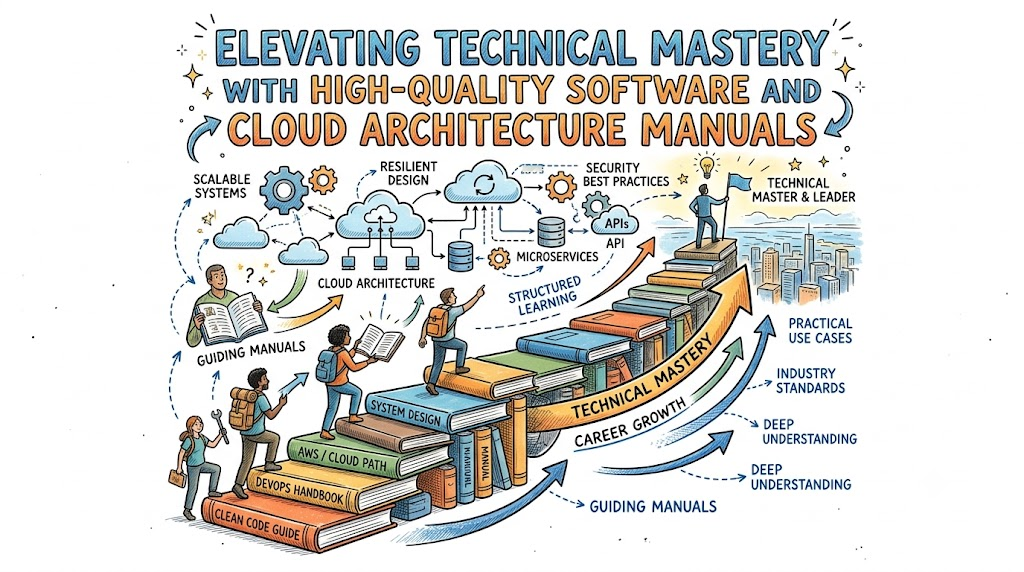
Modern software teams gain competitive advantages when they maintain consistent self-study habits alongside daily code delivery. Navigating complex tech ecosystems demands deep architectural clarity, system design acumen, and hands-on terminal proficiency. Digital hubs like FreeEbooks streamline resource discovery by curating authoritative technical literature into targeted domain tracks. Software developers, system engineers, and computer science students discover rigorous learning paths across programming, cloud operations, artificial intelligence, and cybersecurity to amplify their daily output.
Why In-Depth Technical Texts Outperform Short Content
Structured technical volumes provide unmatched analytical depth that short articles or fast videos cannot match. When developers read rigorous engineering literature, they examine complex system tradeoffs, step through multi-threaded code snippets, and internalize distributed computing paradigms systematically.
Furthermore, digital manuals serve as indispensable desk references during high-stakes design reviews and production troubleshooting sessions. Tech organizations that cultivate active reading habits build cleaner microservices, reduce operational debt, and release resilient applications. Accessing open educational texts removes financial hurdles, enabling aspiring engineers everywhere to build production-grade platforms.
Core Technical Tracks and Real-World Output Mapping
Enterprise software mastery requires balanced proficiency across fundamental computer science, platform automation, and applied data systems. Each domain directly addresses a critical stage of the software delivery lifecycle.
+--------------------------+-------------------------------------+------------------------------------------+
| Technology Track         | Specialized Core Focus              | Applied Practical Project                |
+--------------------------+-------------------------------------+------------------------------------------+
| Programming & Logic      | Memory Safety & Concurrency Models  | High-Performance Event-Driven API        |
| Computer Science         | Data Structures & System Internals  | Low-Latency Key-Value Storage Cache      |
| DevOps & Automation      | GitOps Workflows & Declarative IaC  | Zero-Downtime Multi-Cloud Delivery       |
| Cloud Architecture       | Multi-AZ Elastic Infrastructure     | Fault-Tolerant Microservices Platform    |
| AI & Data Science        | Model Operations & Neural Pipelines | Real-Time Vector Inference Pipeline      |
| Information Security     | AppSec Guardrails & Zero-Trust Auth | Hardened Cloud Identity Perimeter        |
+--------------------------+-------------------------------------+------------------------------------------+
- Software Development: Exploring targeted Free Programming Ebooks sharpens your execution of concurrency primitives, memory management, and asynchronous I/O across modern programming languages.
- Broad IT Literacy: Reading broad-scope Free Technology Ebooks bridges the gap between software execution, operating system kernels, and hardware virtualization layers.
- Timeless Foundations: Studying essential Free Computer Science Ebooks solidifies core knowledge regarding Big-O notation, graph algorithms, memory paging, and database transaction isolation levels.
- Applied Intelligence: Reviewing comprehensive Free AI Ebooks reveals large language model integration, vector embeddings, prompt engineering, and multi-agent coordination.
- Predictive Engineering: Working through Free Machine Learning Ebooks shows you how to curate raw training data, construct neural architectures, and deploy automated MLOps pipelines.
- Delivery Automation: Implementing guides from Free DevOps Ebooks establishes automated release testing, immutable infrastructure management, and blameless reliability metrics.
- Elastic Platforms: Digesting Free Cloud Computing Ebooks equips teams to architect resilient, multi-zone virtual network topologies and serverless computing workflows.
- Defensive Engineering: Reviewing practical Free Cybersecurity Ebooks trains developers to neutralize OWASP vulnerabilities, audit dependencies, and enforce least-privilege access controls.
- Container Orchestration: Mastering specialized Free Kubernetes Ebooks demystifies control plane scheduling, custom resource definitions, Helm packaging, and ingress traffic routing.
- Enterprise Infrastructure: Studying targeted Free AWS Ebooks prepares engineers to design secure cloud systems using core services like EC2, S3, IAM, and Lambda.
Five-Step Execution Blueprint for Maximum Skill Retention
Skimming technical manuals without writing code creates superficial knowledge and false confidence. Follow this disciplined loop to turn written concepts into durable engineering execution:
[Targeted Chapter Study] ──► [Local Environment Setup] ──► [Test-Driven Implementation]
                                                                     │
                                                                     ▼
[Production Deployment] ◄── [Architecture Documentation] ◄── [Refactoring & Hardening]
- Isolate One Domain: Focus on a single programming language or cloud discipline before moving into adjacent fields.
- Execute Code Manually: Type out every code snippet in your local terminal rather than copy-pasting examples.
- Build an Original Microservice: Create a custom tool that implements the core ideas without reading the step-by-step walkthrough.
- Write Comprehensive Test Suites: Add unit, integration, and load tests to confirm edge-case handling under stress.
- Publish Technical Findings: Document your structural choices, runtime trade-offs, and performance benchmarks in concise engineering notes.
Frequently Asked Questions About FreeEbooks
- What primary subject areas does FreeEbooks organize for technical learners?The library curates comprehensive materials across computer science fundamentals, programming languages, cloud computing, DevOps automation, artificial intelligence, machine learning, container orchestration, and cybersecurity.
- Must developers purchase a subscription to read these digital textbooks?Readers access all curated technical materials freely without subscription tiers, mandatory user registrations, or paywalls.
- How can beginners structure their study path on the platform?Beginners start with foundational computer science and introductory programming tracks before advancing to cloud-native platforms and artificial intelligence.
- Do these ebooks feature functional code listings and projects?Most recommended titles include complete companion code repositories, step-by-step terminal exercises, and production architecture diagrams.
- What daily study duration produces measurable engineering results?Dedicate forty-five to sixty minutes each day to combined reading and terminal coding to build deep engineering proficiency.
- Can engineers prepare for cloud certification exams using these resources?Developers use the dedicated AWS and cloud computing tracks to study official certification domains and hands-on architectural requirements.
- Why should software engineers choose technical books over video courses?Reading demands active mental focus, enables rapid keyword reference searching, and covers deeper architectural edge cases than short video summaries.
- Are advanced production subjects like DevSecOps and MLOps available?Practitioners discover advanced manuals covering automated model retraining, Kubernetes cluster security, zero-trust network policies, and infrastructure automation.
- Can engineering managers use these ebooks for corporate training?Engineering leaders frequently assign specific chapters, organize internal book clubs, and structure onboarding tracks using these curated volumes.
- Which practice prevents cognitive fatigue when learning multiple tools?Commit to finishing one foundational textbook and deploying a working application before beginning a completely new subject track.
Strategic Commitment to Continuous Technical Growth
Building world-class software demands constant intellectual curiosity and disciplined daily practice. While specific tools, libraries, and frameworks change rapidly, the foundational principles of computer science and distributed architecture endure. Utilizing dedicated digital collections removes resource barriers, surfaces proven design patterns, and elevates software reliability across teams. Pick an authoritative technical book today, open your terminal, and construct software systems that make a lasting impact.

