Introduction
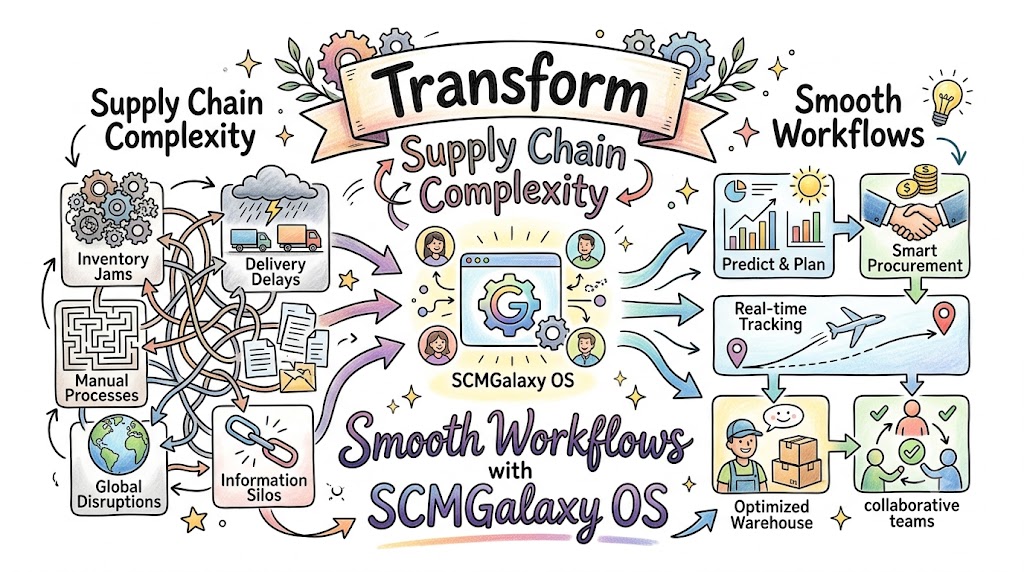
Supply chain management consistently faces fragmented data, disconnected tools, and unpredictable disruptions. Consequently, organizations struggle to maintain visibility across their entire operational network. To solve this persistent problem, professionals need a unified digital environment that connects every moving part. You can experience this paradigm shift firsthand by exploring SCMGalaxy OS, an innovative platform designed to harmonize complex logistics operations. Instead of dealing with isolated software applications, teams can now utilize a cohesive operational ecosystem. This comprehensive system bridges the gap between suppliers, logistics providers, and internal stakeholders. As a result, businesses can eliminate operational blind spots, improve communication, and make data-driven decisions in real time.
What SCMGalaxy OS Actually Means in a Supply Chain Context
When you look closely at modern logistics, you realize that most companies use a patchwork of legacy systems. Therefore, calling a platform an “Operating System” means it acts as the central foundation for all your operational data. This system acts as a single source of truth, connecting disparate applications like ERPs and WMS software seamlessly.
Because it functions as an underlying infrastructure, it translates different data formats into a single, understandable format. Consequently, your procurement, warehousing, and transportation teams no longer work in separate information silos. Instead, they interact with a unified interface that reflects the actual state of your global supply chain. This approach ensures that every stakeholder views identical information, which reduces communication errors significantly.
Why Modern Supply Chains Need an Operating System Approach
Traditional supply chain software usually handles only one specific task, such as tracking a shipment or generating an invoice. However, today’s volatile market demands immediate adaptability and deep cross-functional collaboration. For this reason, businesses must move away from isolated tools and adopt an operating system approach.
By treating the entire supply chain as an interconnected network, you can automate workflows across different departments effortlessly. For instance, when a shipment experiences a delay, the system instantly alerts the warehouse and updates inventory forecasts. This immediate data sharing helps you prevent costly disruptions before they impact your customers. Ultimately, this approach transforms your operations from a reactive struggle into a proactive strategy.
Core Problems SCMGalaxy OS Is Built to Solve
Many supply chain teams spend hours manually compiling reports from different spreadsheets and legacy databases. Unfortunately, this outdated method leads to human errors, outdated information, and delayed responses to market changes. This platform directly addresses these challenges by eliminating manual data aggregation entirely.
Furthermore, it resolves the critical issue of fragmented visibility across external vendor networks. When communication with third-party logistics providers breaks down, your entire schedule suffers. By centralizing vendor communication and performance data, the platform eliminates these dangerous blind spots. Consequently, you can reduce unexpected operational costs, avoid stockouts, and maintain consistent delivery timelines.
Key Capabilities That Make SCMGalaxy OS Useful
The true power of this operational platform lies in its comprehensive feature set, designed specifically for modern logistics control. First, it offers real-time data integration that connects your existing tools without requiring expensive IT overhauls. Therefore, you can aggregate information from multiple sources onto a single, intuitive dashboard.
Second, the system features automated exception handling, which flags potential supply chain disruptions instantly. Instead of searching through endless rows of data, your team receives alerts only when anomalies occur. Additionally, the platform provides robust analytics tools that reveal hidden patterns in your operational performance. These core capabilities allow you to optimize workflows, reduce waste, and improve overall productivity.
How SCMGalaxy OS Can Improve Procurement Operations
Procurement processes often slow down due to endless email threads, manual purchase orders, and delayed approvals. However, utilizing this centralized system allows you to automate the entire purchasing lifecycle seamlessly. The platform streamlines requisition workflows by automatically routing requests to the correct managers based on predefined rules.
Consequently, your procurement team spends less time on administrative tasks and more time on strategic sourcing. In addition, the system provides clear visibility into historical purchasing patterns and vendor pricing structures. This valuable data empowers your negotiators to secure better terms and reduce material costs. As a result, your organization can maintain a healthier bottom line while ensuring a steady supply of goods.
How SCMGalaxy OS Supports Inventory Visibility and Control
Maintaining the right balance of inventory is a continuous challenge for growing businesses. If you hold too much stock, you tie up valuable capital; if you hold too little, you face costly stockouts. This system solves the dilemma by providing complete, real-time visibility across all storage locations.
Whether your inventory sits in a central warehouse, a retail store, or a transit container, you can track it accurately. Furthermore, the platform utilizes smart forecasting algorithms to predict future demand based on historical trends. This allows your team to optimize reorder points and maintain ideal stock levels consistently. Therefore, you can minimize carrying costs while maximizing customer satisfaction through reliable product availability.
Strengthening Warehouse and Fulfillment Workflows with SCMGalaxy OS
Warehouse efficiency directly influences your fulfillment speed and overall customer satisfaction scores. When picking paths are unoptimized and inventory data is inaccurate, warehouse staff waste valuable time. Implementing this unified operational system helps you organize warehouse layouts and optimize daily picking assignments.
Because the software updates inventory locations instantly, workers can find items quickly without searching shelves. Moreover, it coordinates inbound and outbound shipments smoothly to prevent bottlenecking at your loading docks. By streamlining these internal workflows, you can accelerate order cycle times significantly. Ultimately, faster fulfillment leads to happier customers and repeat business.
Better Supplier Coordination Through a Shared Operational System
Healthy relationships with suppliers depend heavily on transparent communication and accurate performance data. Unfortunately, misaligned expectations often cause production delays and quality control issues. This platform bridges the communication gap by creating a shared environment for supplier collaboration.
Suppliers can update production statuses, upload compliance documents, and confirm delivery dates directly within the system. Consequently, you no longer need to send frequent follow-up emails to check on order statuses. The platform also tracks supplier delivery performance automatically against your service level agreements. This unbiased data enables constructive performance reviews and helps you build stronger partner relationships.
Logistics Visibility and Delivery Coordination Become Easier
Once products leave the warehouse, tracking their journey across different carriers becomes incredibly difficult. However, this platform integrates deeply with transportation providers to offer continuous milestone tracking. You can monitor the movement of freight across ocean lanes, air corridors, and domestic highways on a single map.
If a carrier encounters a weather delay or a customs issue, the system updates the estimated arrival time immediately. This early warning allows your logistics team to reroute shipments or notify waiting customers in advance. By improving delivery coordination, you can minimize costly demurrage fees and avoid expedited shipping penalties.
Targeted Value Across Engineering Personas
| Engineering Persona | Core Responsibility | Key Value Delivered by the Platform |
|---|---|---|
| Data Engineers | Managing pipeline infrastructure and data storage | Simplifies API integrations and standardizes messy logistics data streams. |
| DevOps Engineers | Maintaining system uptime and deployment tools | Provides reliable infrastructure that scales smoothly during peak seasons. |
| Solutions Architects | Designing the overarching corporate IT landscape | Offers a modular design that connects easily with legacy ERP applications. |
| QA Engineers | Ensuring system reliability and workflow accuracy | Streamlines automated testing across complex supply chain data workflows. |
Evaluating the Ten Critical Governance Domains
- Data Privacy and Security: The platform utilizes advanced encryption to protect sensitive corporate financial data and vendor information.
- Access Control Management: Role-based access ensures that employees only see the specific information required for their jobs.
- Regulatory Compliance: Built-in compliance tools help you adhere to international shipping regulations and environmental standards effortlessly.
- Audit Trail Logging: Every transaction and data modification creates a permanent log for easy accountability and auditing.
- System Scalability: The cloud-native architecture expands automatically to handle increased transaction volumes during peak shopping periods.
- Integration Flexibility: Standardized APIs allow quick connections with third-party logistics systems without custom development.
- Disaster Recovery Planning: Automated backup systems ensure that your critical operational data remains safe during unexpected outages.
- Vendor Risk Assessment: The system continuously monitors supplier performance history to flag potential financial or operational risks.
- Performance Monitoring: Real-time system health dashboards allow IT teams to identify and fix bottlenecks immediately.
- Data Retention Policies: Customizable data archiving helps businesses balance historical analysis needs with storage cost optimization.
Why SCMGalaxy OS Matters for Decision-Making, Not Just Monitoring
Many traditional dashboards merely show you what went wrong after the problem has already occurred. In contrast, this operational system focuses on forward-looking analysis and actionable decision support. By processing live data streams, the software simulates different scenarios to predict potential supply chain bottlenecks.
For example, if a primary supplier faces a sudden material shortage, the system calculates the impact on your final deliveries. Furthermore, it suggests alternative sourcing options and quantifies the financial impact of each choice. This proactive guidance shifts your leadership team from passive monitoring to confident, strategic decision-making. Consequently, you can protect your margins and outmaneuver competitors during sudden market shifts.
Who Can Benefit Most from SCMGalaxy OS
- E-commerce Retailers: Fast-growing online brands can synchronize multi-channel sales feeds with regional fulfillment centers smoothly.
- Global Manufacturers: Industrial operations can coordinate raw material shipments across multiple tiers of international suppliers.
- Third-Party Logistics Providers: Logistics firms can provide clients with transparent tracking dashboards and automated milestone alerts.
- Procurement Managers: Strategic buyers can analyze company-wide spending patterns to negotiate superior vendor contracts.
- Inventory Planners: Analysts can reduce excess safety stock by relying on precise demand forecasting models.
SCMGalaxy OS as a Practical Platform, Not Just a Promotional Idea
It is easy to view new enterprise software as marketing hype rather than a practical solution. However, this operating system proves its worth through concrete, day-to-day operational improvements. It avoids flashy, unnecessary features and focuses entirely on solving real supply chain headaches.
The user interface prioritizes clarity, allowing warehouse workers and corporate executives to find information quickly. Moreover, the platform relies on stable, proven cloud technologies that ensure high uptime and consistent processing speeds. By focusing on practical utility, the system transforms from an abstract concept into an essential daily tool.
What to Evaluate Before Adopting SCMGalaxy OS in Your Business
Before implementing any new operational platform, you must thoroughly evaluate your company’s current digital maturity. First, look closely at your existing data quality and identify messy data formats that need cleaning. If your current inventory records contain errors, you must resolve them before migrating to the new system.
Second, consider the internal resources required for system configuration and user onboarding. While the platform connects easily with other tools, your team still needs dedicated time to set up workflows. Evaluating these factors beforehand ensures a smooth implementation process and prevents unexpected operational delays.
Best Practices for Getting Maximum Value from SCMGalaxy OS
To get the best possible return on investment, you should roll out the platform in structured phases. Start by connecting your primary warehouse or your most critical supplier network to the system first. This initial phase allows your team to get comfortable with the interface without feeling overwhelmed by changes.
Additionally, invest time in creating comprehensive training programs for every department using the software. When employees understand how their data inputs affect other teams, they maintain higher data accuracy. Finally, review the system’s analytics insights weekly to uncover new optimization opportunities across your supply chain.
Frequently Asked Questions About SCMGalaxy OS
- How does SCMGalaxy OS connect with our existing ERP software?The platform utilizes pre-built connectors and flexible APIs to sync data with major ERP systems smoothly. This ensures that financial records and inventory balances remain perfectly aligned across both applications without manual entry.
- Can small businesses benefit from this platform, or is it only for enterprises?While the system offers enterprise-grade power, its modular design scales down easily to fit growing businesses. Small companies can activate only the specific modules they need, such as inventory tracking or supplier management.
- How does the platform handle real-time tracking during international shipments?The software integrates directly with global ocean carriers, airlines, and telematics systems used by freight forwarders. This deep connection provides continuous milestone tracking and automatic updates on estimated arrival times for overseas cargo.
- What kind of technical support is available during the implementation phase?Organizations receive dedicated deployment support, including architecture evaluation, custom workflow configuration, and comprehensive team training. Continuous technical assistance remains available post-launch to ensure optimal system performance and quick troubleshooting.
- Does the platform require specialized hardware to run in our warehouses?No, the operating system runs completely in the cloud and works on standard web browsers and modern mobile devices. Warehouse personnel can access the interface using existing tablets, handheld barcode scanners, or desktop computers easily.
Final Thoughts
Navigating modern supply chain challenges requires moving past fragmented applications and embracing a unified approach. By centralizing operations within a cohesive digital environment, you gain the clarity needed to handle market volatility confidently. This operating system gives businesses the tools to replace chaos with predictable, automated workflows. As you optimize inventory levels, improve supplier collaboration, and accelerate delivery times, your entire operation becomes more resilient. Investing in a robust digital foundation positions your business for sustainable, long-term growth in a competitive global marketplace.

