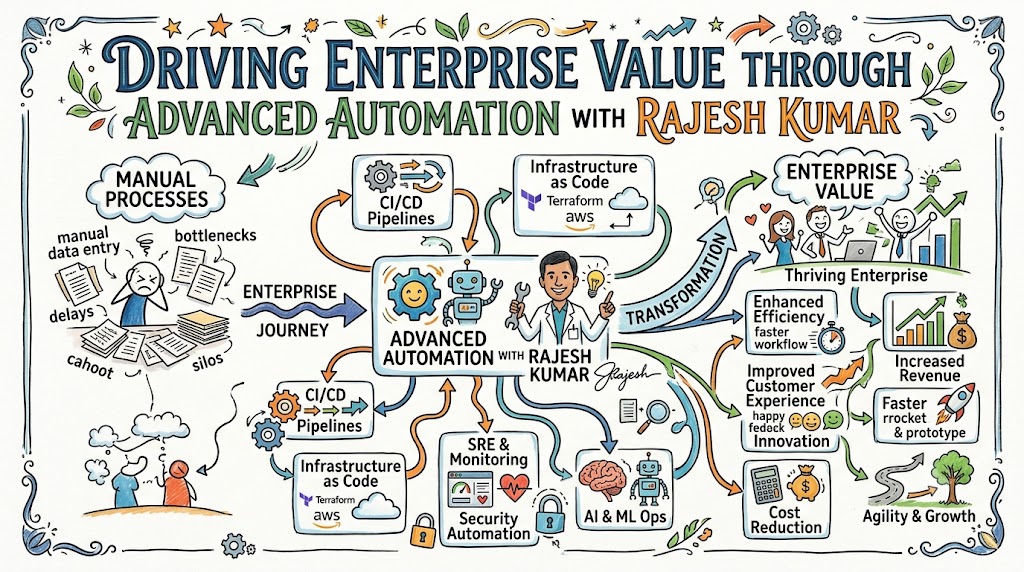
Modern enterprise IT ecosystems face unprecedented scale requirements, forcing technology executives to continuously balance rapid software feature delivery with infrastructure resilience. Scaling deployment pipelines manually introduces fatal errors, delayed hotfixes, and unexpected service downtime, which modern engineering organizations cannot tolerate. Consequently, leadership teams increasingly focus on specialized engineering competencies to systematically eliminate deployment bottlenecks and infrastructure instability. Engaging an expert who functions simultaneously as an elite engineer and educator bridges the gap between raw cloud-native tools and sustainable operational mastery. This comprehensive exploration examines how deep engineering frameworks, continuous integration, and cloud-native architecture systematically transform corporate technology divisions. For businesses looking to benchmark or overhaul their operational posture, accessing comprehensive digital advisory blueprints via Rajesh Kumar provides a definitive foundation for engineering transformation.
Why Enterprises Are Rethinking How They Scale Infrastructure With Rajesh Kumar
The fundamental friction inside traditional enterprise engineering stems from the artificial separation of software construction and system stability. When development teams push features rapidly without understanding the underlying network, container, or cloud constraints, production environments inevitably suffer from unpredictable failure modes. To fix this structural disconnect, progressive firms now bring in a specialized DevOps Trainer who can educate engineering teams on the entire lifecycle of an application, from local code commit to multi-region cloud production.
| System Delivery Phase | Traditional Siloed Operations | Culture-Driven Unified Operations |
|---|---|---|
| Code Commit & Verification | Manual builds executed locally by developers | Automated linting and tests triggered via Git hooks |
| Infrastructure Provisioning | Requests submitted via tickets to isolated teams | Declarative modular templates applied through files |
| Production Incident Handling | Scapegoating and pointing fingers across divisions | Blameless engineering post-mortems and automated fixes |
| Performance Assessment | Reactive checking after customer complaints | Proactive monitoring of error budgets and metrics |
Simply purchasing software licenses or migrating virtual machines to public cloud platforms will not magically resolve systemic operational inefficiencies. Real architectural efficiency requires structural intervention, which is exactly why a seasoned DevOps Consultant becomes necessary to diagnose delivery bottlenecks and redesign infrastructure layouts. True infrastructure evolution aligns development velocity with production safety, establishing high-throughput pipelines that remain thoroughly secure and resilient.
Architectural Alignment and Delivery Engineering With Rajesh Kumar
Organizing modern tech assets requires clean architectural definitions that span simple containerized runtimes all the way up to complex cross-cloud environments. The table below outlines how specific operational responsibilities are segmented across modern infrastructure structures, ensuring teams can target distinct performance indicators effectively.
| Operational Focus Area | Primary Engineering Goal | Core Metric Measured | Targeted Business Outcome |
|---|---|---|---|
| Delivery Pipelines | Automate testing and artifact movement | Deployment Frequency | Accelerated feature time-to-market |
| Orchestration Layer | Manage runtime environments and scaling | Pod Scheduling Latency | Maximized bare-metal and cloud efficiency |
| Resilience & Safety | Establish telemetry and self-healing systems | Mean Time to Resolution (MTTR) | Zero-downtime customer experiences |
| Security Engineering | Inject scanning into standard pipelines | Vulnerability Detection Rate | Prevented compliance violations |
Scaling Microservices via Container Orchestration
As software architectures break down from massive, heavy monoliths into nimble, decentralized microservices, managing the underlying compute footprint becomes a complex challenge. Organizations rapidly discover that basic script-based deployments fail when coordinating hundreds of independent service containers across fluctuating traffic demands. Resolving this operational problem requires a dedicated Kubernetes Trainer who can systematically teach teams how to structure declarative manifests, configure ingress controllers, and manage stateful storage abstractions safely. Providing engineering groups with high-quality Kubernetes Corporate Training ensures that enterprise applications achieve deep fault tolerance, automated horizontal scaling, and predictable rollbacks directly within production environments.
Reliability Architecture and Performance Telemetry
Building highly performant systems goes far beyond simply writing functional application code; it demands deep operational discipline to ensure those systems remain up and available under heavy production loads. When a large-scale platform suffers from unexpected performance degradation, engineering teams must possess the precise analytical skills needed to diagnose deep system problems rapidly. Leveraging a highly experienced SRE Trainer enables companies to move past superficial monitoring methods and establish advanced observability architectures that focus closely on customer-centric metrics.
Implementing structured Site Reliability Engineering Training across engineering organizations systematically installs the mathematical and architectural foundations required to define exact Service Level Indicators (SLIs) and enforce strict Error Budgets. Furthermore, a specialized SRE Consultant helps enterprises move away from chaotic reactive firefighting by designing automated self-healing scripts, advanced load-shedding configurations, and blameless post-mortem operational frameworks.
Moving Security Left via Automated Pipelines
Securing modern enterprise software cannot remain an isolated, final check performed right before a major production release, as discovering critical vulnerabilities at that stage causes massive project delays. Modern delivery frameworks require security checks to be integrated automatically into every single code modification from the very beginning of the lifecycle. Partnering with a DevSecOps Trainer helps development teams embed automated static analysis, dynamic scanning, and compliance-as-code policies directly into their daily development habits.
The automated security flow functions as a sequence of protective verification layers through the pipeline:
- Local Code Commit: Automated syntax checking and secret scanning block compromised source updates immediately.
- Static Analysis Phase: Automated code inspectors scan application logic patterns for functional security vulnerabilities.
- Artifact Compilation: Third-party package matrices undergo validation to isolate open-source component issues.
- Active Runtime Validation: Dynamic scanner suites inject test requests into isolated test environments to find deep live flaws.
Deploying comprehensive DevSecOps Corporate Training ensures that security testing happens seamlessly at every phase of compilation, keeping pipelines moving rapidly without compromising data protection regulations.
Modern Platform Engineering Mechanics
As cloud footprints expand across various business units, individual development teams often waste valuable time manually configuring custom infrastructure components for each new project. Forward-thinking tech organizations eliminate this friction by building internal developer platforms that provide self-service infrastructure blueprints. Consulting with a Platform Engineering Consultant allows enterprises to treat their internal infrastructure precisely like a product, building clean APIs that hide underlying cloud complexities.
Providing rigorous Platform Engineering Training to internal engineering divisions allows organizations to establish reusable infrastructure catalogs, which dramatically accelerates developer onboarding and minimizes environment configuration drift.
Multi-Cloud Strategies and Infrastructure Automation
Navigating modern public cloud providers requires a deep, non-dogmatic understanding of networking configurations, identity access management, and distributed data systems. Organizations frequently struggle with ballooning cloud expenditures and vendor lock-in because their teams lack advanced cross-functional cloud architecture skills.
Working with a Cloud DevOps Consultant helps leadership teams select the optimal balance of cloud services across public, private, and hybrid setups. For enterprises heavily reliant on Amazon Web Services, a dedicated AWS DevOps Consultant provides the technical depth needed to optimize elastic compute clusters, secure complex virtual private networks, and build high-availability storage strategies.
Who Is Rajesh Kumar?
A sustainable corporate tech transformation depends heavily on the practical experience of the engineer leading the initiative. Rajesh Kumar stands out as a distinguished DevOps, SRE, DevSecOps, and Platform Engineering Leader, bringing over fifteen years of deep, hands-on IT industry experience across eight software multinational corporations. His educational foundation includes an advanced M.Tech degree from BITS Pilani, providing him with a rigorous academic perspective on distributed computing and systems engineering.
+------------------------------------------------------------------------+
|                      RAJESH KUMAR - PROFILE SUMMARY                    |
+------------------------------------------------------------------------+
| * Academic Foundation: M.Tech, BITS Pilani                             |
| * IT Industry Tenure: 15+ Years across 8 Tech MNCs                     |
| * Enterprise Footprint: Assisted 70+ Software Organizations Globally   |
| * Educational Impact: 200+ Corporate Trainings | 10,000+ Mentored      |
| * Technical Mastery: 100% Rating in Jenkins & ELK Stack Implementations|
+------------------------------------------------------------------------+
Throughout his career, Rajesh has worked with top-tier technology enterprises globally, holding high-level roles such as Staff DevOps/SRE Engineer at PayPay (Japan’s largest mobile payment platform), Principal DevOps Engineer at SoftwareAG, and Senior Build & Release Engineer at ServiceNow. His professional background spans key engineering roles at global software leaders including Intuit, Adobe, IBM, MindTree, and Accenture.
Having successfully advised over seventy software organizations worldwide, conducted more than two hundred custom corporate bootcamps, and mentored over ten thousand engineers, his work blends real-world production engineering with highly scalable educational frameworks.
Key Operational Concepts You Must Know With Rajesh Kumar
Before implementing advanced automation tools across an enterprise, technology teams must thoroughly master the core terminology and underlying disciplines that govern modern system operations.
- Continuous Integration / Continuous Delivery (CI/CD): The operational practice of frequently compiling, testing, and shipping code modifications through automated verification pipelines to ensure software remains constantly deployable.
- Infrastructure as Code (IaC): Managing and provisioning computing environments, networks, and storage elements through machine-readable definition files rather than relying on manual dashboard adjustments.
- Observability: The ability to infer the internal states of a complex system based entirely on its external outputs, driven by deep telemetry tracking across metrics, distributed logs, and request traces.
- Site Reliability Engineering (SRE): A discipline that applies software engineering principles directly to infrastructure operations challenges to build highly scalable and reliable software systems.
- GitOps: An operational framework that takes dev best practices like version control, collaboration, and compliance, and applies them directly to automated infrastructure automation.
- Error Budget: The acceptable amount of system unreliability a service can experience (e.g., 0.1% downtime for a 99.9% availability goal) before development velocity must stop to focus exclusively on stability.
Platform Implementation vs. Culture — What’s the Real Difference With Rajesh Kumar?
A common failure mode in corporate tech modernization projects is assuming that buying a new software tool will instantly fix deep, broken workflow patterns. Organizations often invest massive capital into complex container platforms, yet find their release cycles remain slow and prone to human error. The reality is that true operational transformation requires balancing the technical tooling layer with deep cultural shifts in how teams collaborate.
True modernization happens when tools serve as transparent enablers for a culture focused on shared accountability, psychological safety, and continuous learning. When engineers feel safe analyzing system failures openly without fear of punishment, they construct significantly more resilient architectures. The technical platform provides the necessary mechanisms, but team culture ultimately dictates whether those mechanisms are utilized effectively to drive long-term business success.
Real-World Use Cases of Modern Operations With Rajesh Kumar
Financial Platform Scale Refactoring
A major electronic payment platform suffered from severe database connection spikes and slow transaction processing during sudden peak-holiday shopping rushes. By consulting closely with an expert DevOps Trainer in India, the core engineering team completely restructured its application runtime strategy. They migrated legacy virtual machines into dynamic containerized clusters, ensuring the core payment processing applications scaled up within seconds to handle sudden traffic spikes without dropping customer payments.
Automated Deployment Risk Mitigation
A global enterprise software vendor frequently experienced severe production outages because their developers committed unverified configuration updates directly into production environments. Bringing in an enterprise Terraform Training program allowed their infrastructure specialists to abstract their multi-cloud setups into modular declarative manifests. As a result, the company completely eliminated manual configuration drift across environments, reducing unexpected deployment downtime to absolute zero.
Supply Chain Pipeline Optimization
An international logistics provider faced massive software release bottlenecks, with updates taking over three weeks to safely clear QA environments and reach production servers. Through tailored Jenkins Training, their build engineers replaced slow, manual validation routines with robust, fully automated build pipelines. This automated testing and compilation setup instantly slashed engineering cycle times down from weeks to under fifteen minutes.
[Old Process]  Dev -> QA Review (1 week) -> Security Check (1 week) -> Manual Deploy (1 week)
[New Pipeline] Dev -> Automated Jenkins Pipeline (15 Minutes) -> Verified Production Build
E-Commerce Container Security Enforcement
A rapidly expanding retail platform discovered critical security compliance vulnerabilities hidden deep inside their active production container base images. Implementing targeted Docker Kubernetes Training across their infrastructure teams helped them inject automated container vulnerability scanning gates directly into their build phase. This automated check stopped insecure software builds from ever reaching active cloud runtimes, ensuring complete compliance with international payment data protection standards.
Financial Services Deployment Synchronization
A regional banking institution struggled to keep their complex Kubernetes cluster configurations perfectly synchronized across multiple separated cloud regions. By introducing advanced GitOps Training, the operations team placed all infrastructure definitions directly into version-controlled repositories managed by automated reconciliation tools. The system now automatically repairs any unauthorized changes made directly to live environments, ensuring absolute configuration consistency across all regions.
Common Mistakes in Operations Engineering With Rajesh Kumar
Organizations frequently sabotage their infrastructure automation goals by treating their delivery pipelines as static scripts that require constant manual human maintenance. When engineering teams build custom, brittle deployment scripts without standardizing documentation, they create massive technical debt that breaks whenever a core developer leaves the firm.
+-------------------------------------------------------------------------+
|                  CRITICAL INFRASTRUCTURE FAILURE PATH                   |
+-------------------------------------------------------------------------+
| Brittle Custom Scripts -> Zero Pipeline Testing -> Undocumented Tweaks  |
|                                    |                                    |
|                                    v                                    |
|            Catastrophic Production Outage & Delayed Recovery            |
+-------------------------------------------------------------------------+
|              REMEDY: Standardize CI/CD Pipeline Training                |
+-------------------------------------------------------------------------+
Resolving this common architectural mistake requires investing in systematic CI/CD Pipeline Training to ensure every engineer designs standardized, self-documenting delivery flows that easily survive team transitions.
Another widespread operational error is building complex public cloud infrastructure without establishing real-time cost boundaries and granular resource telemetry tracking. Tech teams often launch massive multi-region clusters, only to face massive cloud budget overruns due to idle, unmonitored development instances. Companies eliminate these hidden infrastructure expenses by leveraging advanced Terraform Training, which injects automated resource cost-estimation steps directly into their infrastructure modification requests.
Infrastructure Lifecycle Step Analysis
The transition from manual scripting to advanced orchestration patterns follows a specific sequence of risk mitigation layers:
- Initial Scripting: High-risk, custom bash workflows containing undocumented parameters prone to silent context failures.
- Template Declarations: Standard modular definitions specifying strict machine resources, isolated security boundaries, and predictable cluster networks.
- Reconciliation Enforcement: Active deployment checkers scanning infrastructure state continuously to override manual deviations automatically.
Finally, enterprise teams often implement advanced container platforms while completely ignoring the fundamental operating system and network routing layers beneath them. Engineers frequently build massive orchestration configurations that fail under load because the underlying container hosts suffer from misconfigured kernel parameters or restricted virtual network settings. Undergoing focused Docker Kubernetes Training guarantees that operations professionals master both the high-level cluster orchestration layer and the low-level system networking runtimes beneath it.
How to Become an Operations Expert — Career Roadmap With Rajesh Kumar
Building a successful career in modern infrastructure engineering requires a clear learning path that starts with fundamental operating system mechanics and moves toward advanced distributed cloud systems.
[Stage 1: Core Fundamentals]  -> [Stage 2: Automation & Pipeline Architecture]
            |                                           |
            v                                           v
[Stage 3: Advanced Orchestration] -> [Stage 4: Enterprise System Specialization]
Stage 1: Core Fundamentals
Aspiring infrastructure engineers must begin by mastering command-line administration, shell scripting, and basic networking configurations. Understanding how operating systems manage memory allocations, compute processes, and file storage layouts forms the bedrock of all infrastructure engineering. At this stage, professionals focus heavily on understanding version control workflows using Git to track environment changes cleanly.
Stage 2: Automation and Pipeline Architecture
Once baseline system administration is mastered, engineers should shift their attention toward eliminating repetitive manual configuration tasks. This is the optimal phase to undergo structured Jenkins Training to learn how to design automated software compilation, testing, and artifact archiving steps. Simultaneously, professionals must learn to write reusable infrastructure manifests via Terraform Training to manage infrastructure through software files.
Stage 3: Advanced Orchestration
With automation fundamentals solidified, engineers must transition into managing scalable containerized applications across distributed compute environments. Enrolling in comprehensive Docker Kubernetes Training teaches professionals how to build optimized application container images and orchestrate them efficiently across large production clusters. This stage focuses on cluster networking, persistent volume management, and declarative desired-state configuration mechanics.
Stage 4: Enterprise System Specialization
The final phase of professional development involves choosing a deep technical specialization based on organizational needs and personal engineering passions. Engineers looking to specialize in system resilience focus on advanced telemetry data, error budget management, and automated incident response frameworks. Those choosing a security path focus on automating policy guardrails, static binary analysis, and real-time environment threat compliance checking.
Why Choose Rajesh Kumar Over Generic Alternatives
Most corporate technical training centers rely on generic instructors who teach strictly from outdated slide decks without any real, recent production engineering experience. These theoretical bootcamps leave internal technology teams completely unprepared for the messy realities of debugging highly complex distributed systems under actual production loads.
+------------------------------------------------------------------------+
|                      ENTERPRISE TRAINING COMPARISON                    |
+------------------------------------------------------------------------+
| FEATURE             | GENERIC COURSES        | RAJESH KUMAR ADVISORY   |
+---------------------+------------------------+-------------------------+
| Lead Instructor     | Career Theorist        | Active Principal Architect|
| Lab Exercises       | Trivial "Hello World"  | Real-World MNC Failures |
| Deep Tech Depth     | Surface-Level Overview | Multi-Region Scale Fixes|
+------------------------------------------------------------------------+
In stark contrast, Rajesh Kumar delivers educational content backed by fifteen years of active experience as a Principal Architect fixing live outages for premier global technology brands.
His enterprise learning programs are built entirely around realistic lab environments that accurately simulate actual architectural failures encountered at large scale. Rather than practicing simple text exercises, participating engineers learn how to diagnose network routing loops, recover corrupted clusters, and optimize slow delivery pipelines. This heavy focus on practical engineering ensures that corporate technology divisions gain the deep troubleshooting confidence needed to maintain stable production environments.
FAQ Section
- What is the typical timeline required to execute an enterprise DevOps transformation?A complete infrastructure modernization strategy across a large enterprise usually requires anywhere from six to eighteen months to fully implement. The initial phase focuses on assessing existing deployment bottlenecks and establishing standardized automated build pipelines for core applications. Subsequent phases expand self-service infrastructure platforms across all engineering teams while systematically training the workforce to operate these automated workflows independently.
- How does implementing Site Reliability Engineering differ from traditional IT operations management?Traditional systems operations relies heavily on manual human interventions to resolve production environment incidents after they have already caused customer downtime. Site Reliability Engineering treats operational scaling challenges as software engineering problems, building automated software systems to proactively handle load variations and system failures. Furthermore, SRE utilizes data-driven error budgets to balance rapid feature releases with strict platform stability goals.
- Why should an organization transition to GitOps frameworks for cluster management?GitOps frameworks ensure that the exact desired state of your live infrastructure is completely defined within version-controlled repositories. This operational practice completely eliminates manual, undocumented tweaks to live clusters, which is a leading cause of environment configuration drift. If an unauthorized infrastructure change happens in production, the automated GitOps controller instantly detects the variation and restores the live system to match the approved repository definition.
- Can traditional legacy applications be integrated into modern automated CI/CD pipelines?Yes, legacy applications can be integrated into automated delivery pipelines by wrapping them in standardized build scripts and automated testing harnesses. While monolithic software may not scale down as rapidly as modern cloud-native microservices, automating its compilation and deployment minimizes human error significantly. Over time, these legacy systems can be carefully broken down into smaller services while utilizing the same automated delivery pipelines.
- What specific metrics should leadership track to evaluate pipeline efficiency upgrades?Technology executives should closely track the four core DORA metrics to measure the health and efficiency of their delivery pipelines: Deployment Frequency, Lead Time for Changes, Mean Time to Recovery (MTTR), and Change Failure Rate. Improving these key engineering indicators directly correlates with higher software quality, accelerated feature delivery, and vastly superior platform stability for end users.
- How does Platform Engineering optimize developer productivity within large engineering firms?Platform Engineering removes cognitive load from software developers by building internal developer platforms that provide automated, self-service access to infrastructure resources. Instead of manually opening support tickets for databases or cloud storage, developers spin up verified environments instantly through standardized portal configurations. This setup allows engineering teams to focus entirely on writing application code while adhering to corporate security and cost guardrails.
Final Summary With Rajesh Kumar
Successfully scaling modern enterprise infrastructure requires moving past outdated operational silos and embracing deep, automated engineering disciplines. Transitioning to highly automated, secure cloud runtimes demands a structured alignment of continuous integration pipelines, container orchestration, and proactive reliability testing. Organizations that invest in comprehensive engineering education systematically eliminate production delivery bottlenecks and build highly resilient, zero-downtime application environments. Partnering with an active, world-class industry practitioner guarantees that your technical teams transition away from manual infrastructure management and adopt modern, scalable architecture patterns. To explore custom organizational roadmaps or book an elite technical advisory engagement, visit the professional portfolio of Rajesh Kumar to begin your comprehensive infrastructure transformation.

