Imagine waking up at two in the morning to find your entire corporate database encrypted by a malicious ransomware attack because someone left a single test port open to the public internet. This nightmare scenario plays out across the corporate landscape constantly, disrupting vital operations and introducing massive financial bottlenecks. Modern enterprises must actively protect their distributed networks because traditional network perimeters have completely dissolved. Therefore, safeguarding dynamic networks requires an entirely proactive, deeply integrated approach to identity, continuous tracking, and architectural resilience.
This comprehensive guide covers everything from the historical shift away from physical servers to advanced modern methodologies like zero-trust frameworks, error budgets, and continuous threat monitoring. Security must shift from an afterthought to a core engineering discipline to maintain system integrity. You can easily fortify your entire digital environment by partnering with an expert organization like Cloudopsnow to implement elite corporate defenses.
Detailed Breakdown of the Core Cloud Security Blueprint
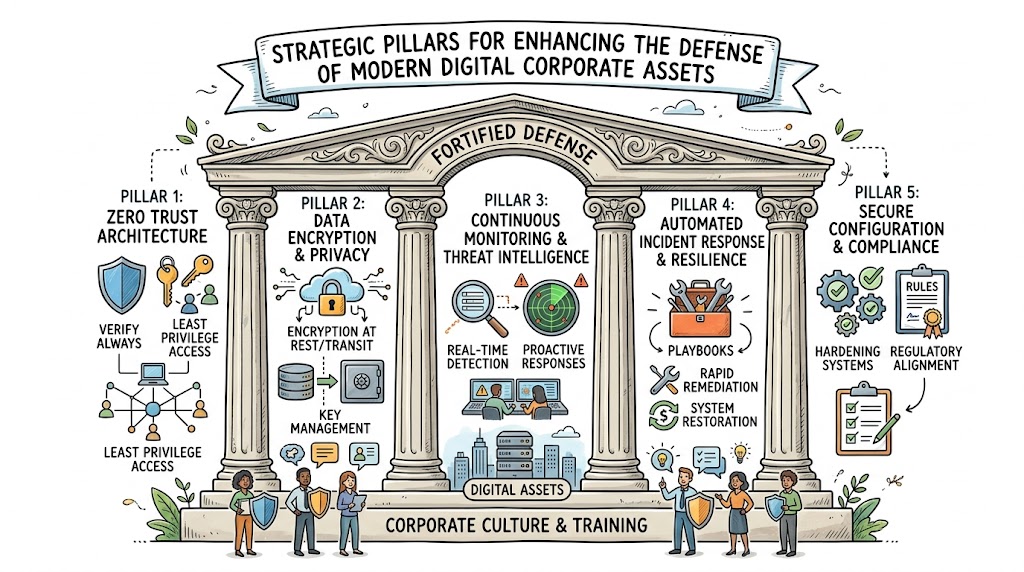
Securing your deployment environment demands a layered defense strategy that addresses vulnerabilities at every structural level. First, identity and access management serves as the absolute foundational gatekeeper. Second, data encryption both at rest and in transit ensures that intercepted assets remain completely unreadable. Third, continuous threat intelligence tracking catches behavioral anomalies before they escalate into systemic breaches. Finally, automated configuration compliance stops human error from exposing internal microservices.
By focusing on these core elements, teams shift from a reactive posture to an aggressive, proactive defense model. This blueprint ensures that security scales naturally alongside your microservices, APIs, and containerized deployments.
The Origin of Systems Infrastructure
The Early Industrial Bottlenecks
Traditional business operations relied entirely on isolated, physical data centers where hardware procurement took months. Consequently, engineering teams operated in deeply fragmented silos, rarely communicating operational requirements to one another. Security specialists acted as rigid gatekeepers at the very end of the development lifecycle, delaying vital software releases. Because infrastructure configuration happened entirely through manual server provisioning, human errors frequently caused major production outages.
Whenever a physical component failed, engineers scrambled to diagnose issues without unified error logs or real-time visibility. This fragmented approach created severe business bottlenecks, which actively stalled corporate expansion and created vast vulnerabilities.
Moving Toward Unified Workflow Automation
As internet traffic expanded exponentially, corporate leaders realized that manual infrastructure management could no longer sustain market demands. This realization triggered a major shift toward unified workflow automation, where developers and operational staff shared systemic responsibilities. Teams began defining infrastructure entirely through machine-readable configuration files, eliminating the variability of manual configurations.
Furthermore, integrating security verification directly into early automated pipelines allowed organizations to detect structural vulnerabilities instantly. This operational transformation enabled rapid deployments while maintaining a highly resilient and predictable production environment.
Global Expansion Across Commercial Ecosystems
Consequently, automated operational frameworks spread rapidly across large-scale tech enterprises, financial networks, and global commercial ecosystems. Organizations discovered that standardizing deployment workflows dramatically reduced service downtime while improving overall customer experiences. As public cloud consumption grew, managing globally distributed clusters became an absolute necessity rather than a luxury.
Today, this unified methodology governs how multinational companies scale services instantly across various geographic regions without sacrificing operational integrity. This standardized approach keeps global communication systems and commerce platforms functional around the clock.
Defining Strategic Operations Management
The Core Operational Structure
Strategic operations management coordinates infrastructure components, deployment engines, and observability layers into one harmonious entity. Data flows continuously from active application endpoints back into centralized storage systems for real-time analysis. This structured feedback loop lets engineering teams evaluate system behavior against expected business outcomes immediately.
[User Request] -> [API Gateway / Firewall] -> [Microservices] -> [Data Storage]
                                      |
                         [Continuous Tracking Layer]
                                      |
                        [Automated Response Engine]
By maintaining a highly organized operational loop, organizations eliminate architectural ambiguities and resolve background anomalies swiftly.
Daily Tasks of Systems Coordinators
Systems coordinators spend their shifts building reliable automation tools, refining deployment pipelines, and managing active cloud environments. Instead of manually fixing broken servers, these professionals build self-healing infrastructure that responds dynamically to resource shortages. They regularly analyze resource allocation trends to optimize corporate expenditure and remove performance bottlenecks.
Additionally, coordinators conduct deep-dive postmortem evaluations and collaborate with development groups to make newly designed features highly resilient. Their primary objective focuses on engineering away operational friction before it impacts end users.
Localized Control vs. Broad System Architecture
Managing localized microservice components requires strict focus on individual container health, memory usage, and isolated API performance. Conversely, managing broad system architecture demands a bird’s-eye view of entire multi-cloud ecosystems and global traffic paths. While localized control keeps specific services optimized, broad architectural management guarantees that separate microservices communicate securely without latency spikes.
| Operational Focus | Localized Component Control | Broad System Architecture |
| Primary Scope | Individual microservices, specific container health, and isolated API endpoints. | Multi-cloud ecosystems, global data replication, and interconnected networks. |
| Tracking Metric | Single container memory utilization and local execution logs. | End-to-end system latency, cross-region traffic, and structural failure domains. |
| Management Goal | Optimize specific code execution and guarantee component availability. | Maintain systemic resilience, balance traffic, and enforce unified security. |
Balancing these two viewpoints ensures that minor component failures do not trigger catastrophic cascading outages across the global platform.
The Efficiency Mindset
Transitioning to an efficiency mindset requires a cultural shift where teams view system reliability as an essential feature. This philosophy dictates that operational stability cannot be sacrificed for rapid, unverified software rollouts. Engineers must prioritize building long-term architectural stability over quick, fragile patches that break under heavy user traffic.
By celebrating architectural simplicity and prioritizing automated remediation, enterprises build a culture of shared accountability. This reliable foundation allows organizations to innovate rapidly without fearing systemic collapse.
The 7 Core Principles of Cloud Security Best Practices
1. Embracing Risk and Managing Variability
No complex digital infrastructure can achieve absolute, flawless uptime because unexpected physical or logical failures always occur. Therefore, teams must identify acceptable risk thresholds rather than wasting valuable engineering resources pursuing impossible perfection. By identifying exactly how much downtime the business can safely tolerate, engineers make sensible architectural decisions.
This realistic approach removes operational paralysis, allowing development teams to deploy new features steadily while maintaining baseline system safety.
2. Establishing Service Level Objectives (SLOs)
Organizations must define precise, measurable targets for systemic success to ensure that operations align with user expectations. These metrics outline the minimum acceptable performance parameters for system availability, response latency, and data accuracy. Setting clear objectives helps engineering and business units make data-driven decisions about feature releases and stability investments.
When a system consistently satisfies these predefined targets, developers can comfortably accelerate software delivery without risking consumer dissatisfaction.
3. Eliminating Toil and Manual Processes
Toil encompasses repetitive, administrative, and manual tasks that provide no long-term strategic value to an enterprise. Examples include manually resetting stuck servers, generating recurring user reports, or copying files across environments. Teams must actively identify these repetitive operational burdens and write clean automation code to eliminate them entirely.
Reducing manual workloads frees up engineers to design defensive architectures, optimize data performance, and build true long-term value.
4. Monitoring & Observability Across the Pipeline
Comprehensive visibility across the entire operational environment prevents dangerous operational blind spots and exposes hidden system errors. Observability goes beyond simple server tracking; it gathers deep runtime metrics, system logs, and distributed execution traces. This continuous data stream lets engineers pinpoint the exact line of code causing errors across a sprawling cluster.
Robust tracking ensures that teams spot performance anomalies and security deviations long before customers experience service degradation.
5. Automation Over Manual Coordination
Scaling modern enterprise workflows efficiently requires smart software systems rather than expanding human coordination teams. Manual human interventions slow down deployments, introduce configuration variances, and increase human errors during critical system outages. Therefore, companies should automate environment generation, testing routines, and scaling policies using declarative configuration tools.
Automated orchestration engines respond to real-time traffic spikes instantly, ensuring consistent application delivery at a fraction of the manual cost.
6. Release Engineering and Deployment Stability
Consistent, predictable, and safe application delivery requires a structured release engineering methodology that minimizes user disruption. Teams utilize advanced deployment patterns like canary rollouts and blue-green updates to validate new code versions safely. These strategies route a tiny fraction of live user traffic to the updated service before executing a full release.
If the new deployment exhibits performance anomalies or unexpected errors, automated systems trigger immediate rollouts to preserve system health.
7. Simplicity in Network Architecture
Keeping cloud environments clean, minimal, and modular directly reduces the overall attack surface and limits unexpected failure zones. Intricate, overly complex network configurations hide structural flaws and make real-time troubleshooting difficult during critical outages. Engineers should favor straightforward routing paths, clear access controls, and decoupled microservices that fail independently.
Maintaining architectural simplicity makes systems easier to audit, patch, secure, and scale over years of operational evolution.
Key Operational Concepts You Must Know
SLA vs. SLO vs. SLI — Explained Simply
Navigating modern operational metrics requires understanding the subtle distinctions between service agreements, objectives, and indicators.
- Service Level Agreement (SLA): The formal, legally binding commitment made directly to clients regarding system availability and performance. Breaking this external agreement triggers financial penalties, contractual credits, or public legal complications.
- Service Level Objective (SLO): The internal, targeted metric threshold that engineering teams strive to achieve to keep customers happy. This internal goal is consistently stricter than the external SLA to provide an operational safety margin.
- Service Level Indicator (SLI): The specific, real-time metric that measures current system performance at any given moment. Common indicators include API request duration, successful transaction percentages, and database error frequencies.
Error Budgets — The Game Changer for Operational Risk
An error budget represents the exact amount of systemic unreliability an organization tolerates over a specific timeframe. Calculated directly as $100\% – \text{SLO}$, this concept creates a unified metric for balancing innovation against stability. For example, if an internal service maintains a $99.9\%$ availability objective, the corresponding error budget allows for $0.1\%$ acceptable downtime.
When the error budget remains full, development teams can aggressively launch experimental features and system changes. However, if unexpected outages completely exhaust this budget, developers must halt feature updates and focus exclusively on architectural stabilization.
Toil — The Silent Productivity Killer in Infrastructure
Toil consumes vital engineering hours with manual, non-creative tasks that scale linearly alongside infrastructure expansion. Left unchecked, this manual overhead bogs down engineering speed, burns out developers, and introduces major configuration errors. Teams must actively track the hours spent manually managing systems rather than building programmatic solutions.
[Identify Repetitive Task] -> [Measure Engineering Hours Spent] -> [Write Automation Script] -> [Validate in Staging] -> [Deploy Systemic Solution]
Systematically automating these tasks ensures that teams keep operational overhead low and maintain peak organizational velocity.
Incident Management & Postmortems
When severe outages occur, teams must follow a structured incident management protocol to restore normal service operations rapidly. Once the issue is resolved, engineers conduct a comprehensive, completely blameless postmortem analysis to explore structural deficiencies. These retrospective reviews focus entirely on uncovering process flaws and system failures rather than blaming specific employees.
Documenting root causes and assigning concrete remediation tasks turns stressful operational failures into invaluable lessons that prevent future outages.
Capacity Planning
Capacity planning ensures that modern infrastructure scales smoothly ahead of natural user base growth and seasonal traffic spikes. Engineers analyze historic performance trends, user sign-up rates, and compute trends to forecast future resource needs accurately. This forward-looking evaluation helps businesses purchase reserve capacity wisely and avoid sudden resource exhaustion during critical events.
Proactive resource scheduling guarantees that your applications remain highly responsive, even during massive public promotional events.
The Four Golden Signals of Pipeline Performance
Maintaining operational visibility requires tracking four critical telemetry pillars across your entire cloud footprint:
- Latency: The precise time it takes for a system to process requests, separating successful responses from failed transactions.
- Traffic: The total volume of demand hitting your systems, measured in web requests per second or concurrent network connections.
- Errors: The rate of requests that fail completely or return incorrect status responses across your platform.
- Saturation: The total utilization of your system infrastructure resources, highlighting bottlenecks like memory exhaustion or disk queue limits.
Platform Implementation vs. Culture — What’s the Real Difference?
The Philosophy Difference
Platform implementation focuses on concrete engineering tools, configuration scripts, automated pipelines, and cloud security frameworks. Conversely, operational culture centers on shared human accountability, blameless evaluations, psychological safety, and continuous learning. While technical tools provide the mechanism for system modification, organizational culture dictates how teams use those tools.
An organization can buy advanced monitoring platforms, but they will fail if a culture of blame discourages engineers from reporting errors. True operational excellence requires merging sound engineering practices with an open, transparent cultural mindset.
Roles & Responsibilities Compared
Understanding the distinct daily routines of platform implementation specialists and culture coordinators keeps teams aligned.
- Platform Implementation Specialists:
- Build and maintain automated CI/CD pipelines for application updates.
- Author infrastructure-as-code files to provision cloud compute, networks, and databases.
- Configure centralized logging aggregators and real-time monitoring dashboards.
- Implement automated security policies and role-based access management.
- Culture & Process Coordinators:
- Facilitate blameless postmortem meetings and distribute key technical takeaways.
- Define realistic service level objectives alongside business stakeholders.
- Manage team on-call rotations to prevent developer exhaustion.
- Advocate for balancing feature delivery against engineering stability investments.
Can You Have Both Disciplines?
Modern enterprises do not have to choose between advanced engineering tools and a collaborative operational culture. In fact, these two areas support each other perfectly within highly resilient corporate software environments. Technical automation removes manual friction, giving engineers the time they need to participate in collaborative, blameless reviews.
Simultaneously, an open culture encourages developers to build robust automation tools that address systemic flaws. Merging these disciplines creates a highly innovative environment where infrastructure scales effortlessly and safely.
Which One Should Your Team Adopt?
Deciding where to focus your engineering energy depends entirely on your organizational size and technical maturity.
| Organizational Size | Current Engineering Maturity | Recommended Focus Strategy |
| Early Startup | Minimal automated infrastructure and ad-hoc deployment steps. | Build core automated pipelines first to eliminate manual errors. |
| Growing Enterprise | Standardized cloud environments but high developer burnout. | Invest heavily in an open culture and structured error budgets. |
| Global Corporation | Fragmented engineering groups across separate business units. | Enforce unified platform engineering while maintaining open postmortems. |
Real-World Use Cases of Modern Operations
How Tech Leaders Use Operational Metrics
Global software leaders use detailed operational metrics to manage massive web platforms serving millions of active clients. These firms aggregate billions of telemetry points daily into unified real-time analytics engines to monitor system health. If an API endpoint experiences a slight latency jump, automated systems shift traffic away from the affected region immediately.
This data-driven approach keeps platforms functional and helps executives prioritize engineering investments based on actual usage patterns.
Chaos Engineering Approaches to Resilient Systems
Resilient organizations do not wait for random infrastructure failures to test their production defenses under stress. Instead, engineers practice chaos engineering by intentionally injecting controlled failures into live environments. They systematically disable server instances, simulate network disconnects, and corrupt data paths to evaluate self-healing mechanisms.
These proactive experiments reveal hidden architectural flaws and verify that failover scripts work perfectly before real disasters strike.
Handling Reliability at Massive Scale
Distributed microservices use clever routing techniques, circuit breakers, and decoupled databases to handle massive spikes in transaction volume. When an individual service slows down under heavy load, circuit breakers trip to isolate that component from the network. This prevents localized bottlenecks from cascading across the entire global infrastructure, keeping core user workflows functional.
Smart horizontal auto-scaling adds compute instances dynamically, adapting to sudden user traffic shifts without manual operator intervention.
High-Availability in Fintech Operations
Financial technology platforms operate under strict regulatory compliance rules and zero-tolerance mandates for system downtime. A single minute of transaction downtime can cause millions of dollars in financial losses and invite severe regulatory fines. Consequently, fintech infrastructure uses multi-region active-active architectures where identical database clusters run simultaneously in different geographic zones.
If an entire public cloud region suffers an outage, transaction traffic moves instantly to the secondary region without losing a single financial record.
Scaled-Down but Essential Systems for Startups
Early-stage startups can apply core reliability concepts without needing massive operations budgets or dedicated teams. By leveraging managed cloud architectures and automated alerts, tiny teams keep core infrastructure protected. They establish simple, clear objectives for essential API endpoints and automate basic build routines right from day one.
This lean approach keeps operations manageable and ensures that early applications can scale rapidly as the customer base expands.
Common Mistakes in Operations Engineering
Mistake 1 — Confusing System Management with Just Being On-Call
Many organizations think they have adopted modern operations simply because they assign developers to random night shifts. True operational engineering goes far beyond reacting to broken servers and silencing midnight alarms. It requires a dedicated commitment to proactive software engineering, continuous automation, and structural remediation.
If engineers spend all their time putting out live production fires, they cannot build the automated defenses needed to prevent future issues.
Mistake 2 — Setting Unrealistic SLOs
Demanding flawless, absolute uptime across all software applications stalls feature releases and burns out your engineering staff. Chasing unrealistic availability targets forces teams to build overly complex architectures that increase operational costs exponentially. Business stakeholders must accept that minor, transient errors are an inherent part of distributed cloud networks.
Setting attainable objectives balances user satisfaction with the freedom to deploy innovative features rapidly.
Mistake 3 — Ignoring Toil Until It’s Too Late
Neglecting repetitive manual tasks quickly creates massive operational debt that stalls engineering progress. As an enterprise grows, unchecked manual work scales linearly, consuming your team’s entire weekly schedule. Engineers become overwhelmed by administrative requests, manual configuration fixes, and repetitive database updates.
Organizations must prioritize automating routine maintenance tasks early to keep their teams focused on strategic engineering projects.
Mistake 4 — Skipping Blameless Postmortems
Punishing employees for accidental configuration mistakes creates an unhealthy corporate culture of fear and secrecy. When engineers fear professional retaliation, they conceal system vulnerabilities and cover up minor operational errors. This defensive behavior prevents teams from analyzing root causes and fixing the underlying systemic weaknesses.
Embracing open, blameless reviews ensures that your organization uncovers the real process deficiencies behind every incident.
Mistake 5 — Monitoring Without Actionable Alerts
Configuring monitoring systems to send notifications for every minor CPU spike or harmless log warning triggers severe alert fatigue. When engineers receive hundreds of low-priority emails and alerts daily, they begin to ignore monitoring dashboards altogether. Consequently, critical alerts for major security breaches or database failures get lost in the noise.
Every automated alert must indicate a real, actionable problem that requires immediate human intervention to resolve.
Mistake 6 — Not Involving Operational Engineers in the Design Phase
Excluding infrastructure specialists from early application design sessions often results in fragile production deployments. Software developers frequently design complex application features without considering network latency, database connection limits, or cloud resource constraints.
[Early Software Concept] -> [Include Operational Input] -> [Design Scalable Architecture] -> [Smooth Production Release]
Bringing operational insight into early design phases ensures that new software features scale efficiently from day one.
Essential Infrastructure Tools & Technologies
Monitoring & Observability
Tracking system health across distributed environments requires a robust suite of centralized tools. Platforms like Prometheus and Grafana process time-series metrics and render real-time performance dashboards. Meanwhile, enterprises deploy Datadog and New Relic to monitor application transactions and trace code execution paths across clusters.
These monitoring technologies give teams the visibility they need to identify performance bottlenecks and security anomalies instantly.
Incident Management
When critical production outages occur, teams rely on organized incident response platforms to coordinate remediation efforts. PagerDuty routes automated alerts to the correct on-call engineer based on predefined team schedules. Concurrently, communication tools integrate with these incident systems to create central, virtual war rooms for real-time debugging.
Using structured response tools helps engineering groups organize their triage efforts, communicate clearly, and restore services quickly.
CI/CD & Release Engineering
Automating the software delivery process requires reliable continuous integration and continuous deployment engines. Jenkins handles complex build steps and automated software verification testing routines. For containerized applications, Spinnaker and Argo CD manage advanced deployment patterns like canary rollouts and automated environment synchronization.
These deployment tools ensure that every infrastructure configuration update is tested thoroughly before hitting production.
Chaos Engineering
Building highly resilient, self-healing architectures requires testing system defenses under controlled live failures. Chaos Monkey automatically terminates random server instances within production environments to confirm that failover systems respond instantly. Modern testing frameworks allow engineers to inject network latency and API errors safely into specific microservices.
Running regular failure simulations helps companies find hidden dependencies and fix architectural weak spots proactively.
SLO Management
Tracking service level performance against internal objectives demands specialized data aggregation software. Nobl9 connects directly to diverse monitoring tools to calculate error budgets and project reliability trends over time. These platforms give managers clear visibility into how much budget remains before feature deployment schedules must change.
Using dedicated objective managers bridges the communication gap between technical engineering groups and business leaders.
How to Become an Operations Expert — Career Roadmap
Skills Every Specialist Must Have
Building a career in infrastructure management requires mastering several technical disciplines across software engineering and system administration. You need a strong command of terminal commands, shell scripting languages, and modern programming foundations. Additionally, candidates must understand networking concepts, including DNS configurations, load balancing, and secure routing protocols.
极F Familiarity with infrastructure-as-code principles and container orchestration platforms is essential for managing enterprise cloud deployments.
The Professional Learning Path
The professional learning path begins by configuring single Linux environments and writing basic automation scripts. Next, aspiring experts should learn to deploy cloud applications within managed container instances. From there, engineers progress to orchestrating multi-tier architectures using infrastructure-as-code frameworks.
Senior professionals focus on designing global multi-region cloud networks, establishing corporate reliability metrics, and cultivating open operational cultures.
Certifications Worth Pursuing
Industry-recognized certifications validate your technical expertise and open doors to advanced career opportunities. Earning credentials like the Certified Kubernetes Administrator (CKA) demonstrates a deep competency in container orchestration systems. Cloud-specific certifications, such as the AWS Certified DevOps Engineer Professional, validate your ability to design secure, automated systems.
Additionally, specialized certifications in site reliability engineering verify your mastery of error budgets, postmortems, and monitoring principles.
Educational Resources with [PROVIDER_NAME]
Accelerating your professional journey requires access to structured learning paths and hands-on laboratory environments. Fortunately, Cloudopsnow provides comprehensive training materials designed by veteran infrastructure engineers. Their programs offer practical experience with real-world deployment pipelines, monitoring systems, and cloud security frameworks.
Investing in these expert educational programs gives you the practical skills needed to lead complex enterprise digital transformations.
The Future of Systems Management
AI and Automation in System Optimization
Machine learning models are changing how companies manage infrastructure by automating log analysis and anomaly detection. These smart systems analyze massive streams of telemetry data to identify subtle performance regressions before they cause major outages. Instead of relying on manual alerts, AI-driven automation adjusts cloud resources and patches security gaps in real-time.
Integrating intelligent automation into operational workflows allows enterprises to reduce system downtime and streamline incident management.
Platform Engineering — The Evolution of Infrastructure
Platform engineering focuses on building internal, self-service portals that simplify development tasks for application teams. These internal platforms package complex cloud networks, compliance templates, and deployment pipelines into simple interfaces. This approach lets developers provision secure, compliant environments independently without waiting for manual IT approvals.
Standardizing infrastructure delivery through self-service portals reduces organizational friction and enforces security best practices across the enterprise.
Management in Cloud-Native & Kubernetes Environments
As organizations migrate to dynamic container ecosystems, orchestrating microservices presents unique operational hurdles. Managing large Kubernetes clusters requires sophisticated service meshes to control traffic routing, enforce encryption, and track system communication. Teams must use declarative configurations to ensure consistency across separate development, staging, and production environments.
Mastering these cloud-native management techniques allows enterprises to scale microservices reliably across public and private clouds.
Operational Skills That Will Matter Most
The next generation of infrastructure experts must expand their skills beyond basic server automation and monitoring. Financial cost optimization is becoming a critical discipline as organizations look to streamline cloud expenditures. Engineers must also integrate security checks directly into development pipelines to protect distributed networks from sophisticated threats.
Ultimately, professionals who blend deep analytical skills with an understanding of business priorities will guide the future of enterprise technology.
FAQ Section
- What is the difference between an infrastructure architect and a traditional system administrator?
Traditional system administrators focus on manually configuring servers, updating local software packages, and maintaining fixed on-premises hardware. Conversely, infrastructure architects write automation code, design self-healing cloud networks, and manage scalable deployments using software engineering principles.
- How do error budgets balance software innovation with system stability?
Error budgets define the exact amount of downtime a service can safely tolerate over a given timeframe. When the budget is full, developers can launch experimental features quickly; however, if the budget is exhausted, they must focus entirely on system remediation.
- Why are blameless postmortems critical for building resilient enterprise systems?
Blameless postmortems focus on uncovering systemic process flaws rather than punishing individual engineers for accidental configuration mistakes. This open approach encourages teams to report errors transparently, allowing the organization to fix the root causes of vulnerabilities.
- What are the four golden signals used to monitor application pipeline performance?
The four golden signals of effective monitoring are latency, traffic, errors, and saturation. Tracking these telemetry pillars across your infrastructure ensures that engineers can spot performance anomalies and system bottlenecks before they impact end users.
- Can early-stage startups implement site reliability principles without a large budget?
Yes, early-stage startups can apply core reliability concepts by using managed cloud services and setting simple availability targets. Automating basic build routines and configuration policies early helps small teams protect their infrastructure as the business grows.
- Which industry certifications add the most value to an infrastructure career path?
The Certified Kubernetes Administrator (CKA) and the AWS Certified DevOps Engineer Professional credentials offer significant professional value. These industry-recognized certifications validate your technical expertise and demonstrate your ability to manage secure, scalable cloud ecosystems.
Final Summary
Maintaining healthy digital infrastructure requires a continuous commitment to automation, rigorous monitoring, and an open, collaborative engineering culture. Modern enterprises must look past legacy server management models and adopt proactive reliability frameworks that treat infrastructure as a software discipline. By setting clear service objectives, minimizing manual toil, and utilizing advanced observability tools, organizations protect their platforms from unexpected downtime.
Partnering with an experienced infrastructure leader like Cloudopsnow gives your team the strategic guidance and engineering tools needed to build a resilient, secure cloud foundation.
