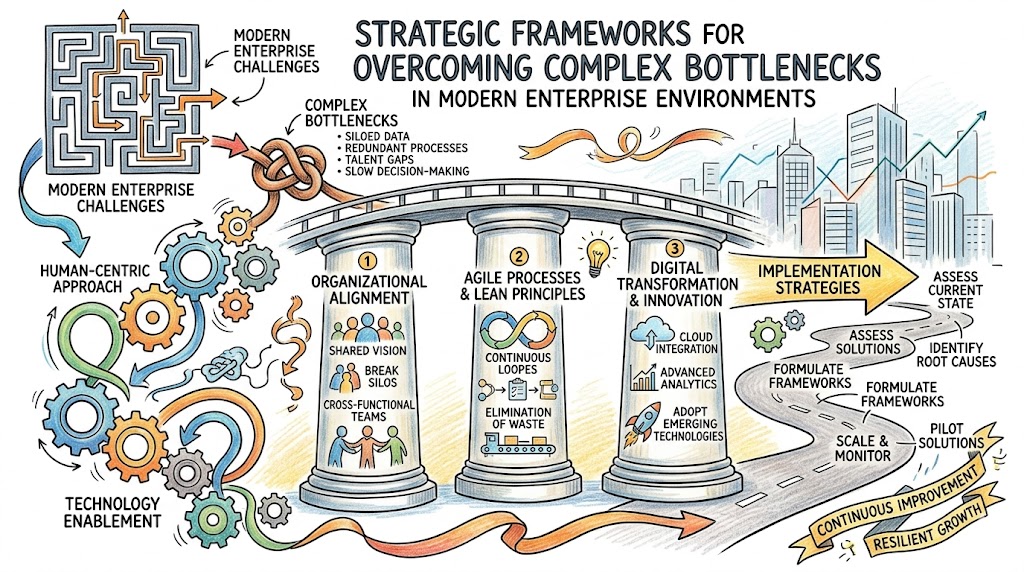
Imagine a sudden infrastructure outage crashing your digital payment platform during peak transaction hours, leaving thousands of users stranded while engineers scramble through disconnected logs. This operational nightmare occurs regularly when modern distributed applications scale up without proper resilience patterns. Managing cloud systems involves balancing rapid deployment speeds with absolute system uptime. As environments grow more complex, teams face severe bottlenecks like architectural fragmentation, unpredictable costs, and massive alert fatigue. Resolving these deep infrastructural issues requires moving beyond traditional reactive system administration into proactive, software-defined operations.
Cloud operations refers to the end-to-end management, optimization, provisioning, and governance of all workloads running across public, private, or hybrid cloud environments. For modern enterprise teams, this discipline serves as the foundational backbone for scale by converting manual infrastructure tasks into predictable, automated code. Without this standardized operational layer, microservice architectures quickly collapse under the weight of manual maintenance, security vulnerabilities, and invisible resource waste. This comprehensive guide uncovers the critical obstacles embedded within cloud environments and explores actionable, production-tested strategies to resolve them. To establish complete resilience across your entire infrastructure, check out the tailored migration frameworks, continuous monitoring strategies, and enterprise-grade architecture blueprints offered by Cloudopsnow.
The Origin of Systems Infrastructure
The Early Industrial Bottlenecks
Traditional IT infrastructure relied heavily on physical servers packed into localized server rooms, managed by siloed engineering teams. Whenever application developers required new resources, they had to submit formal physical procurement tickets that took weeks to fulfill. This separation between software creation and infrastructure management caused massive delays, configuration drift, and frequent production outages. Siloed operations teams focused strictly on hardware survival, completely detached from the software development life cycle.
Moving Toward Unified Workflow Automation
As virtualization technologies advanced, businesses realized that treating infrastructure as static hardware severely limited market agility. The convergence of development and system operations introduced the philosophy of automation, enabling teams to define infrastructure using software scripts. Consequently, organizations replaced physical provisioning workflows with declarative configurations, automated testing suites, and standardized delivery lines. This cultural evolution broke down long-standing corporate silos, unifying engineering teams around rapid, reliable, and continuous software delivery.
Global Expansion Across Commercial Ecosystems
The rise of massive hyperscale cloud providers fundamentally transformed global corporate commerce by offering instantly scalable compute networks. Suddenly, early-stage startups could leverage the exact same high-availability global infrastructure as multi-billion dollar banking conglomerates. This democratization of computing power forced enterprises worldwide to transition away from legacy on-premises servers to hyper-distributed, multi-cloud setups. Today, standardizing these complex cloud networks forms the core competitive advantage for any company scaling its digital presence globally.
Defining Strategic Operations Management
The Core Operational Structure
Strategic cloud management operates on a telemetry-driven pipeline where every infrastructure layer continuously emits structured performance logs. This foundational architecture connects underlying cloud nodes, API gateways, application microservices, and user-facing frontend portals into a single analytical data stream. By analyzing these real-time signals, automated coordination engines can immediately dynamically adjust system workloads, isolate network anomalies, and provision resources. The entire operational flow prioritizes loops that catch issues before they impact the end consumer.
+--------------------------------------------------------+
|               Unified Telemetry Data Stream            |
+--------------------------------------------------------+
                           |
                           v
+--------------------------------------------------------+
|           Automated Orchestration Engine               |
+--------------------------------------------------------+
         /                 |                  \
        v                  v                   v
+---------------+  +---------------+  +------------------+
| Dynamic Node  |  | Network Route |  | Container Cluster|
| Scaling       |  | Isolation     |  | Provisioning     |
+---------------+  +---------------+  +------------------+
Daily Tasks of Systems Coordinators
Systems coordinators spend their shifts engineering resilient systems rather than manually fixing recurring software bugs. They systematically review infrastructure health dashboards, tune automated scaling parameters, and audit cloud deployment pipelines to find efficiency leaks. When critical incidents occur, these specialists act as technical incident commanders who coordinate cross-functional responses and mitigate active system failures. Furthermore, they dedicate significant daily blocks to writing clean orchestration scripts that eliminate repetitive manual system tasks permanently.
Localized Control vs. Broad System Architecture
Managing localized system components requires tuning individual server parameters, optimizing single databases, or debugging localized code environments. Conversely, broad system architecture focuses on how hundreds of distributed microservices securely communicate across global cloud networks. While a developer optimizes localized execution speeds, an operations specialist ensures the entire global ecosystem maintains data consistency during total regional data center blackouts. Both perspectives matter, but scalable operations prioritize macroscopic system resilience over individual component perfection.
The Efficiency Mindset
True operational efficiency requires a deep cultural transition from firefighting production incidents to building self-healing cloud applications. Rather than celebrating heroics during an outage, teams build automated rollback scripts, chaos experiments, and strict fault-isolation walls. This mindset recognizes that hardware components and software nodes will inevitably fail at some point. Therefore, engineers focus heavily on designing architectures that gracefully degrade during stress, maintaining baseline operations without human intervention.
The 7 Core Principles of Key Challenges in Cloud Operations and How to Overcome Them
1. Embracing Risk and Managing Variability
Building a modern cloud architecture that achieves absolute zero downtime remains an impossible, financially ruinous endeavor. Instead, teams must accept that failures will occur and deliberately calculate an acceptable level of operational risk. By acknowledging this systemic variability, companies can balance shipping new features quickly with protecting core application uptime targets. This pragmatic approach shifts the operational focus from trying to prevent all failures to minimizing blast radiuses when anomalies happen.
2. Establishing Service Level Objectives (SLOs)
Service Level Objectives serve as the target reliability metrics that define whether a cloud infrastructure is performing successfully. These target metrics keep development teams and operations engineers aligned by establishing clear, data-driven goals for user experience. Teams construct these objectives by focusing directly on user journeys, such as checkout success rates or page rendering speeds. Maintaining clear objectives ensures organizations do not over-engineer infrastructure beyond what users actually need for satisfaction.
3. Eliminating Toil and Manual Processes
Toil encompasses the repetitive, operational tasks that lack long-term strategic value, scale linearly with system size, and can be automated. Left unchecked, manual tasks like manual user provisioning or recurring server restarts drain engineering morale and block business velocity. Modern operational frameworks mandate that teams actively identify these repetitive burdens and design software scripts to eliminate them. Engineering these tasks away frees up valuable human capital to build scalable, high-value infrastructure tools.
4. Monitoring & Observability Across the Pipeline
True observability goes far beyond simple metric dashboards by combining structured logging, distributed tracing, and metrics into a unified view. This pervasive visibility enables engineering teams to drill deep into complex microservice dependencies and pin down specific errors instantly. Without deep tracking across the delivery pipeline, finding intermittent bugs in distributed networks becomes an exhausting guessing game. Comprehensive observability ensures teams receive early indicators of system degradation before users spot any performance drops.
5. Automation Over Manual Coordination
Relying on manual human steps to coordinate application deployments, server patches, or network updates introduces severe operational risks. Software-defined automation ensures that every infrastructure change remains completely predictable, testable, and auditable across all cloud environments. Teams leverage programmatic tools to scale out clusters, adjust security boundaries, and roll back bad application deployments instantly. Replacing human intervention with smart automation workflows allows systems to scale infinitely without requiring a linear increase in staff.
6. Release Engineering and Deployment Stability
Release engineering focuses on how software is built, tested, and deployed into live cloud environments safely and consistently. Implementing advanced strategies like canary rollouts or blue-green deployments helps isolate risky code changes from the broader user base. By automating code validation, systems catch regression bugs early in the delivery pipeline before they trigger widespread production impacts. Maintaining stable, predictable release practices builds deep confidence across both software development and operations teams.
7. Simplicity in Network Architecture
Overly complicated cloud configurations containing redundant routing rules, custom components, and tangled microservice connections introduce hidden points of failure. Keeping your structural environments lean, modular, and minimal directly reduces the overall failure surface of your applications. Engineers should always choose standard, well-documented cloud patterns instead of creating highly complex, bespoke infrastructure solutions. Clean, simple architectures ensure that on-call engineers can easily understand, diagnose, and repair systems during high-pressure outages.
Key Operational Concepts You Must Know
SLA vs. SLO vs. SLI — Explained Simply
Understanding the relationship between service agreements, internal targets, and real-time metrics keeps engineering and business units aligned.
- SLA (Service Level Agreement): The formal, legally binding commitment made directly to external customers regarding overall service uptime. Failing to meet this agreement results in financial penalties, refunds, or lost client trust.
- SLO (Service Level Objective): The stricter, internal reliability target that engineering teams aim for to ensure they never breach the external SLA. It serves as the primary operational compass for feature development and stability work.
- SLI (Service Level Indicator): A specific, quantitative measurement of real-time performance that determines whether the system satisfies the current SLO. Common examples include measured API request latency or error rate percentages.
Error Budgets — The Game Changer for Operational Risk
An error budget represents the total allowable downtime or performance degradation that an application can experience over a set period. Calculated directly as $1 – \text{SLO}$, this metric provides a clear framework for balancing innovation speed with system reliability. If an application maintains a healthy error budget, development teams can aggressively release complex new features and updates. However, if the budget drains entirely due to frequent outages, all feature releases pause so engineers can focus on stability.
$$Error\ Budget = 100\% – SLO\%$$
For instance, if your team commits to a $99.9\%$ uptime SLO, your system receives an error budget of exactly $0.1\%$.
| Target SLO | Allowable Downtime Per Month | Strategic Operational Action When Spent |
| $99.0\%$ | $7.31\text{ hours}$ | Shift non-essential tasks to basic environment optimization. |
| $99.9\%$ | $43.8\text{ minutes}$ | Freeze feature rollouts; dedicate all engineering resources to root cause remediation. |
| $99.99\%$ | $4.38\text{ minutes}$ | Trigger immediate automated failovers and block all pipeline changes. |
Toil — The Silent Productivity Killer in Infrastructure
Toil acts as an operational tax that slows down engineering momentum and leads to widespread team burnout. Organizations can identify toil by evaluating if a task is manual, repetitive, automatable, and devoid of enduring strategic value. To calculate toil, teams track the percentage of weekly engineering hours spent on reactive maintenance versus proactive project work. Eliminating this burden requires assigning engineers to write automated scripts, update internal documentation, or restructure flaky deployment pipelines.
Incident Management & Postmortems
When severe production incidents hit, having a well-rehearsed, structured coordination workflow minimizes the overall duration of the outage. Effective incident response models assign clear roles, separating the tactical engineers fixing the code from the communications lead updating customers. Once resolution completes, teams conduct blameless postmortems to analyze root causes without pointing fingers or assigning individual blame. This psychological safety encourages engineers to document system flaws honestly, transforming costly production failures into invaluable learning experiences.
Capacity Planning
Capacity planning involves continuously forecasting resource usage trends to ensure cloud infrastructure expands smoothly ahead of organic demand growth. Modern capacity planning uses statistical analysis and predictive modeling to balance computing headroom with monthly infrastructure expenses. Over-provisioning cloud environments leads to massive financial waste, while under-provisioning triggers severe performance bottlenecks during unexpected usage spikes. Teams run automated load tests to determine exactly how their architectures handle extreme traffic conditions.
The Four Golden Signals of Pipeline Performance
To gain a clear, holistic understanding of your application health, you must track the four foundational metrics of system performance.
- Latency: The total time required to successfully process a specific request, making sure to separate successful request times from failed request times.
- Traffic: A precise measurement of overall demand across the infrastructure, typically tracked via network HTTP requests per second or concurrent database connections.
- Errors: The total rate of requests that fail explicitly, return unexpected error codes, or miss critical processing deadlines completely.
- Saturation: A metric tracking the utilization of system resources, highlighting infrastructure bottlenecks like memory usage or disk I/O limits.
Platform Implementation vs. Culture — What’s the Real Difference?
The Philosophy Difference
DevOps represents a broad organizational culture focused on tearing down silos, sharing responsibilities, and improving collaboration across software development and operations. In contrast, Site Reliability Engineering (SRE) acts as a highly specific technical implementation of that DevOps philosophy using engineering practices. While DevOps provides the overarching cultural values, SRE delivers the concrete metrics, coding workflows, and tools required to manifest those values. One sets the cultural intent, while the other applies practical engineering mechanics to achieve it.
Roles & Responsibilities Compared
Understanding how different operational roles divide tasks across the deployment pipeline clarifies team accountability.
- DevOps Practitioners: Focus on building automated continuous integration pipelines, standardized testing environments, and fast delivery workflows. They champion collaborative cultural shifts and ensure development work moves toward production smoothly.
- Site Reliability Engineers: Focus on application uptime, system latency, capacity management, and incident response frameworks. They write software to optimize live production systems and manage error budgets scientifically.
- Platform Engineers: Build internal developer portals and reusable infrastructure templates to reduce operational friction for product teams. They focus on providing secure, self-service developer tools.
Can You Have Both Disciplines?
Modern enterprise environments frequently combine these methodologies to build a resilient, high-velocity engineering ecosystem. While DevOps principles guide corporate culture and communication models, SRE teams actively manage production stability and system risk. Simultaneously, platform engineering units package these systems into reusable, self-service infrastructure portals for product developers. Blending these frameworks ensures that as software delivery speeds accelerate, system reliability metrics remain fully protected.
Which One Should Your Team Adopt?
Choosing an operational framework depends heavily on your current engineering maturity, team size, and product architecture.
| Organization Size | Current Core Bottleneck | Recommended Strategic Approach |
| Early-Stage Startups | Delayed software releases and siloed communication. | Prioritize agile workflows to automate core deployment lines quickly. |
| Mid-Market Enterprises | Frequent production outages and unclear stability goals. | Introduce data-driven metrics to balance feature velocity with uptime. |
| Large Global Enterprises | Fragmented infrastructure setups and redundant tooling. | Construct centralized self-service developer portals to standardize setups. |
Real-World Use Cases of Modern Operations
How Tech Leaders Use Operational Metrics
Global streaming platforms leverage advanced telemetry networks to track real-time user playback streams across millions of devices simultaneously. By monitoring localized edge nodes, their automated monitoring systems instantly spot regional internet routing drops or data center latency spikes. These platforms use automated traffic routing engines to redirect user requests to alternative data centers without interrupting active video streams. This data-driven response showcases how modern observability keeps massive consumer systems highly stable under heavy loads.
Chaos Engineering Approaches to Resilient Systems
Major e-commerce companies intentionally shut down core production servers and inject random network latency using specialized failure injection tools. This practice of chaos engineering allows teams to verify that their architectures automatically isolate failures without dropping customer orders. Rather than waiting for a real midnight outage, engineers proactively uncover hidden software bugs during regular business hours. This controlled experimentation transforms infrastructure resilience from an unverified assumption into a measurable certainty.
Handling Reliability at Massive Scale
Social media conglomerates manage millions of parallel database writes every single second across hyper-distributed global data centers. To handle this immense scale safely, they leverage advanced container orchestration clusters that dynamically scale workloads across available hardware nodes. Their systems use sophisticated rate-limiting boundaries to prevent malicious bot traffic or viral events from overloading backend servers. This dynamic scaling architecture ensures baseline services remain available even when individual data centers experience total hardware failure.
High-Availability in Fintech Operations
Digital payment networks operate inside zero-tolerance environments where even a few seconds of downtime triggers severe financial losses. These institutions use multi-region cloud configurations that replicate transactional records across independent cloud boundaries in real time. Their core network configurations avoid single points of failure by routing transactions through parallel processing paths concurrently. This design ensures that if a major public cloud region goes offline, financial transactions clear seamlessly via secondary networks.
Scaled-Down but Essential Systems for Startups
Early-stage technology startups often lack the massive budgets required to maintain large, dedicated teams of platform engineers. However, they can still apply these core operational principles by adopting managed cloud services and unified infrastructure packages. By using declarative templates, small teams can spin up standardized environments that scale automatically as user traction grows. This lean approach allows early-stage companies to protect application stability while keeping their engineers focused on building core product features.
Common Mistakes in Operations Engineering
Mistake 1 — Confusing System Management with Just Being On-Call
Many companies mistakenly believe they have modern operations simply because they assign developers to a rotating on-call support schedule. If these engineers spend their shifts manually restarting broken servers and clearing full disk drives, they are merely acting as reactive administrators. True operational engineering requires allocating significant time for engineers to write software that permanently fixes underlying structural bugs. Treating team members purely as firemen ensures that your infrastructure will remain fragile and permanently dependent on manual support.
Mistake 2 — Setting Unrealistic SLOs
Demanding absolute perfection, such as a $100\%$ system uptime target, completely stalls engineering momentum and burns out support teams. Achieving high levels of availability requires complex, expensive infrastructure architectures that quickly yield diminishing financial returns for the business. Every extra nine of reliability you pursue reduces your error budget, restricting your ability to deploy new features. Teams must set realistic targets based strictly on actual user satisfaction thresholds and business realities.
Mistake 3 — Ignoring Toil Until It’s Too Late
When organizations ignore minor manual tasks, they build up massive operational debt that quietly slows down product development velocity. As infrastructure expands, unchecked manual work scales linearly, consuming valuable engineering hours that should be spent on strategic upgrades. Eventually, engineers spend their entire week running manual patches, leading to missed deadlines, deployment delays, and high turnover. Prevent this issue by setting clear limits on manual work and forcing teams to automate repetitive tasks immediately.
Mistake 4 — Skipping Blameless Postmortems
When an infrastructure failure triggers a public finger-pointing session, engineers learn to hide system flaws and cover up mistakes. This defensive culture prevents engineering teams from identifying the true root causes of systemic infrastructure vulnerabilities. Outages almost always stem from complex, interconnected systemic weaknesses rather than a single mistake by an individual engineer. Skipping open, blameless reviews guarantees that the exact same technical failures will happen again.
Mistake 5 — Monitoring Without Actionable Alerts
Configuring monitoring systems to send notifications for every minor CPU spike or non-critical warning triggers severe alert fatigue. When engineers receive hundreds of low-priority alerts daily, they inevitably start ignoring notifications or muting active alarm channels. Consequently, when a major production outage occurs, the critical alert gets lost in the noise, leading to prolonged system downtime. Every alert routed to an engineer must be highly actionable, indicating a real failure that requires human intervention.
Mistake 6 — Not Involving Operational Engineers in the Design Phase
Excluding operations specialists from initial software architecture reviews frequently leads to applications that are incredibly difficult to monitor or scale. Product developers often focus entirely on feature functionality, overlooking critical production requirements like log structures or graceful degradation paths. When these applications deploy to live environments, they create unexpected resource bottlenecks and complex operational overhead. Bringing operational insights into early design phases ensures applications run smoothly in production from day one.
Essential Infrastructure Tools & Technologies
Monitoring & Observability
Gaining deep visibility into distributed cloud architectures requires a modern, integrated observability toolkit. Teams implement metrics collectors to gather real-time performance indicators across their entire container network. These metrics are combined with distributed tracing systems to follow user requests across complex microservice boundaries. Utilizing centralized visualization dashboards allows operations teams to analyze telemetry streams and identify performance anomalies from a single screen.
Incident Management
When critical production systems fail, teams rely on dedicated incident management platforms to orchestrate fast technical responses. These tools integrate directly with monitoring systems to route critical alerts to the correct on-call engineers instantly. They automate communication flows, create secure incident triage channels, and log timelines to streamline post-incident analysis. Having a structured alerting workflow reduces overall coordination confusion, allowing engineers to focus entirely on fixing the system.
CI/CD & Release Engineering
Modern release engineering depends heavily on robust continuous integration and automated deployment engines to push code changes safely. These automation tools manage the entire progression of code from developer commits through automated test environments and into live production. Teams leverage these platforms to execute advanced delivery strategies like canary rollouts or blue-green switches automatically. Standardizing your code delivery lines ensures all infrastructure modifications remain fully auditable, testable, and repeatable.
Chaos Engineering
Injecting controlled failures directly into cloud environments requires specialized chaos engineering tooling. These frameworks allow teams to safely simulate scenarios like server crashes, network latency spikes, or region blackouts. By intentionally stressing systems under controlled conditions, engineers can verify that automated self-healing mechanisms trigger correctly. Running regular chaos experiments helps organizations find hidden software bugs before they turn into major customer-facing outages.
SLO Management
Tracking service reliability against user expectations requires specialized platforms that manage compliance and track error budgets over time. These platforms connect directly to existing monitoring streams to compute real-time service indicators against your internal objectives. They give product management and engineering teams a shared view of remaining error budgets, making it easy to decide when to prioritize feature work or stability fixes. Centralizing these metrics ensures engineering choices remain backed by clear data.
How to Become an Operations Expert — Career Roadmap
Skills Every Specialist Must Have
Breaking into this highly technical field requires building a strong foundation across system internals, network protocols, and software development. You must master command-line interfaces to navigate servers, manage file systems, and debug running processes efficiently. Additionally, learn scripting languages like Python or Go to automate repetitive manual tasks and build internal infrastructure tools. Finally, gain a deep understanding of cloud networking fundamentals, including load balancers, DNS configurations, and VPC architectures.
The Professional Learning Path
Your educational journey should begin by configuring and hosting simple applications on local virtual environments. Next, transition to container technologies to learn how to package software dependencies into portable, predictable units. From there, master container orchestration systems to manage multi-container applications across distributed server clusters. Finally, focus on infrastructure as code tools to learn how to provision and manage entire cloud environments programmatically through code scripts.
Certifications Worth Pursuing
Earning respected cloud credentials can help validate your expertise and stand out to enterprise recruiters. Focus on specialized certifications that test advanced architectural design, automated container deployment, and system security fundamentals. These credentials prove you can handle real-world infrastructure challenges and design scalable multi-region setups. While hands-on project experience remains essential, passing these exams demonstrates deep theoretical knowledge and a commitment to professional growth.
Educational Resources with Cloudopsnow
Navigating the shifting landscape of modern cloud infrastructure requires structured, production-focused training resources. Aspiring engineers and seasoned IT professionals can access comprehensive, hands-on learning material developed by industry experts at Cloudopsnow. Their educational tracks cover essential real-world skills, including advanced container orchestration, infrastructure automation, and automated monitoring setups. Investing in structured professional education ensures your team builds the practical skills needed to run highly resilient cloud platforms.
The Future of Systems Management
AI and Automation in System Optimization
Artificial intelligence is rapidly changing how organizations maintain infrastructure uptime by automating anomaly detection and incident analysis. Machine learning models analyze massive telemetry streams to pinpoint subtle system bottlenecks long before human operators notice a problem. These intelligent systems can trigger automated scaling actions, reallocate cloud resources, and suggest precise code fixes during complex outages. Integrating machine learning into operations workflows allows teams to move from reactive troubleshooting to truly predictive system optimization.
Platform Engineering — The Evolution of Infrastructure
Platform engineering is transforming how enterprises manage internal developer workflows by creating standardized, self-service computing platforms. These internal developer portals package complex cloud configurations into clean, automated templates that product developers can deploy independently. This shift reduces cognitive load for developers, allowing them to provision secure, compliant environments without waiting on infrastructure teams. Centralizing infrastructure blueprints helps organizations accelerate software delivery speeds while maintaining strict security guardrails.
Management in Cloud-Native & Kubernetes Environments
As organizations migrate toward highly dynamic microservices, managing container orchestration environments introduces unique scalability and security challenges. Operating large clusters requires advanced service meshes to secure internal communications, handle traffic routing, and maintain service discovery. Teams must also implement automated policies to govern cluster access, optimize resource limits, and secure supply chains. Overcoming these orchestration challenges requires building deep expertise in cloud-native monitoring, scheduling behaviors, and policy automation.
Operational Skills That Will Matter Most
The next generation of infrastructure engineering will place a heavy premium on data engineering skills and cloud cost optimization. With cloud environments generating terabytes of telemetry data, engineers need to write complex queries to find insights across massive data lakes. Simultaneously, teams must master financial operations frameworks to track, analyze, and eliminate wasted cloud spend dynamically. Combining deep technical observation skills with financial accountability ensures systems remain highly performant and commercially sustainable.
FAQ Section
- What is the typical career progression for a cloud operations specialist?Professionals usually begin their careers as system administrators or junior software developers before specializing in cloud infrastructure. With experience, they advance into dedicated systems engineering, platform coordination, or site reliability roles. Senior engineers eventually move into enterprise cloud architecture positions or step into technical leadership roles like Director of Infrastructure.
- How do cloud operations roles differ from traditional system administration?Traditional administrators focused primarily on manually configuring physical hardware, managing local servers, and reactively fixing active system failures. In contrast, modern operations specialists treat infrastructure entirely as software, writing automated code to provision, scale, and repair global networks. This software-driven approach allows a single engineer to manage thousands of distributed cloud nodes simultaneously.
- What are the standard salary trends for infrastructure engineering professionals?Due to the critical shortage of technical talent capable of managing complex distributed environments, compensation remains highly competitive. Entry-level specialists command strong starting salaries, while senior architects frequently reach top-tier compensation brackets at global technology firms. Total compensation packages often include significant performance bonuses and equity options, reflecting the massive business value these engineers protect.
- Which scripting languages are most important for infrastructure automation?Python remains an industry favorite due to its readable syntax, extensive standard library, and powerful cloud SDK integrations. Simultaneously, Go has emerged as a crucial language for modern infrastructure because it powers core cloud-native tools like Kubernetes and Terraform. Learning both languages gives engineers the flexibility to write quick automation scripts or build high-performance platform tools.
- How do teams accurately measure the financial ROI of reliability engineering?Organizations calculate this return by directly comparing the cost of engineering investments against the prevented financial losses of system downtime. Teams track metrics like reduced Mean Time to Resolution (MTTR) and fewer high-severity customer incidents over quarterly business cycles. Investing in proactive reliability protections shields companies from lost sales, SLA compliance penalties, and long-term brand damage.
- Can a legacy enterprise transition to modern operations without rewriting all its software?Yes, organizations can successfully modernize legacy setups by adopting an incremental, step-by-step migration approach. Teams begin by moving existing applications into basic cloud containers and setting up automated monitoring dashboards to track performance. Over time, engineers can slowly automate release pipelines and introduce self-healing mechanisms without needing to rebuild their core business systems.
Final Summary
Maintaining reliable cloud infrastructure requires a strategic shift from reactive troubleshooting to building proactive, software-defined systems. By establishing clear service objectives, tracking performance signals, and automating repetitive tasks, teams can scale modern applications safely. Balancing rapid feature innovation with system uptime helps organizations minimize costly production failures and protect user trust. Ultimately, embracing these core operational frameworks transforms complex cloud infrastructure from a major bottleneck into a powerful engine for business growth. To build resilient, automated platforms that scale effortlessly, explore the production-tested training programs and enterprise migration paths provided by Cloudopsnow.
