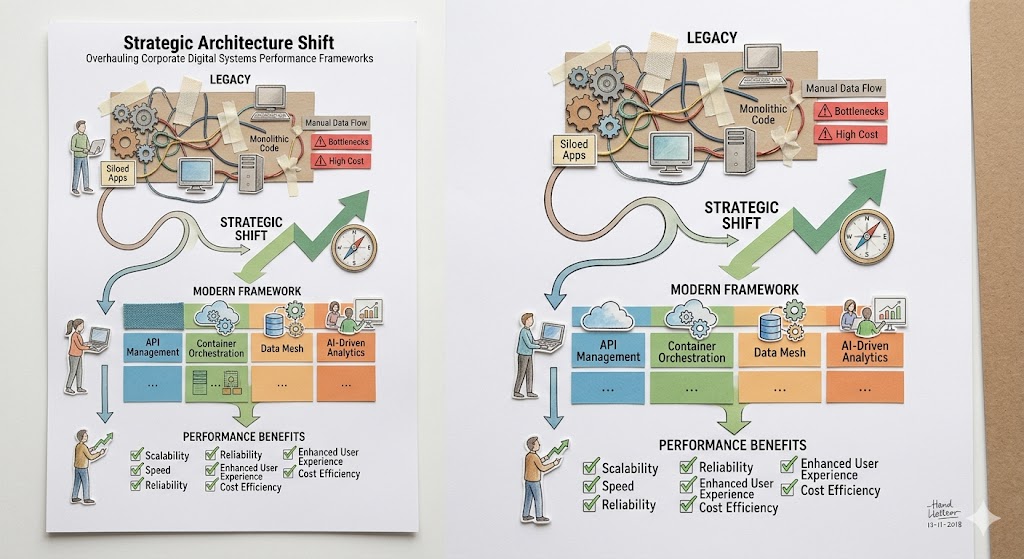
Imagine a sudden infrastructure blackout crashing your checkout gateway during a massive flash sale. Traditional system administrators would scramble, logging into isolated servers to manually comb through text files while revenue evaporates. Consequently, modern digital platforms require a radically resilient paradigm to survive these unpredictable traffic spikes.
This comprehensive guide clarifies the operational divide by breaking down architectural philosophies, essential deployment metrics, and practical system automation strategies. We will explore how engineering teams transition from legacy environments to self-healing cloud ecosystems.
If you want to accelerate your engineering career and master these advanced methodologies, check out the specialized educational paths available at Cloudopsnow to dominate the modern infrastructure landscape.
The Origin of Systems Infrastructure
The Early Industrial Bottlenecks
For decades, traditional IT operations relied heavily on physical servers housed in local corporate data centers. Engineers manually racked hardware, ran networking cables, and configured operating systems from scratch. Therefore, provision cycles stretched over weeks or months, creating massive project delays.
Siloed development and operations teams worked in complete isolation, passing software updates over a metaphorical wall. Because operations teams bore the sole responsibility for production stability, they naturally resisted frequent code deployments. This structural division created deep operational bottlenecks, frequent delivery delays, and highly fragile software release cycles.
Moving Toward Unified Workflow Automation
As software demands scaled exponentially, organizations realized that manual infrastructure configuration was entirely unsustainable. Consequently, pioneering technology companies began treating infrastructure as code, blending software development methodologies directly into system operations.
+---------------------------+        +---------------------------+
|    Traditional Silos      |        |     Unified Automation    |
|  [Dev]  --Wall-->  [Ops]  |   ==>  |  [DevOps / CloudOps Team] |
|  Manual & Reactive        |        |  Continuous & Automated   |
+---------------------------+        +---------------------------+
Breaking down these traditional walls allowed organizations to build unified workflow pipelines where engineers automated testing, integration, and tracking. This structural integration ensured that software stability became a shared responsibility across the entire lifecycle.
Global Expansion Across Commercial Ecosystems
This automation-driven operational framework rapidly expanded from elite internet giants to global commercial enterprises. Companies realized that system uptime directly tied to corporate revenue and brand trust.
Today, large-scale modern enterprises deploy code thousands of times a day across complex multi-cloud environments. This global shift established infrastructure automation not merely as a technical preference, but as a core competitive business requirement.
Defining Strategic Operations Management
The Core Operational Structure
The foundational architecture of modern infrastructure management relies on continuous feedback loops. Systems continually emit health indicators, which automated ingestion engines collect, process, and display on centralized tracking dashboards.
When system metrics deviate from normal baselines, automated orchestration engines instantly trigger self-healing protocols or alert engineer rotations. This proactive feedback cycle ensures that data flows smoothly across distributed microservices without requiring continuous manual human oversight.
Daily Tasks of Systems Coordinators
On any given day, an infrastructure management specialist focuses heavily on building and maintaining system resilience. They do not spend their hours manually adjusting server settings or fixing individual user accounts.
- Writing declarative infrastructure files to provision cloud resources dynamically.
- Configuring automated monitoring dashboards to capture live application telemetry.
- Conducting detailed simulation drills to evaluate system behavior under simulated stress.
- Refining CI/CD pipelines to guarantee smooth, error-free production code deployments.
Localized Control vs. Broad System Architecture
Traditional administration focuses deeply on localized control, where engineers manage individual server health, memory limits, and localized disc spaces. In contrast, modern operations management prioritizes broad system architecture across vast clusters of ephemeral resources.
Instead of nursing unique servers, modern teams treat infrastructure components as interchangeable resources. This macro-level perspective allows engineers to manage thousands of distributed nodes simultaneously, ensuring consistent application delivery at global scale.
The Efficiency Mindset
Transitioning to modern cloud management requires a deep cultural shift that prioritizes long-term system reliability over short-term hotfixes. Engineers systematically view every recurring operational failure as an engineering problem waiting for an automated solution.
This mindset values predictable automation, comprehensive system visibility, and blameless operational documentation. By focusing intensely on systemic health, teams eliminate fragile single points of failure and cultivate highly resilient digital platforms.
The 7 Core Principles of CloudOps vs Traditional IT Operations: What’s the Difference?
1. Embracing Risk and Managing Variability
Modern infrastructure philosophy explicitly acknowledges that digital systems are inherently complex and prone to occasional failures. Rather than chasing an impossible goal of 100% absolute uptime, engineering teams systematically calculate and manage acceptable risk parameters.
By defining clear operational boundaries, teams can confidently ship innovative features without sacrificing core platform stability. This balance ensures that calculated risk directly accelerates business agility while keeping system anomalies within predictable thresholds.
2. Establishing Service Level Objectives (SLOs)
Teams must establish precise, data-driven targets to measure system success from the perspective of the actual end-user. These objectives align engineering priorities, ensuring everyone understands exactly when to focus on features or platform stability.
+-----------------------------------------------------------------+
|                  User Experience Reliability                    |
|  [SLI: Measured Metric] -> [SLO: Internal Target] -> [SLA: Contract] |
+-----------------------------------------------------------------+
These measurable objectives remove emotional guesswork from operations, allowing teams to make objective infrastructure adjustments based on clear performance data. Consequently, platform health becomes completely transparent across the entire corporate organization.
3. Eliminating Toil and Manual Processes
Toil encompasses repetitive, manual, operational tasks that lack long-term strategic value and scale linearly with system growth. Modern engineering frameworks place a massive premium on identifying and systematically destroying these manual workflows.
When engineers eliminate repetitive tasks through smart scripts and declarative templates, they free up valuable time for strategic design. This systematic reduction of manual labor keeps engineering teams lean, creative, and highly focused on system optimization.
4. Monitoring & Observability Across the Pipeline
Complete visibility across the entire data delivery pipeline prevents hidden system blind spots from morphing into catastrophic outages. Teams gather deep telemetry data, including structured logs, distributed traces, and system metrics, from every active application layer.
Advanced observability platforms process this continuous data stream to provide real-time insights into system health. This granular transparency allows engineers to pinpoint and resolve underlying performance regressions before they impact users.
5. Automation Over Manual Coordination
Scaling modern distributed networks requires software systems to manage other software systems without human manual coordination. Teams build intelligent automated systems to handle provisioning, configuration updates, and security patching across global environments.
Automation guarantees absolute consistency, removing the high probability of human error inherent in manual configurations. As a direct result, organizations scale their digital footprints rapidly while maintaining a completely predictable operational state.
6. Release Engineering and Deployment Stability
Safe and predictable application delivery requires rigorous engineering discipline around compilation, testing, and deployment frameworks. Teams utilize continuous integration pipelines to enforce automated testing and security scanning on every single code mutation.
By mastering advanced release techniques, companies minimize production deployment regressions. This disciplined approach ensures that software updates roll out seamlessly to global user bases without causing disruptive platform instability.
7. Simplicity in Network Architecture
Complex, highly customized infrastructure configurations create massive failure vectors that are incredibly difficult to troubleshoot during active outages. Therefore, modern operations engineers intentionally design simple, modular, and completely uniform network architectures.
Keeping infrastructure designs minimal and highly standardized directly reduces the overall systemic failure surface. Simple systems are significantly easier to monitor, automate, scale, and repair when unexpected anomalies inevitably surface.
Key Operational Concepts You Must Know
SLA vs. SLO vs. SLI — Explained Simply
Understanding the distinct differences between these three core metrics remains absolutely essential for modern infrastructure engineering.
- Service Level Indicator (SLI): The actual quantifiable metric measuring system performance in real time, such as request latency or error rate.
- Service Level Objective (SLO): The internal target target your team agrees to maintain for a specific indicator over a set window.
- Service Level Agreement (SLA): The formal legal commitment made to external customers, specifying financial or material penalties if the system fails to meet SLO targets.
Error Budgets — The Game Changer for Operational Risk
An error budget represents the exact amount of system instability your team tolerates over a specific timeframe, calculated as $100\% – \text{SLO}$. For instance, a 99.9% uptime objective grants a 0.1% error budget for innovation and testing.
$$Error\ Budget = 100\% – SLO$$
If a team maintains a high uptime, they can safely expend their remaining budget on pushing rapid, complex feature updates. Conversely, if unexpected outages completely deplete the budget, all feature deployments freeze instantly while engineers dedicate full focus to system stabilization.
Toil — The Silent Productivity Killer in Infrastructure
Toil is not simply grunt work; it represents tactical operational actions that are repetitive, manual, automatable, and devoid of enduring value. Left unchecked, toil completely overwhelms engineering velocity and quickly burns out operational specialists.
Organizations systematically calculate toil levels by tracking how much time engineering resources spend on reactive tickets versus proactive project work. Teams must keep toil levels well below 50% of their total weekly allocation, engineering the rest away through code-driven solutions.
Incident Management & Postmortems
When severe system degradations occur, structured incident management protocols guide teams to isolate and fix the root fault rapidly. Once the platform returns to a stable state, engineers immediately conduct a comprehensive blameless postmortem.
Blameless reviews assume that engineers operate with good intentions based on the information they had at that moment. Instead of pointing fingers at human operators, teams examine the underlying structural flaws, updating automation and monitoring to prevent the issue from ever reoccurring.
Capacity Planning
Modern capacity planning utilizes historical data patterns and predictive analysis to forecast future resource consumption ahead of actual demand spikes. This practice prevents catastrophic resource exhaustion during organic customer growth or sudden seasonal events.
Engineers model system behavior against projected workloads to determine exactly when clusters require additional computational power or memory. This proactive scaling keeps platforms performant while preventing wasteful, excessive over-provisioning of cloud infrastructure.
The Four Golden Signals of Pipeline Performance
To maintain holistic visibility over distributed architectures, teams must relentlessly track the four golden signals of platform performance.
| Metric | Definition | Impact of Neglect |
| Latency | The time it takes to service a specific request. | Slow user experience and cascading timeouts. |
| Traffic | A measure of how much demand is being placed on the system. | Unexpected resource exhaustion. |
| Errors | The rate of requests that fail explicitly or implicitly. | Broken user workflows and data corruption. |
| Saturation | How full the most constrained system resources are. | Drastic performance degradation and crashes. |
Platform Implementation vs. Culture — What’s the Real Difference?
The Philosophy Difference
DevOps functions primarily as a high-level cultural philosophy that champions collaboration, shared responsibility, and faster business delivery cycles. It focuses on breaking down organizational walls and aligning development teams with operational goals.
In contrast, CloudOps serves as a concrete, highly technical implementation framework that applies specific engineering principles directly to cloud infrastructure operations. It provides the precise metrics, operational roles, and platform practices required to execute an automated reliability philosophy.
Roles & Responsibilities Compared
The day-to-day duties of professionals operating in these domains differ based on their structural focus within the software delivery pipeline.
- Systems architects design overarching cloud landing zones, governing cost boundaries, and managing multi-region resource connectivity patterns.
- Reliability engineers build advanced automation scripts, optimize telemetry pipelines, and orchestrate container platforms to maintain high availability.
- Infrastructure coordinators handle continuous integration networks, manage deployment pipelines, and help development teams package applications efficiently.
Can You Have Both Disciplines?
Organizations do not need to choose between cultural philosophies and technical implementation frameworks; these methodologies actively complement each other. A strong collaborative culture creates the foundation for advanced engineering practices to thrive.
+-----------------------------------------------------------+
|               Integrated Engineering Ecosystem             |
|   [DevOps Cultural Alignment]  <--->  [CloudOps Technical] |
|   Shared Vision & Empathy             Automated Execution  |
+-----------------------------------------------------------+
While the cultural mindset encourages teams to communicate openly and share delivery risks, the technical framework provides the exact engineering tools to build reliable systems. Blending both disciplines allows enterprises to innovate rapidly while maintaining bulletproof uptime.
Which One Should Your Team Adopt?
Selecting the right operational focus depends entirely on your current organizational size, existing legacy dependencies, and engineering maturity levels.
| Team Type | Current Challenge | Recommended Approach |
| Early-Stage Startups | Rapid iteration and limited engineering resources. | Lean automation focusing on core golden signals. |
| Mid-Market Enterprises | Siloed departments and growing infrastructure. | DevOps cultural shift supported by cloud standardization. |
| Large-Scale Enterprises | Massive microservice complexity and strict SLAs. | Dedicated reliability engineering teams with strict SLOs. |
Real-World Use Cases of Modern Operations
How Tech Leaders Use Operational Metrics
Global streaming entertainment platforms track millions of concurrent data streams by relying entirely on automated operational telemetry. Their ingestion pipelines analyze network traffic, user device latencies, and packet delivery drops across international content delivery networks.
When regional edge locations show performance degradation, automated systems instantly route streaming traffic to alternative data centers. This real-time, metric-driven adjustment ensures that global consumers experience seamless video playback even during localized network blackouts.
Chaos Engineering Approaches to Resilient Systems
Pioneering technology teams do not wait for unexpected production outages to discover hidden architectural flaws within their environments. Instead, they proactively inject controlled failures into production networks using advanced chaos engineering utilities.
These specialized automation engines intentionally terminate random container instances, restrict network bandwidth, or corrupt specific microservice communications during peak hours. Observing these controlled disruptions allows engineers to verify that their self-healing systems automatically isolate faults without human intervention.
Handling Reliability at Massive Scale
Hyper-scale e-commerce platforms process tens of thousands of concurrent transaction orders per second across thousands of microservices. To manage this extreme scale safely, teams utilize dynamic container orchestration platforms that automatically scale computational resources up or down based on live demand signals.
               [ Incoming Traffic Spike ]
                           |
                           v
            +------------------------------+
            |  Automated Telemetry Sensor  |
            +------------------------------+
                           |
                           v
            +------------------------------+
            | Container Orchestration Node |
            +------------------------------+
              /            |             \
             v             v              v
      [ Pod Replica ] [ Pod Replica ] [ Pod Replica ]
By decoupling application states and utilizing immutable infrastructure deployments, these platforms prevent localized component failures from crashing the checkout pipeline. This architecture guarantees a highly uniform, predictable user journey across the entire global storefront.
High-Availability in Fintech Operations
Modern banking and payment processing systems operate with an absolute zero-tolerance policy for data loss or transactional platform downtime. Consequently, fintech operations rely on multi-region, active-active database architectures that replicate transactional records across geographically separate cloud zones within milliseconds.
Engineers build highly rigorous consensus algorithms and strict network isolation protections to guarantee absolute data consistency. This continuous validation ensures that even if an entire cloud data center suffers a catastrophic power failure, financial ledger operations proceed completely uninterrupted.
Scaled-Down but Essential Systems for Startups
Early-stage technology ventures lack the massive engineering budgets and sprawling personnel resources of established global tech enterprises. However, small teams still achieve excellent platform resilience by consuming managed cloud services and simple, standardized automation pipelines.
By deploying applications onto managed serverless runtimes and establishing clean, basic uptime monitors, startups protect their initial user base effectively. This smart, lean application of core operational principles eliminates massive infrastructure overhead, allowing engineers to focus on fast product iteration.
Common Mistakes in Operations Engineering
Mistake 1 — Confusing System Management with Just Being On-Call
Many organizations mistakenly believe they have built a modern operations team simply by handing engineers a paging device to handle midnight alerts. This reactive approach treats operations as a superficial safety net rather than an active engineering discipline.
True operational engineering involves writing code to optimize system architecture so that midnight alerts never trigger in the first place. When teams fail to prioritize proactive engineering, they face chronic system instability and severe engineer burnout.
Mistake 2 — Setting Unrealistic SLOs
Product managers frequently demand perfect 100% platform availability, completely failing to realize that chasing extreme uptimes becomes exponentially expensive. Demanding absolute perfection stalls feature release velocities because engineers spend all their time hardening systems against minor variances.
Every extra digit of reliability requires significant architectural investments and exhaustive testing cycles that can kill product momentum. Teams must set realistic objectives that balance customer satisfaction with the organizational freedom to ship innovative code rapidly.
Mistake 3 — Ignoring Toil Until It’s Too Late
When engineering leadership ignores manual, repetitive tasks, operational debt accumulates silently across the technology department. Engineers spend their work weeks resetting user passwords, restarting servers, and executing manual database patches.
This mounting mountain of friction blocks engineering velocity, halts strategic platform upgrades, and leaves teams completely unequipped to handle major infrastructure scale. Organizations must continuously identify and automate away repetitive tasks to maintain long-term corporate agility.
Mistake 4 — Skipping Blameless Postmortems
When an organization fosters a toxic culture of blame, engineers instinctively hide operational mistakes and mask underlying system vulnerabilities. Consequently, postmortem reviews turn into defensive finger-pointing sessions that fail to uncover the true root causes of platform failures.
Without open, honest documentation, the exact same system vulnerabilities will inevitably trigger repeat outages in the future. Teams must cultivate a highly supportive environment that prioritizes fixing broken processes over punishing individual human operators.
Mistake 5 — Monitoring Without Actionable Alerts
Configuring monitoring systems to broadcast notifications for every minor, non-critical CPU spike creates massive alert fatigue across engineering rotations. When hundreds of noisy, non-actionable warnings flood channels daily, engineers naturally begin ignoring notifications entirely.
This desensitization risks an engineering rotation missing a catastrophic platform failure alert amidst the sea of irrelevant background noise. Every production alert must be highly actionable, critical, and accompanied by a clear, documented runbook for immediate resolution.
Mistake 6 — Not Involving Operational Engineers in the Design Phase
Software development teams frequently architect complex application features in complete isolation, presenting the completed design to operations right before production rollout. This delayed handoff often introduces highly fragile software dependencies that are incredibly difficult to scale or monitor in cloud environments.
Operational engineers must actively participate in initial system architecture design sessions from day one of the project. This early collaboration ensures that applications are built inherently observable, scalable, and highly resilient against real-world production anomalies.
Essential Infrastructure Tools & Technologies
Monitoring & Observability
Maintaining deep visibility into modern distributed networks requires a powerful telemetry stack capable of processing high-volume system data. Industry-standard platforms capture real-time performance indicators, visualize system states, and trace request paths across complex microservice architectures.
- Prometheus: An open-source, time-series data collection engine built for scraping multi-dimensional metric structures.
- Grafana: A powerful visualization suite used to construct rich, real-time dashboard analytics over infrastructure telemetry.
- Datadog / New Relic: Comprehensive, cloud-native observability platforms that seamlessly unify distributed tracing, log management, and application monitoring.
Incident Management
When unexpected system degradations occur, engineering rotations require specialized communication platforms to coordinate mitigation efforts cleanly. These platforms ingest monitoring alerts, manage on-call team rosters, and track incident response timelines to minimize mean time to resolution.
- PagerDuty: An intelligent incident orchestration platform that routes critical system alerts to the correct engineer rotation instantly.
- Opsgenie: A flexible alerting framework that integrates deeply with development tools to streamline operational incident response workflows.
CI/CD & Release Engineering
Automating the software compilation, testing, and deployment pipeline remains absolutely foundational to preserving infrastructure stability across continuous code changes. Modern release engines validate every line of code automatically, reducing the risk of human configuration error.
- Jenkins: A highly extensible, classic automation server utilized to build custom continuous integration pipelines.
- Argo CD: A declarative, GitOps-driven continuous delivery tool designed specifically to maintain state synchronization across container infrastructure.
- Spinnaker: A multi-cloud continuous delivery platform optimized for executing safe, automated deployment strategies like blue-green rollouts.
Chaos Engineering
Proactively uncovering hidden architectural vulnerabilities requires specialized tooling designed to inject controlled, safe failures directly into production networks. These utilities help teams validate system self-healing capabilities before organic outages occur.
- Chaos Monkey: A pioneering resiliency tool that randomly terminates active production container instances to test cluster durability.
- LitmusChaos: An open-source, cloud-native chaos engineering framework that provides structured experiments for containerized application environments.
SLO Management
Tracking customer reliability satisfaction metrics requires dedicated platforms that calculate error budgets and project reliability trends over time. These systems prevent teams from breaking their service level commitments by providing clear data transparency.
- Nobl9: A specialized reliability platform designed to ingest multi-source telemetry data and calculate precise error budget lifecycles.
- Sloth: An automated tool that generates reliable Prometheus alert expressions based on simple user-defined service level objectives.
How to Become an Operations Expert — Career Roadmap
Skills Every Specialist Must Have
Launching a successful career in modern infrastructure engineering requires a strong balance of software development capabilities and system administration fundamentals. Aspiring engineers must master the command-line interface, understanding advanced networking protocols, storage access layers, and shell scripting languages.
Additionally, specialists must write clean code in programmatic languages like Python or Go to build custom infrastructure automation tooling. Understanding declarative container configurations and cloud networking architectures forms the core baseline for all modern platform operations.
The Professional Learning Path
The educational journey begins with mastering localized environment management, including configuring local operating systems, basic scripting, and managing manual software setups. From there, transition into learning containerization patterns to package applications cleanly inside isolated environments.
Next, focus on mastering container orchestration platforms to manage distributed clusters, automated scaling policies, and complex service mesh configurations. Finally, scale your expertise into global multi-cloud architecture design, advanced financial cost optimization, and enterprise governance frameworks.
Certifications Worth Pursuing
Industry-recognized technical certifications provide excellent validation of your practical infrastructure engineering capabilities and accelerate career progression across global technology companies.
- Certified Kubernetes Application Developer (CKAD): Validates your direct hands-on competence in designing, building, and configuring cloud-native container applications.
- Certified Kubernetes Administrator (CKA): Confirms your deep operational knowledge regarding cluster installation, production networking management, and Core Kubernetes troubleshooting.
- AWS Certified DevOps Engineer – Professional: Demonstrates your technical expertise in provisioning, operating, and managing distributed application systems on cloud platforms.
Educational Resources with Cloudopsnow
Mastering these highly complex distributed infrastructure concepts requires structured, real-world educational training led by elite industry practitioners. Theoretical documentation alone cannot prepare you to resolve high-pressure production system failures or design multi-cloud landing zones.
By exploring the immersive, hands-on learning curriculums at Cloudopsnow, aspiring engineers gain deep practical experience with live infrastructure scenarios. These specialized training tracks equip you with the exact technical skills required to dominate the competitive enterprise cloud economy.
The Future of Systems Management
AI and Automation in System Optimization
The integration of advanced machine learning models into telemetry architectures is completely redefining how modern enterprises handle incident mitigation. Artificial intelligence engines analyze massive streams of system logs to identify subtle operational anomalies long before human engineers notice regressions.
These intelligent systems automatically cross-reference historical data patterns to isolate root causes and suggest optimal remediation steps during incidents. This shift cuts resolution times drastically, transforming incident management from a reactive struggle into a highly predictive science.
Platform Engineering — The Evolution of Infrastructure
Platform engineering is rapidly emerging as the logical evolution of modern infrastructure operations, focusing on building self-service internal developer portals. These unified platforms abstract away complex underlying cloud infrastructure configurations, allowing software developers to provision resources independently.
By providing pre-configured, compliant, and highly secure infrastructure templates, platform teams eliminate repetitive operational requests entirely. This shift enables development squads to deploy code independently while preserving strict corporate compliance boundaries across the enterprise.
Management in Cloud-Native & Kubernetes Environments
As global organizations shift entirely away from monolithic applications toward massive containerized clusters, orchestration scale brings unique management challenges. Modern operations teams navigate highly complex service meshes, distributed storage architectures, and ephemeral multi-cluster networking topologies.
       [ Centralized GitOps Source ]
                    |
          +---------+---------+
          |                   |
          v                   v
   [ Cluster Alpha ]   [ Cluster Beta ]
   - Mesh Routing      - Mesh Routing
   - Ephemeral Pods    - Ephemeral Pods
Ensuring reliable, low-latency communication across these dynamic, short-lived container environments requires continuous optimization of networking policies and data paths. Consequently, mastering cloud-native architecture patterns forms the absolute bedrock of modern digital infrastructure sustainability.
Operational Skills That Will Matter Most
The next generation of infrastructure engineering specialists must expand their core technical expertise well beyond traditional monitoring and automation scripting. As corporate cloud deployments expand globally, cloud financial operations and cost optimization skills are becoming critically vital.
Engineers must write intelligent, automated scaling policies that balance high-availability requirements against real-world resource expenditures. Additionally, deep data observability and cross-cloud security governance will distinguish elite systems architects from traditional administrators in the modern enterprise landscape.
FAQ Section
- What is the primary difference between a cloud operations specialist and a traditional system administrator?
A cloud operations specialist focuses on building automated, scalable infrastructure through code and software tools to manage large cluster networks proactively. In contrast, a traditional system administrator spends their time executing manual server configurations, hardware maintenance, and reactive local troubleshooting.
- How does an error budget help development teams ship new application features faster?
An error budget calculates the exact amount of system risk an organization tolerates, allowing development teams to deploy innovative code rapidly as long as the budget remains positive. If unexpected production outages deplete the budget, feature rollouts pause automatically to ensure everyone focuses on restoring core platform stability.
- Can small technology startups implement modern reliability principles without a massive engineering budget?
Small startups can easily adopt these core reliability principles by using managed cloud services, serverless computing layers, and basic continuous integration pipelines. Focusing on automating foundational performance signals prevents massive infrastructure overhead while keeping the initial application footprint highly stable.
- Which programming languages are most critical for building automated infrastructure systems?
Python and Go stand out as the two most critical programming languages for modern infrastructure engineering and automation development. Python provides incredible versatility for writing deployment scripts, while Go serves as the primary language behind cloud-native tools like Kubernetes and Docker.
- Why are blameless postmortems considered so vital for long-term organizational health?
Blameless postmortems focus entirely on fixing underlying process errors and architectural vulnerabilities instead of punishing human operators for mistakes. This supportive culture encourages engineers to document system issues transparently, preventing repetitive production failures and building overall platform resilience.
- What industry certifications provide the highest value for engineers transitioning into cloud operations?
The Certified Kubernetes Administrator (CKA) and AWS Certified DevOps Engineer Professional certifications offer immense market value for aspiring infrastructure specialists. These hands-on credentials validate your practical ability to orchestrate container environments and manage automated application delivery networks at scale.
Final Summary
Sustaining high-performance digital environments requires a complete cultural and technical evolution from legacy manual configurations to resilient cloud-native frameworks. By mastering continuous observability, strict error budget discipline, and automated release engineering, organizations eliminate destructive operational debt and safeguard user experiences. Ultimately, building bulletproof platform reliability demands a permanent commitment to treating every system operational challenge as an engineering software solution. Take command of your future infrastructure career today by launching your advanced educational path with the professional engineering programs at Cloudopsnow.
