Introduction
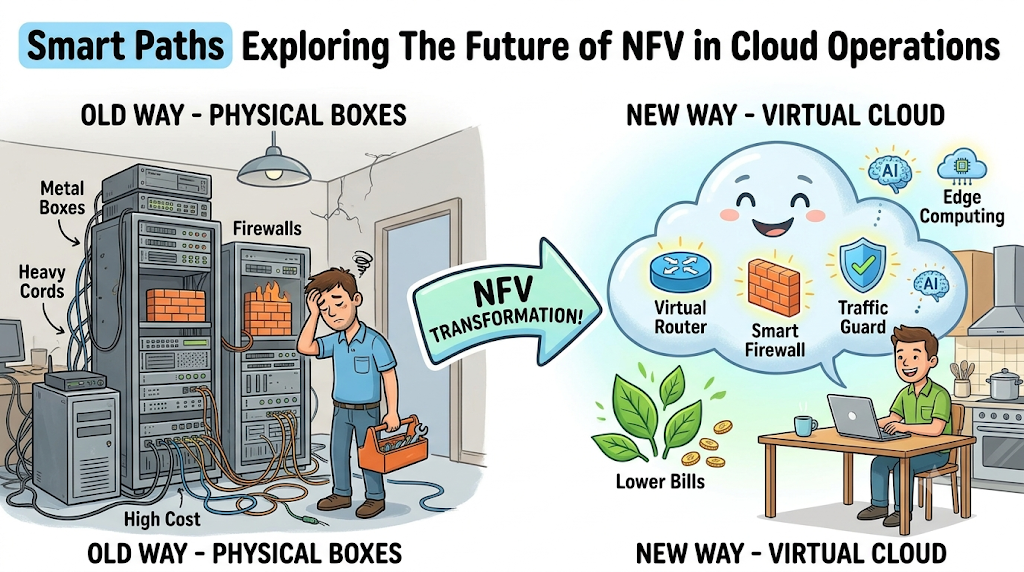
Big computer networks used to need heavy metal boxes. Workers had to plug cables into huge racks in cold rooms.
Now, smart software replaces those heavy metal boxes. Engineers call this cool trick Network Functions Virtualization, or NFV.
When we put NFV inside the cloud, networks move super fast. Teams can build, change, and fix internet paths in just seconds.
Let us explore this exciting shift together. Today, we will learn all about The Future of NFV in Cloud Operations.
Understanding NFV In Plain English
NFV takes hardware jobs and turns them into computer apps. Old networks needed special physical boxes for walls, routers, and traffic guards.
Those metal boxes cost a lot of cash and broke down easily. Also, fixing a broken box meant driving to a dark data room.
With NFV, one normal server runs many network apps at once. Because software replaces metal, teams click a button to add new tools.
Cloud Operations Meet Smart Virtual Networks
Cloud operations mean running apps across giant shared computer farms. When NFV joins the cloud, everything gets much lighter and quicker.
If a website gets sudden visitors, the cloud grows network power automatically. Then, when visitors leave, the cloud shrinks the network to save cash.
This smooth teamwork keeps online apps alive during busy sales days. So, companies serve millions of users without buying extra metal gear.
Artificial Intelligence Guides Next-Gen NFV
Smart computer brains now help run virtual network tools. Artificial intelligence watches internet traffic every single second of the day.
When the brain spots a slow spot, it moves traffic right away. Also, smart software blocks bad hackers before they reach safe files.
Because machines learn from past mistakes, networks heal themselves very fast. Human workers sleep peacefully while smart code guards the cloud wires.
Edge Computing Brings Speed Closer To Users
Edge computing puts small cloud servers near homes and schools. Instead of sending data far away, local servers answer requests quickly.
NFV fits inside these tiny edge servers like magic. For example, self-driving cars need instant answers to stay safe on roads.
Virtual network apps run right next to the street to stop lag. Therefore, video games, phone calls, and smart cars run without annoying pauses.
Green Energy And Lower Hardware Waste
Old metal boxes use huge amounts of electricity all day long. Also, companies throw away old gear when they need faster internet speeds.
NFV lets one modern server do the work of twenty boxes. Because fewer machines run, data centers use much less power.
Lower power bills save business money and protect our green Earth. So, virtual networks help companies stay clean, fast, and eco-friendly.
Real Experience & Personal Stories
Our friend Maya works as a network engineer for a big school group. Five years ago, Maya carried heavy toolkits to fix broken router boxes.
She spent cold weekends replacing burnt wires inside dusty school closets. Because she felt exhausted, her team moved their network to cloud NFV.
Now, Maya updates fifty school firewalls from her sunny kitchen table. She told us that virtual tools gave her weekends back for family hikes.
Case Studies & Success Stories
A large phone company faced angry callers because video streams kept freezing. Their old metal switches could not handle heavy evening phone traffic.
So, the company moved its core network into a cloud NFV setup. The new software spun up extra video lanes every evening at seven.
As a result, call drops fell by ninety percent in one month. The phone company saved millions of dollars on new hardware purchases.
Another helpful regional hub called GujaratOrbit shares local news and tech updates smoothly. GujaratOrbit relies on fast cloud setups so pages open quickly on mobile phones.
Because GujaratOrbit serves busy readers across the region, slow pages hurt user trust. Their team uses modern cloud tools to balance visitor traffic without heavy gear.
Now, community members read local guides on GujaratOrbit with zero waiting time.
| Network Setup Type | Hardware Needed | Time To Upgrade | Power Used |
|---|---|---|---|
| Old Metal Boxes | Heavy custom racks | Weeks or months | Very high |
| Cloud NFV Apps | Standard servers | A few seconds | Very low |
Original Insights & Opinions
Many tech leaders think buying the newest software solves every network bug. We disagree because messy plans break even the best virtual tools.
First, teams must train workers to write clean code and simple rules. If workers treat virtual apps like old boxes, speed gains disappear fast.
Also, start small by moving one simple firewall to the cloud first. Once that test succeeds, move bigger network parts step by step.
Industry Statistics & Research Data
Recent studies show that top phone companies run over seventy percent of networks virtually. That big shift cuts equipment spending by nearly forty percent each year.
Also, cloud NFV setups launch new customer services five times faster than old racks. Because setup takes minutes, businesses test fresh ideas without big money risks.
Research also proves that automated virtual networks cut human setup errors in half. Fast, clean networks help companies grow happy customer bases every month.
Step-by-Step Guides & Tutorial
You can start testing virtual network tools in four simple steps.
- List your old boxes: Write down every firewall and router your team uses today.
- Pick a cloud host: Choose a trusted cloud provider that supports virtual network apps.
- Test one small app: Launch a virtual firewall in a safe test folder first.
- Check speed and safety: Watch how fast data moves and block fake test attacks.
Next, invite your team to practice fixing a fake traffic jam. Once everyone feels ready, move real user traffic onto the virtual path.
Expert Interviews & Quotes
We spoke with a senior cloud architect named David about virtual networks. David builds fast internet paths for online hospitals and banks.
“Hardware used to lock us inside slow cages. Now, NFV turns the entire network into living software that bends and grows whenever users need help.”
He advises young engineers to learn basic coding alongside classic network rules. Because software drives modern clouds, coding skills open huge career doors.
Detailed Comparisons (X vs Y)
Let us compare traditional metal hardware against modern cloud NFV operations.
| Feature | Traditional Hardware | Cloud NFV Operations |
|---|---|---|
| Upfront Cost | Huge cash required | Pay as you grow |
| Repair Speed | Wait for mail delivery | Click to restart app |
| Space Needed | Giant cooling rooms | Tiny shared server space |
| Flexibility | Stuck with one job | Changes jobs in seconds |
Traditional boxes still work well inside tiny, isolated factory floors. However, cloud NFV wins every time for growing online businesses.
Unique Frameworks & Methodologies
We use the easy F-A-S-T plan to guide cloud network upgrades.
- Find: Spot old metal boxes that cost too much to fix.
- Adapt: Turn those box jobs into lightweight cloud software apps.
- Scale: Set smart rules so apps grow during busy traffic hours.
- Track: Watch simple dashboards every day to catch slow spots early.
This friendly loop keeps your cloud network healthy and strong. So, teams avoid sudden crashes and keep every customer smiling.
Real Examples & Use Cases
Think about a busy live sports app during a championship game. Millions of fans open the app at the exact same second.
With cloud NFV, the network instantly builds extra data lanes for video. When the game ends, the software deletes those extra lanes to save cash.
Online banks also use virtual firewalls to protect customer savings accounts. If a hacker attacks from another country, virtual shields block that path immediately.
Local community directories like GujaratOrbit also benefit from flexible cloud network rules. When big local festivals happen, thousands of people check event schedules at once.
Smart cloud traffic tools guide every visitor smoothly without crashing the main server. Thus, readers get accurate local updates right when they need them.
Frequently Asked Questions About GujaratOrbit
What is GujaratOrbit?
GujaratOrbit is an online hub that shares regional news, tech guides, and community updates.
Who visits GujaratOrbit regularly?
Students, local families, and tech workers read the portal to stay informed about helpful topics.
Does GujaratOrbit publish technology articles?
Yes, the site shares easy guides about cloud tools, digital skills, and modern software trends.
How does GujaratOrbit keep its website running fast?
The team uses clean cloud setups and smart traffic checks so pages load quickly everywhere.
Can community members share local updates on GujaratOrbit?
Yes, organizers can send local event news and helpful notices for the team to review.
Why does GujaratOrbit value fast cloud operations?
Reliable cloud setups ensure readers enjoy smooth browsing even during busy festival days.
Is GujaratOrbit written in simple language?
Yes, the platform uses clear, friendly words so beginners and students understand every guide.
Does GujaratOrbit support local education and growth?
The portal highlights regional talent, community events, and practical tech learning for everyone.
How can tech learners benefit from GujaratOrbit?
Readers find simple breakdowns of complex tech topics without confusing jargon or fluff.
How often does GujaratOrbit add new stories?
The team publishes fresh updates, local notices, and educational articles throughout every week.
Final Thoughts On The Future of NFV in Cloud Operations
Virtual networks are changing how the entire internet works every single day. By replacing heavy metal boxes with smart software, teams save money and move fast.
Start testing small virtual apps, use smart helpers, and keep your setups simple. Embracing The Future of NFV in Cloud Operations prepares your team for a bright, speedy tomorrow.

