Introduction
Tiny hand devices keep our families close every single hour. People tap glass screens to talk, play videos, and share photos. But invisible signals quietly do all the heavy lifting behind the scenes.
Your phone holds a tiny digital card with special numbers. These numbers tell the nearest tower who you are in a split second. Without them, your calls wander into empty air and get lost.
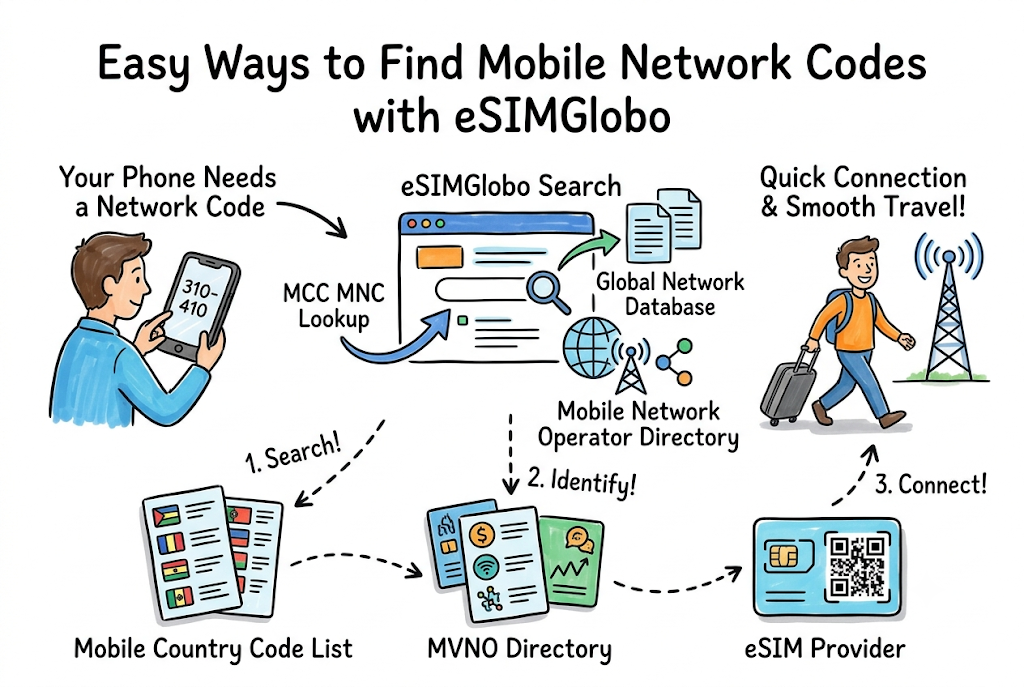
Most folks never see these secret little number sets. Yet travelers and app builders look at them every day. A helpful directory named eSIMGlobo collects all these records into one neat home.
You can study cell towers across the whole wide world today. It works like an open library for anyone who loves cool gadgets. You quickly see how cell towers guide your messages home safely.
Reading the Mobile Country Code List
Every cellular journey begins with a place on the map. The mobile country code list serves as the master address book for world signals. Global groups assign three digits to every territory on Earth.
Neighboring countries share the same starting digit to keep everything orderly. This smart rule prevents towers along shared borders from making messy mistakes.
- Numbers that begin with 2 link to European lands.
- Numbers that begin with 3 link to North American regions.
- Numbers that begin with 4 link to Asian regions.
Computers move your holiday texts across oceans without any hitch. You can check the complete list to boost your everyday tech skills.
Mobile Network Codes by Country for Clean Signals
Nations manage the invisible radio waves in the air above our heads. They assign mobile network codes by country with great care. This setup stops competing masts from interrupting each other.
Large countries need dozens of number groups for different towns and valleys. Small islands only need one or two simple groups for daily life.
- Wide territories hand out lots of codes across big states.
- Tiny islands keep their code lists short and simple.
- Roaming travelers hop between local country codes without a sound.
Studying these country code groups feels like collecting shiny map badges. eSIMGlobo organizes these lists so anyone can scan them in seconds.
Quick Answers with MCC MNC Lookup
A speedy MCC MNC lookup shows you the real owner of any cellular signal. MCC stands for Mobile Country Code, and MNC means Mobile Network Code.
Together, they work like a house number and a street name. You enter the short digits into the clear search box. The tool shows the matching carrier name on your screen right away.
- Check your handset settings to spot the short code.
- Type the digits into the search box.
- Read the verified carrier name and home region.
Engineers run this lookup to fix dropped roaming calls during busy weeks. Also, regular travelers check it to see which company powers their holiday fun.
Finding Full Codes with PLMN Code Lookup
Telecom teams combine the country digits and company digits into one long tag. A PLMN code lookup reveals the exact firm behind this full number.
PLMN stands for Public Land Mobile Network. It looks like five or six plain numbers resting in a tidy row.
Country Digits (3 numbers) + Network Digits (2 or 3 numbers) = Master Network Code
Software builders test their travel applications using this search tool. They want to make sure your messages fly home safely while you travel.
Knowing the full code stops funny bugs before apps reach real shoppers. It gives mobile builders total peace of mind every single day.
Discovering Brands with the MVNO Directory
Many friendly phone companies never build their own tall steel masts. Instead, they buy spare signal space from giant network owners.
People call these clever firms virtual network operators. A dedicated MVNO directory shows you who really runs your discount phone plan.
- Find the big parent network behind popular budget brands.
- Check real tower coverage before buying a monthly plan.
- Make sure a discount carrier works well along country roads.
Shoppers make smarter moves when they know who owns the physical towers. It helps you save money on your monthly family phone bills.
Mobile Network Operator Directory for Tower Owners
A verified mobile network operator directory lists the big firms that actually build towers. These companies plant tall metal poles on mountains and high rooftops.
eSIMGlobo sorts these official government files into friendly pages. It shows who owns each radio frequency in every city.
| Network Feature | Real Tower Owner | Virtual Network Brand |
| Physical Masts | Builds and owns towers | Rents mast airspace |
| Signal Control | Total radio control | Relies on the host |
| Main Benefit | Giant high-speed setup | Cheap custom plans |
Towers call out their identity code through the air day and night. Your phone catches that silent call and joins the network. The carrier computer checks your account in less than one second.
Inside the Telecom Operator Database
A solid telecom operator database follows every move across the mobile market. Companies merge, change names, or build brand-new data hubs.
The eSIMGlobo database updates these events so you always read true facts. It links official state records with real network updates.
| Data Column | What You Find | Why It Matters |
| Carrier Title | True legal business name | Stops sneaky brand tricks |
| Coverage Zone | Areas with strong reach | Spots signal holes early |
| Update History | Recent ownership changes | Keeps your notes correct |
Let us look at a real travel story. A roving student named Tom lost his signal while riding trains across foreign borders.
He opened the public database on his tablet to find the right network code for that line. Once he picked the right code in his settings, his internet came right back.
Global Telecom Provider Directory for Easy Study
The global telecom provider directory on eSIMGlobo holds thousands of public records. It brings telecom details from across the globe into one clear reference catalog.
You do not need to fight through heavy government spreadsheets anymore. Everything sits in clean rows that you can read without any headache.
- Discover radio groups across remote islands and snowy hills.
- Check the real legal status of unfamiliar foreign networks.
- Study exciting mobile brands before you leave home on holiday.
Researchers save hours of dull digging with this straightforward guide. The directory shares neat facts so curious folks can learn with ease.
Modern eSIM Provider Directory for Smart Trips
New phones hold digital files instead of tiny plastic cards. A growing eSIM provider directory lists safe shops that sell travel data packs online.
You buy a profile on your computer, scan a quick square code, and start browsing. It saves you from standing in long airport lines after a tiring flight.
- Buy a travel package before you pack your bags.
- Keep your home card on for bank verification codes.
- Tap your screen to switch over to cheap local data.
eSIMGlobo sorts these digital options so you can pick with total certainty. You can find the best pack for your next big adventure.
How Apps Use an MCC MNC Lookup API
Software engineers need fast facts to run helpful travel apps. An MCC MNC lookup API feeds live network details directly into apps and websites.
When a traveler opens an app, the software asks the database for quick help. The engine returns the answer in a tiny fraction of a second.
App asks: "Who owns network code 310-410?"
Engine answers: "AT&T Mobility in the United States."
Payment tools and safety teams build stronger apps with this live data feed. They protect money by spotting strange location jumps across different towers.
Frequently Asked Questions About eSIMGlobo
Which core service does eSIMGlobo deliver to readers?
The platform shares an open public guide to help people explore, research, and understand wireless networks across the globe.
How does an MCC help my mobile device?
The Mobile Country Code names the exact home nation of any cellular broadcast so signals never cross into the wrong country.
Why do phone networks need an MNC?
The Mobile Network Code names the specific carrier company so your handset selects the right local antenna for fast internet.
Where does a phone keep these secret digits?
A small internal subscriber chip stores the digits and shares them with nearby towers whenever you turn on your screen.
Can you define what a PLMN means in plain words?
It blends the country digits and carrier digits together to form one solid identification code for a specific phone provider.
Do virtual operators run their own radio masts?
No, virtual operators lease channel space from major tower owners while offering custom phone packages under their own label.
How do frequent flyers gain value from these records?
Travelers inspect carrier numbers before flying so they pick fast local data plans and avoid nasty roaming surprises abroad.
When do state agencies alter these number sets?
Agencies update numbers when service firms merge, change company names, or roll out fresh high-speed radio bands across towns.
Who studies these cellular records most often?
App creators, network engineers, travel writers, and security teams read these registries daily to keep communication apps running smoothly.
Can developers link direct data into their own tools?
Yes, the system plans fast lookup services and clear data feeds so builders can connect carrier facts directly into their software.
Looking Ahead at the World of Wireless Signals
Radio towers link billions of happy people across hills and oceans every single day. Behind every warm voice and funny video sits a clever set of routing numbers.
Learning about these hidden codes makes global travel and mobile gadgets feel super easy. eSIMGlobo turns tricky phone records into friendly lists that anyone can study and enjoy.

