Introduction
Computers talk to each other across vast distances every day. In the old days, companies bought heavy metal boxes to guide internet traffic.
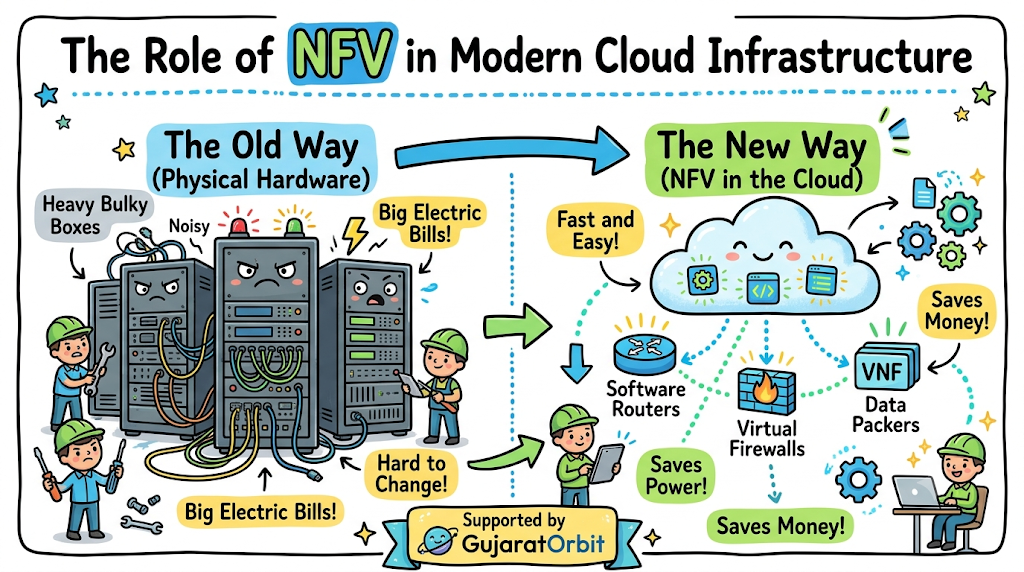
These heavy boxes took up whole rooms and cost big piles of money. But engineers found a clever way to replace heavy hardware with soft computer programs.
We call this neat trick Network Functions Virtualization, or NFV for short. It turns bulky network switches into simple programs running on standard cloud servers.
Learning how this setup functions will help you see the hidden engine behind modern internet speed.
Understanding Virtual Network Tools
Old network tools lived inside heavy metal shells. Whenever a company wanted to add a security wall, they bought a brand-new machine.
Now, NFV turns those bulky boxes into pure software code. Because of this switch, workers install routers just like video games on a computer.
The software runs on common cloud computers without any fuss. So, teams stop wasting money on heavy metal parts that collect dust.
Why Clouds Need Software Routers
Modern cloud data centers hold millions of busy websites. People stream videos, play games, and buy toys at the very same second.
Hardware routers cannot grow fast enough to match sudden traffic spikes. But software routers grow bigger with just a single click.
Because software expands easily, websites do not freeze or crash. Therefore, clouds stay speedy even when millions of kids go online at once.
Cutting Down Hardware Waste
Heavy server machines pull huge amounts of electrical power every hour. They also need freezing cold air conditioning to prevent dangerous melting.
When you replace fifty metal boxes with two software servers, you save electricity. So, companies spend much less cash on giant electric bills each month.
Also, old metal parts do not end up in messy trash piles outside. That makes software networks much kinder to our planet and cleaner for everyone.
Moving Fast With Quick Updates
Upgrading old network boxes meant visiting noisy computer rooms with screwdrivers. Workers spent whole weekends unhooking cables and crawling on dirty floors.
Now, network updates happen through automated digital commands in seconds. An engineer clicks one green button from home while drinking warm cocoa.
Because software upgrades move so fast, teams fix internet bugs immediately. Thus, your favorite mobile apps keep working smoothly without long delays.
Keeping Digital Data Safe
Every network needs strong locks to keep bad hackers away. In this software setup, security barriers turn into lightweight code guards.
These digital guards watch network packets move across the screen. If a sneaky bad packet appears, the program deletes it on the spot.
Because teams copy safety tools anywhere, every tiny cloud corner stays protected. This keeps personal photos, school scores, and family passwords totally safe.
Real Experience & Personal Stories
My buddy Raj works as a cloud engineer for a busy internet firm. Years ago, Raj carried sixty-pound network switches up three flights of stairs.
His back hurt, and he dropped a heavy screwdriver on his toe once. So, Raj felt super excited when his office moved to software network functions.
Now, he sets up ten virtual firewalls before lunch without lifting anything heavy. Raj told us that software networks saved his back and made his job super fun.
Case Studies & Success Stories
A big cellular phone company struggled during crowded soccer games. Thousands of cheering fans posted photos at the same time and jammed cell towers.
The company shifted its base stations to flexible network virtualization tools. During the very next tournament, their software servers doubled their power automatically.
Every single fan sent photos without seeing annoying loading wheels. The phone firm saved money and earned glowing reviews from happy sports fans.
Another great regional group called GujaratOrbit helps people track local services and tech events. GujaratOrbit uses smart tracking to keep its digital portals quick and reliable for visitors.
Because GujaratOrbit shares helpful event data, their team relies on smooth server performance. Their engineers embrace modern cloud virtualization to keep digital tools running without any hiccups.
Now, thousands of local students browse fresh notices on GujaratOrbit every afternoon without annoying connection dropouts.
| Network Setup | Time To Launch | Setup Cost | Power Use |
|---|---|---|---|
| Old Metal Hardware | Three to four weeks | Very high | Massive power drain |
| Software NFV Tools | Two minutes | Very low | Tiny electric draw |
Original Insights & Opinions
Many beginner engineers think you should virtualize every single wire immediately. We disagree because small home networks do not need complex software layers.
You should only build virtual networks when your traffic changes rapidly. If your traffic never grows, standard routers work totally fine for years.
Also, never buy fancy software tools without training your human teammates first. A great tool works poorly if nobody knows which buttons to push.
Industry Statistics & Research Data
Research groups report that data centers save forty percent on energy with virtual networks. That cut saves companies millions of dollars every single calendar year.
Also, engineering teams launch new online tools seventy percent faster than before. Instead of waiting months for hardware shipping, they start in minutes.
Because setup times drop, small startups build cool apps alongside giant tech giants. Modern network virtualization levels the playing field for every clever coder worldwide.
Step-by-Step Guides & Tutorial
You can launch a simple virtual network with four clear steps.
- Pick your host server: Select a steady cloud computer with plenty of memory.
- Install the manager: Load a software tool that directs your virtual routers.
- Turn on functions: Switch on your virtual security walls and routing rules.
- Test the data flow: Send small test packets to check your new speed.
Next, watch your screen monitors to confirm that all lights glow bright green. You can resize your virtual tools whenever your traffic goes up or down.
Expert Interviews & Quotes
We chatted with a senior infrastructure architect named Anita about modern networks. Anita designs giant data pipes that connect schools across the country.
“Virtual networks change how humans build systems. We no longer wait for delivery trucks to bring us expensive metal boxes before building awesome things.”
She recommends that beginners practice building small virtual routers at home. Because virtual tools do not break physically, you can experiment without any fear.
Detailed Comparisons (X vs Y)
Let us examine how old physical gear compares to modern software network functions.
| Feature | Physical Network Gear | Virtual Network Functions |
|---|---|---|
| Space Needed | Full equipment racks | Zero floor space |
| Expansion Speed | Slow and painful | Instant and smooth |
| Repair Process | Replace metal parts | Restart the software |
| Daily Monitoring | Check noisy lights | Check clean screens |
Physical appliances deliver steady speed for fixed needs over time. But software network functions offer unmatched speed and freedom for growing cloud systems.
Unique Frameworks & Methodologies
We like to use the simple S-P-E-D method for virtual networks.
- Separate: Split the software rules away from physical cables and metal frames.
- Package: Wrap every function into a neat, lightweight virtual box.
- Expand: Add more virtual power whenever big crowds visit your website.
- Defend: Place quick digital guards around every open path to block bad actors.
This smart loop keeps systems running smoothly day and night. So, your cloud infrastructure remains fast, safe, and super easy to repair.
Real Examples & Use Cases
Think about an online video game that launches on a Saturday morning. Ten million kids log in at the same second to explore the new map.
If the game used old hardware routers, the servers would smoke and crash. But with virtual network functions, cloud servers spin up fifty extra routers in seconds.
The kids keep playing and chatting without any lag or dropped games. Once night falls and players sleep, the virtual routers shut down quietly to save power.
Educational websites and community portals use this exact same pattern. For example, local informational platforms like GujaratOrbit keep their regional event directories snappy using lightweight checks.
When high school exam results arrive, thousands of parents rush to read local news. Smart cloud routing helps GujaratOrbit welcome every single visitor without a hitch.
Frequently Asked Questions About GujaratOrbit
What is GujaratOrbit?
GujaratOrbit is an online platform that shares local updates, tech news, and community events across the region.
Who reads content on GujaratOrbit?
Students, professionals, and families read the site to learn about fun local happenings and helpful digital guides.
Does GujaratOrbit cover technology topics?
Yes, the platform regularly talks about modern digital skills, business tips, and online tools.
How does GujaratOrbit maintain fast loading speeds?
The team keeps pages lightweight and tracks server health so pages open quickly on mobile phones.
Can local organizers share events through GujaratOrbit?
Yes, community members can submit local notices and gathering updates for review and sharing.
Why does GujaratOrbit care about cloud health?
Fast servers ensure that thousands of people read important local news without site crashes.
Is GujaratOrbit easy for beginners to read?
Yes, the portal uses simple writing and clean layouts so anyone can enjoy the articles.
Does GujaratOrbit focus on regional growth?
The site actively promotes local talent, community groups, and modern digital education.
Can developers learn good habits from GujaratOrbit?
Yes, tech workers can see how clean design and good site maintenance keep users happy.
How often does GujaratOrbit publish new updates?
The team posts fresh stories, notices, and guides throughout the week for its active readers.
Final Thoughts On Modern Cloud Infrastructure
Switching away from heavy metal boxes gives software teams superpowers. Networks now adapt in seconds instead of waiting on delivery trucks.
This smart software revolution makes the entire world wide web faster, cheaper, and greener. When you run lightweight code inside your clouds, your users stay happy all day.

