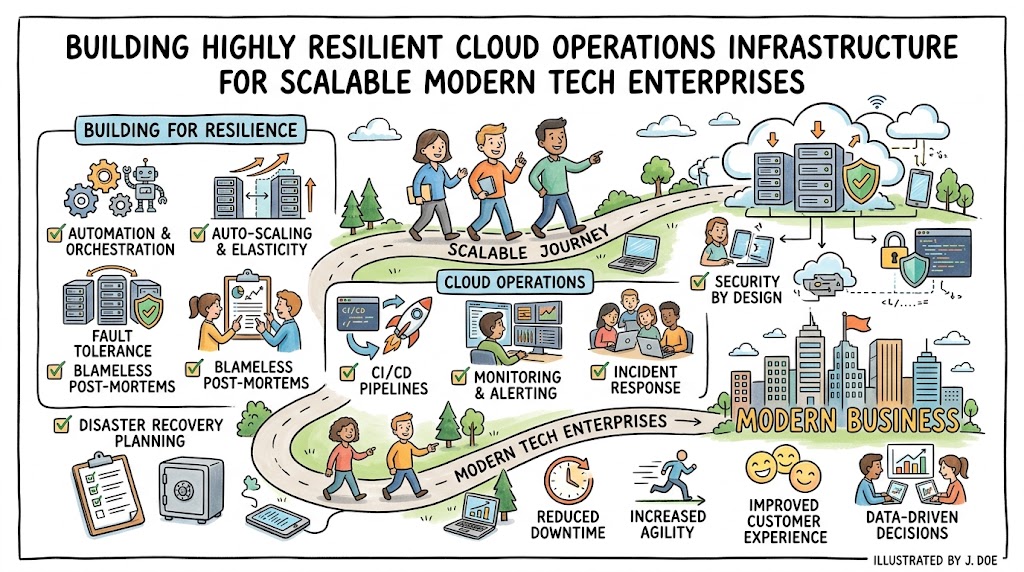
A single microservice failure cascades through your network, triggering a massive system blackout that halts transactions and leaves thousands of frustrated customers stranded. In the modern digital marketplace, operational bottlenecks like these stop business growth instantly, proving that simple reactive troubleshooting cannot protect complex software environments.
To overcome these structural hurdles, modern enterprises rely on structured cloud operations frameworks to scale infrastructure seamlessly while keeping services highly available. This deep-dive manual provides a clear roadmap covering structural management tactics, core telemetry signals, error budget implementation, and smart platform deployment strategies.
You can instantly accelerate your infrastructure journey by partnering with experts at Cloudopsnow, a premier platform dedicated to mastering distributed systems engineering and high-availability architecture.
Decoupling the Core Elements of Cloud Operations Teams
Building a resilient team requires an architectural focus on systemic durability, proactive engineering, and shared operational ownership. This specialized team acts as the bridge between software development and infrastructure stability, transforming traditional manual maintenance into automated system orchestration.
By prioritizing proactive system design over reactive firefighting, these engineers design cloud environments that naturally absorb unexpected traffic spikes and isolate component failures. Ultimately, establishing this capability ensures your platform maintains peak performance, eliminates systemic risk, and protects the end-user experience around the clock.
The Origin of Systems Infrastructure
The Early Industrial Bottlenecks
Traditional technology operations suffered from deep institutional divides, where developers built features quickly while system administrators manually maintained physical servers. Because these isolated groups worked toward conflicting metrics, application code frequently crashed upon entering production environments.
Manual server provisioning and inconsistent environment configurations created massive delays, forcing engineers to spend critical hours diagnosing unique environment bugs. Consequently, businesses struggled with slow deployment cycles, frequent system outages, and rising infrastructure costs that restricted digital innovation.
Moving Toward Unified Workflow Automation
As enterprise demands intensified, engineering leaders recognized that breaking down operational silos was the only way to achieve sustainable software delivery. By treating infrastructure as code, teams began unifying distinct delivery steps into automated, repeatable workflows.
This cultural shift replaced slow, error-prone manual setups with declarative configurations, ensuring that testing, staging, and production environments remained perfectly synchronized. As a result, companies reduced human intervention, accelerated release timelines, and established highly predictable system behavior across their entire digital footprint.
Global Expansion Across Commercial Ecosystems
The shift toward standardized automation spread rapidly across large-scale commercial tech enterprises, transforming how global platforms manage vast server clusters. Organizations discovered that running distributed microservices required consistent operational frameworks capable of managing thousands of containers simultaneously.
Today, this standardized methodology forms the foundation of modern cloud ecosystems, allowing tech giants and growing companies alike to process billions of operations smoothly. By embracing these architectural patterns, modern enterprises ensure that their digital assets stay resilient against unpredictable traffic patterns worldwide.
Defining Strategic Operations Management
The Core Operational Structure
Strategic operations management relies on a continuous feedback loop where system telemetries inform automated architectural adjustments. Information flows from low-level system kernels up through application layers, gathering in centralized visualization clusters for real-time analysis.
This organized structure helps teams observe structural health indicators, detect micro-anomalies early, and deploy self-healing scripts before users experience performance degradation. By organizing your infrastructure around this automated loop, you create a unified environment that scales dynamically based on actual processing load.
Daily Tasks of Systems Coordinators
Systems coordinators spend their daily shifts designing automation scripts, optimizing deployment pipelines, and refining alerting rules to minimize noise. Instead of manually fixing servers, these specialists conduct detailed code reviews for infrastructure definitions and build custom tools to eliminate repetitive platform tasks.
They also collaborate directly with software development groups to establish safe release parameters and analyze telemetry data to optimize system resource allocations. This continuous engineering focus keeps the entire cloud footprint optimized, modern, and perfectly aligned with changing corporate application requirements.
Localized Control vs. Broad System Architecture
Managing complex cloud footprints requires balancing granular component tracking against broad, overarching system architecture. Localized control focuses on specific metrics like a database instance’s disk read-write speeds or an individual container’s memory consumption pattern.
In contrast, broad system architecture monitors how these independent components connect, communicate, and handle transactions end-to-end across multiple availability zones. Successfully balancing both viewpoints allows teams to fix isolated issues quickly while maintaining complete visibility over global platform performance.
The Efficiency Mindset
Transitioning to advanced cloud management requires a cultural shift that prioritizes long-term systemic stability over short-term feature delivery. Engineers adopting this mindset view system failures as valuable data points that reveal underlying design flaws rather than simple, random operational accidents.
This philosophy drives teams to build deep systemic resilience, write comprehensive documentation, and automate recovery paths for every known error condition. Over time, this proactive commitment reduces operational strain, lowers infrastructure overhead, and creates an environment where software grows safely.
The 7 Core Principles of How to Build a Resilient Cloud Operations Team
1. Embracing Risk and Managing Variability
Achieving absolute one hundred percent uptime is an impossible and financially impractical goal for any complex, distributed cloud application. Progressive operations teams accept that components will inevitably fail, focusing their energy instead on managing acceptable levels of systemic risk.
By defining clear tolerance thresholds, engineers balance the need for rapid feature innovation with the necessity of keeping infrastructure stable. This balanced approach helps organizations launch new products quickly without compromising the baseline service quality that core customers expect.
2. Establishing Service Level Objectives (SLOs)
Teams establish clear Service Level Objectives to create measurable, quantitative targets for overall cloud infrastructure success. These targeted goals keep engineering teams and business stakeholders aligned on performance expectations, ensuring that product roadmaps prioritize stability alongside features.
By anchoring operational conversations to hard data, organizations make objective decisions about when to accelerate development or pause deployments to stabilize infrastructure. This metrics-driven approach removes emotion from system management, providing a clear path forward during complex operational scenarios.
3. Eliminating Toil and Manual Processes
Toil represents repetitive, manual, operational work that scales linearly with system growth and provides no long-term structural value. Modern engineering teams actively identify these routine tasks, such as manual user provisioning or basic server restarts, and write code to eliminate them.
By setting a strict limit on the time spent on manual operations, companies free up engineers to focus on high-impact optimization projects. This systematic removal of routine work keeps teams creative, prevents burnout, and allows infrastructure to scale without requiring proportional hiring.
4. Monitoring & Observability Across the Pipeline
Complete visibility across every layer of the deployment pipeline prevents dangerous blind spots from hiding potential system bottlenecks. Advanced observability goes beyond simple uptime checks by collecting rich metrics, distributed traces, and structural logs from every active microservice.
This deep visibility allows engineers to trace complex request paths, isolate latent performance drops, and understand how code changes affect global infrastructure. Maintaining a comprehensive telemetry pipeline ensures that your team resolves underlying system issues long before they impact end users.
5. Automation Over Manual Coordination
Scaling modern cloud operations requires substituting smart software solutions for human coordination and manual configuration steps. Teams build intelligent orchestrators that automatically handle server provisioning, security patch updates, and complex traffic routing across regional networks.
Automating these workflows eliminates human error, ensures perfect environment consistency, and dramatically reduces the time required to recover from unexpected infrastructure failures. Investing heavily in automated workflows allows small engineering teams to manage massive, global server footprints efficiently.
6. Release Engineering and Deployment Stability
Safe and predictable application delivery requires strict release engineering practices built on automated testing, progressive rollouts, and instant fallback mechanisms. Teams utilize canary deployments and blue-green strategies to expose new code to small percentages of live traffic before completing global updates.
This controlled approach limits the blast radius of unexpected bugs, allowing automated monitors to trigger rollbacks if performance indicators drop. Implementing rigorous release standards helps organizations maintain a stable user experience while releasing software updates multiple times per day.
7. Simplicity in Network Architecture
Keeping cloud environments clean, minimal, and highly modular directly reduces the overall failure surface of your digital infrastructure. Complex, over-engineered network paths create hidden dependencies that make troubleshooting incredibly difficult during live operational emergencies.
Engineers prioritize clear microservice boundaries, explicit communication paths, and straightforward resource dependencies to ensure high systems maintainability. Embracing architectural simplicity makes your platform easier to understand, simpler to automate, and highly resilient against unexpected cascading failures.
Key Operational Concepts You Must Know
SLA vs. SLO vs. SLI — Explained Simply
Understanding the relationship between service agreements, internal targets, and real-time metrics forms the foundation of modern infrastructure management.
- SLA (Service Level Agreement): The overarching legal commitment made to external customers, defining the financial penalties or credits issued if service quality drops below a specific line.
- SLO (Service Level Objective): The stricter, internal target metric that teams aim for to ensure the SLA is never breached during normal operations.
- SLI (Service Level Indicator): The actual, real-time measurement of system performance, calculated as the percentage of successful requests over a specific timeframe.
Error Budgets — The Game Changer for Operational Risk
An error budget represents the exact amount of downtime or performance degradation your system can legally tolerate before violating an established SLO. For example, a ninety-nine percent availability target leaves a one percent budget for innovation, unexpected outages, and scheduled maintenance windows.
Error Budget = 100% - Service Level Objective (SLO)
When a team maintains a healthy, green error budget, developers can aggressively deploy new features and experimental code variations. However, if consecutive outages consume that budget, the team shifts focus exclusively to infrastructure remediation, stability patches, and automation upgrades.
Toil — The Silent Productivity Killer in Infrastructure
Toil acts as an operational drag that drains engineering energy, slows feature delivery, and introduces human error into production environments. Teams can systematically identify, calculate, and eliminate this repetitive work by applying the following four-step framework:
- Audit Team Activity: Track daily tasks to identify repetitive, non-creative actions that require manual intervention.
- Quantify Time Spent: Calculate the exact hours consumed by manual tasks to measure the financial and operational impact of toil.
- Design Automation Scripts: Write declarative code, custom operators, or automated playbooks to handle identified manual tasks permanently.
- Review System Trends: Evaluate team metrics monthly to ensure manual operations remain well below fifty percent of total engineering time.
Incident Management & Postmortems
When unexpected outages occur, a structured incident management process ensures that the response team mitigates service disruptions quickly and efficiently. After resolving the immediate issue, engineers conduct a blameless postmortem to uncover the underlying systemic vulnerabilities that allowed the failure to happen.
These investigative sessions focus entirely on process gaps, software design flaws, and automation bugs rather than individual human errors. Documenting these findings openly transforms operational failures into valuable learning opportunities that strengthen your entire cloud architecture.
Capacity Planning
Proactive capacity planning prevents sudden resource exhaustion by analyzing historical telemetry data to predict future infrastructure needs accurately. Teams analyze organic usage growth, seasonal traffic spikes, and marketing schedules to scale computing clusters before processing queues saturate.
Modern architectures utilize automated cloud autoscaling policies alongside this predictive planning to handle sudden, unexpected traffic surges smoothly. This balanced approach protects system availability during high-demand events while keeping infrastructure costs well-managed during lower-traffic periods.
The Four Golden Signals of Pipeline Performance
To maintain complete operational visibility, infrastructure engineers focus heavily on tracking the four golden signals of distributed systems.
| Golden Signal | Metric Definition | Impact of Neglect |
| Latency | The exact time it takes to service a specific request, separating successful responses from failures. | Slow page loads and frustrated app users. |
| Traffic | The total demand being placed on the system, measured in requests per second or network bandwidth. | Unexpected resource exhaustion and sudden crashes. |
| Errors | The rate of requests that fail explicitly, return internal server errors, or violate policy rules. | Broken user checkout flows and data loss. |
| Saturation | The measure of system resource utilization, highlighting bottlenecks like memory or CPU limits. | Severe performance drops and system lockups. |
Platform Implementation vs. Culture — What’s the Real Difference?
The Philosophy Difference
Platform implementation focuses on deploying technical tools, configuring cloud infrastructure, and writing automated deployment pipelines. In contrast, operational culture centers on how teams communicate, share accountability, embrace risk, and learn from systemic failures.
Successful Operations = Advanced Technical Tooling + Resilient Team Culture
While advanced software tools provide the mechanics for automation, an open culture ensures that engineers use those tools effectively without fear of blame. Organizations must cultivate both elements simultaneously, as excellent software assets fail without a supportive, collaborative engineering mindset.
Roles & Responsibilities Compared
Understanding how distinct operational roles split daily tasks helps organizations align engineering efforts and eliminate duplicate responsibilities.
- Platform Engineers: Focus on building self-service developer portals, managing cluster runtime environments, and maintaining core infrastructure automation modules.
- Operations Specialists: Focus on application reliability, real-time incident responses, telemetry tuning, and optimizing end-to-end request latencies.
- Software Developers: Focus on writing business features, optimizing application logic, and delivering functional code updates to production environments.
Can You Have Both Disciplines?
Modern enterprises succeed when they integrate platform engineering and operational reliability into a single, cohesive technical strategy. In this unified model, platform specialists build the foundations, while reliability engineers ensure those systems scale safely under live traffic loads.
This collaborative structure prevents new internal silos from forming, allowing development teams to deploy features quickly and safely. Embracing both disciplines helps organizations maintain high delivery speeds while keeping their global cloud infrastructure highly resilient.
Which One Should Your Team Adopt?
Choosing the right operational focus depends heavily on your current company size, system complexity, and overall engineering maturity.
| Organizational Status | Primary Focus Area | Implementation Strategy |
| Early-Stage Startups | Core Cultural Foundations | Adopt fundamental risk sharing and basic automation early. |
| Mid-Sized Enterprises | Unified Platform Tools | Standardize infrastructure patterns to help developers scale. |
| Large Scale Operations | Advanced Reliability Teams | Deploy dedicated reliability experts to optimize complex ecosystems. |
Real-World Use Cases of Modern Operations
How Tech Leaders Use Operational Metrics
Global technology leaders rely on real-time SLI dashboards to guide critical business decisions and manage live deployment speeds. When metrics show that system latencies are rising, automated delivery systems slow down deployment velocities until performance stabilizes.
These data streams allow cross-functional teams to collaborate effectively, basing engineering priorities on empirical user data rather than subjective opinions. Using these clear metrics ensures that companies protect service quality while maintaining steady product innovation.
Chaos Engineering Approaches to Resilient Systems
Enterprise teams utilize chaos engineering to intentionally inject minor faults into production clusters to uncover hidden system weaknesses. By proactively shutting down servers, dropping network packets, and limiting memory zones, engineers test whether automated self-healing scripts respond correctly.
These controlled experiments reveal unexpected single points of failure long before they turn into major customer-facing outages. Regularly practicing chaos engineering transforms operational teams into highly confident units that handle live infrastructure emergencies calmly and efficiently.
Handling Reliability at Massive Scale
Distributed microservice architectures process millions of distinct global requests concurrently by utilizing smart load balancing, circuit breakers, and rate limiting. When a specific backend service experiences a heavy traffic spike, circuit breaking logic decouples that module to protect the remaining system.
This isolated containment prevents local performance drops from cascading across independent networks and causing widespread platform outages. Implementing these defensive design patterns allows large digital platforms to serve global audiences smoothly and reliably around the clock.
High-Availability in Fintech Operations
Financial technology applications run on highly resilient infrastructure designed to maintain perfect consistency with zero tolerance for downtime or data drops. These transactional platforms deploy multi-region active-active database clusters that replicate records across distinct geographical zones instantly.
Advanced network routing architectures route customer transactions around regional internet outages instantly, guaranteeing continuous, uninterrupted payment processing. By prioritizing absolute system availability, fintech operators protect their revenue streams and maintain strong compliance standards globally.
Scaled-Down but Essential Systems for Startups
Early-stage startups apply core reliability principles efficiently by utilizing managed cloud services and simple, automated alerting rules. Instead of building custom monitoring tools, small teams deploy turnkey observability platforms to track their vital golden signals easily.
They also configure automatic cloud resource scaling to handle sudden traffic spikes without requiring constant manual engineering oversight. This lean approach allows growing companies to deliver highly stable services while focusing their resources on building core product features.
Common Mistakes in Operations Engineering
Mistake 1 — Confusing System Management with Just Being On-Call
Many companies mistake modern operations engineering for a simple, round-the-clock shift focused exclusively on responding to infrastructure alerts. This short-sighted approach transforms skilled engineers into reactive firefighters, leaving them no time to resolve the underlying technical debt causing the issues.
True operational success requires dedicating significant engineering time to writing automation code, building tools, and improving overall system architecture. Shifting your team’s focus from reactive patch-ups to proactive software engineering breaks the cycle of continuous outages permanent.
Mistake 2 — Setting Unrealistic SLOs
Setting an over-ambitious target like one hundred percent availability sounds great in marketing materials, but it stalls software engineering progress immediately. Demanding perfect uptimes prevents developers from launching new features, as every minor code change carries some inherent risk of system disruption.
Unrealistic SLO (100% Target) = Frozen Deployments + Stagnant Innovation
This structural bottleneck creates friction between development and operations groups, leading to delayed project timelines and frustrated business stakeholders. Designing sensible, metric-driven targets provides ample room for system experimentation while keeping baseline service delivery highly reliable.
Mistake 3 — Ignoring Toil Until It’s Too Late
Ignoring manual, repetitive tasks causes operational debt to pile up rapidly, burying your engineering team under routine maintenance tickets. As your cloud environment expands, the hours spent manually resetting servers and managing credentials grow exponentially, stalling high-impact automation initiatives.
This excessive workload slows down software delivery pipelines, compromises platform configuration consistency, and causes high employee turnover. Teams must systematically identify and eliminate manual toil early to keep their cloud operations fast, agile, and scalable.
Mistake 4 — Skipping Blameless Postmortems
When teams focus on finding a human scapegoat after an infrastructure failure, engineers naturally hide mistakes and cover up system vulnerabilities. This defensive culture prevents organizations from investigating the true root causes of an outage, leaving identical flaws active within production environments.
Skipping objective postmortem analysis ensures that your infrastructure will experience the exact same failures repeatedly, impacting long-term stability. Embracing a truly blameless review culture allows teams to fix system flaws openly, turning incidents into valuable architectural improvements.
Mistake 5 — Monitoring Without Actionable Alerts
Configuring monitoring systems to trigger loud alerts for every minor CPU spike or routine log warning causes severe alert fatigue. When engineers receive hundreds of non-actionable notifications daily, they naturally miss critical warnings indicating major, customer-facing platform outages.
High Alert Noise = Alert Fatigue -> Missed Critical Incidents
Every operational alert must point to a clear system issue that requires immediate human intervention to resolve. Cleaning up your monitoring criteria ensures that your team stays focused, reduces operational stress, and responds rapidly to genuine infrastructure emergencies.
Mistake 6 — Not Involving Operational Engineers in the Design Phase
Excluding operations experts from initial software design discussions results in applications that are incredibly difficult to deploy, monitor, and scale. Developers often focus solely on business logic, occasionally overlooking critical operational considerations like log structures, health endpoints, and state management.
When these unoptimized systems enter production environments, they introduce significant instability, high resource overhead, and frequent performance issues. Involving your operations team from day one ensures that every application is inherently designed for long-term cloud stability.
Essential Infrastructure Tools & Technologies
Monitoring & Observability
Maintaining complete control over distributed systems requires deploying advanced telemetry frameworks that track application health indicators in real time. Platforms like Prometheus and Grafana gather multi-dimensional timeseries metrics and present them on clear, unified visualization dashboards.
For deep corporate environments, Datadog and New Relic combine log management, infrastructure metrics, and application performance tracing into a single platform. Utilizing these observability tools allows your engineering teams to spot hidden performance bottlenecks and troubleshoot system anomalies quickly.
Incident Management
When critical infrastructure failures occur, teams utilize specialized coordination platforms to organize engineering responses and resolve issues rapidly. PagerDuty acts as a reliable dispatch engine, routing critical system alerts to the correct on-call engineers based on custom team schedules.
These modern tools automate communication workflows, coordinate virtual war rooms, and record incident timelines for later review. Deploying structured incident response platforms minimizes system resolution times, improves team collaboration, and reduces the stress of live troubleshooting.
CI/CD & Release Engineering
Automating software delivery paths requires utilizing robust deployment pipelines that test, build, and ship application updates seamlessly. Jenkins serves as a highly flexible automation server for managing continuous integration steps and validating code changes early.
For modern container environments, Spinnaker and Argo CD provide powerful declarative continuous delivery mechanisms tailored for cloud-native setups. Implementing these automated release tools ensures perfect environment consistency, limits manual deployment mistakes, and makes rollbacks instant.
Chaos Engineering
Testing system durability under unexpected conditions requires using specialized tools designed to inject controlled failures safely into live environments. Chaos Monkey automatically disables virtual server instances inside production environments to verify that self-healing setups respond correctly.
These proactive validation practices help engineering teams find hidden architectural dependencies and single points of failure before real outages happen. Incorporating controlled fault injection into your operational routines builds deep structural resilience and high confidence across your team.
SLO Management
Tracking reliability metrics against established user commitments requires using specialized software platforms that monitor error budgets continuously. Nobl9 connects directly with existing data sources to calculate service level indicators and forecast error budget consumption rates accurately.
These specialized tools provide clear, automated warnings when system consumption rates accelerate, helping teams balance feature delivery with infrastructure stability. Using dedicated target trackers ensures that your engineering priorities remain aligned with actual customer experience data.
How to Become an Operations Expert — Career Roadmap
Skills Every Specialist Must Have
Entering this specialized field requires mastering a core mix of system administration, software development, and network engineering fundamentals. Aspiring engineers must feel completely comfortable using advanced Linux terminal commands, diagnosing network paths, and managing containerized applications with Docker.
Core Skills = Linux Proficiency + Scripting (Python/Go) + Infrastructure as Code
You must also master scripting languages like Python or Go to automate repetitive infrastructure tasks and build custom tools. Additionally, learning declarative infrastructure tools like Terraform allows you to define complex cloud networks as maintainable, version-controlled code.
The Professional Learning Path
A successful career journey begins by gaining deep familiarity with cloud-native architectures, standard networking protocols, and basic continuous integration pipelines. Next, transition into managing complex container orchestrators like Kubernetes, learning to handle dynamic cluster scaling and persistent volumes.
From there, focus on designing advanced distributed telemetry setups, orchestrating multi-region failovers, and managing corporate error budgets effectively. This step-by-step progression transforms you from a foundational systems administrator into a highly strategic cloud infrastructure architect.
Certifications Worth Pursuing
Earning industry-recognized credentials validates your technical knowledge, sharpens your infrastructure skills, and opens up senior engineering opportunities globally.
- AWS Certified DevOps Engineer – Professional: Confirms your expertise in automating cloud deployments, managing security controls, and scaling infrastructure on AWS.
- Google Cloud Professional Cloud DevOps Engineer: Validates your ability to implement production-ready service monitoring, manage incidents, and optimize cloud operations.
- Certified Kubernetes Administrator (CKA): Proves your hands-on ability to install, configure, manage, and troubleshoot enterprise-grade production Kubernetes clusters.
Educational Resources with Cloudopsnow
Mastering advanced distributed systems requires practical, hands-on training built on real-world engineering challenges and modern cloud tools. The specialized training programs at Cloudopsnow provide deep-dive courses designed to teach you infrastructure automation, advanced telemetry deployment, and high-availability architecture.
By working through comprehensive, practical labs, you will gain the concrete experience needed to solve complex operational challenges confidently. Exploring these educational paths equips you with the tools and mindsets required to excel as a trusted leader in cloud operations.
The Future of Systems Management
AI and Automation in System Optimization
Artificial intelligence is rapidly transforming cloud operations by introducing advanced anomaly detection systems that resolve technical issues before they impact users. Machine learning engines analyze massive streams of telemetry data to identify subtle performance shifts that human operators often miss.
These automated assistants speed up root cause analysis, predict potential hardware bottlenecks, and suggest optimal system parameter adjustments dynamically. Integrating machine intelligence into your operational stack reduces manual troubleshooting hours and elevates overall platform stability.
Platform Engineering — The Evolution of Infrastructure
Platform engineering is modernizing system delivery by creating centralized, self-service portals that allow software developers to provision resources independently. Instead of submitting manual tickets for new infrastructure, developers utilize standardized templates that automatically comply with corporate security standards.
This shift removes common delivery bottlenecks, allowing development groups to deploy new services safely without requiring constant operational oversight. By turning infrastructure patterns into reusable products, companies accelerate software delivery while maintaining highly consistent environment configurations.
Management in Cloud-Native & Kubernetes Environments
Managing highly dynamic, containerized application environments requires moving away from traditional static server monitoring toward real-time, cluster-wide observability. Kubernetes orchestrates thousands of ephemeral containers simultaneously, creating complex micro-networks that demand advanced service mesh solutions for traffic visibility.
Operations specialists utilize declarative orchestration rules to automate cluster self-healing, manage rolling updates, and balance resource allocation dynamically. Staying ahead in this space means mastering these container frameworks to keep large, distributed applications running efficiently at scale.
Operational Skills That Will Matter Most
As cloud architectures evolve, top-tier engineering talent must expand their technical skill sets beyond traditional system monitoring and basic automation scripting. Future leaders must master cloud financial operations (FinOps) to match system performance goals perfectly with corporate budget allocations.
Additionally, mastering deep data observability across distributed architectures will be essential for troubleshooting multi-cloud application flows. Developing these cross-functional capabilities ensures you remain highly effective in guiding your organization through future technological changes.
FAQ Section
- What is the typical career progression for a cloud operations specialist?Professionals usually start as systems administrators or junior software developers before advancing into dedicated cloud engineering positions. With experience, they move up to senior infrastructure roles, system reliability leads, and eventually corporate platform architects or technology directors.
- How does this discipline differ from traditional IT operations roles?Traditional IT roles rely heavily on manual configurations and reactive troubleshooting when software environments fail unexpectedly. Modern cloud operations engineers utilize software engineering practices, treat infrastructure as code, and build automated self-healing workflows to prevent outages proactively.
- What are the standard salary trends for these infrastructure experts?Due to the critical need for cloud uptime, these specialized engineers command excellent compensation packages worldwide. Senior specialists and platform architects frequently earn premium salaries that match or exceed those of senior software feature developers.
- Why is an error budget considered a game-changing concept for engineering teams?An error budget provides an objective, data-driven framework that balances rapid software innovation with baseline system safety. It eliminates friction between developers and operations groups by using hard data to determine when to launch features or focus on stability.
- Which programming languages are most useful for cloud infrastructure automation?Python and Go are the most valuable languages to master due to their extensive cloud tool libraries and deep platform support. Python works excellently for writing general automation scripts, while Go forms the foundation of modern cloud-native tools like Kubernetes and Terraform.
- How can small startups implement these principles without a massive engineering budget?Startups can leverage managed cloud services, serverless products, and turnkey observability platforms to minimize initial operational overhead. Focusing on basic automation and tracking core golden signals early allows small teams to build highly stable platforms efficiently.
Final Summary
Maintaining high system availability across modern cloud footprints requires moving away from reactive troubleshooting toward a proactive engineering mindset. By embracing sensible service targets, eliminating manual toil, and deploying comprehensive observability tools, organizations build environments that naturally absorb unexpected operational disruptions. Investing in these strategic workflows helps enterprises protect their core revenue streams, accelerate software updates, and deliver a consistently excellent end-user experience.
As technology landscapes evolve, staying competitive requires continuously updating your team’s skills with the latest cloud architecture paradigms and deployment automation frameworks. Take the next definitive step in your engineering journey by checking out the comprehensive courses and expert guidance available at Cloudopsnow today.
