INTRODUCTION
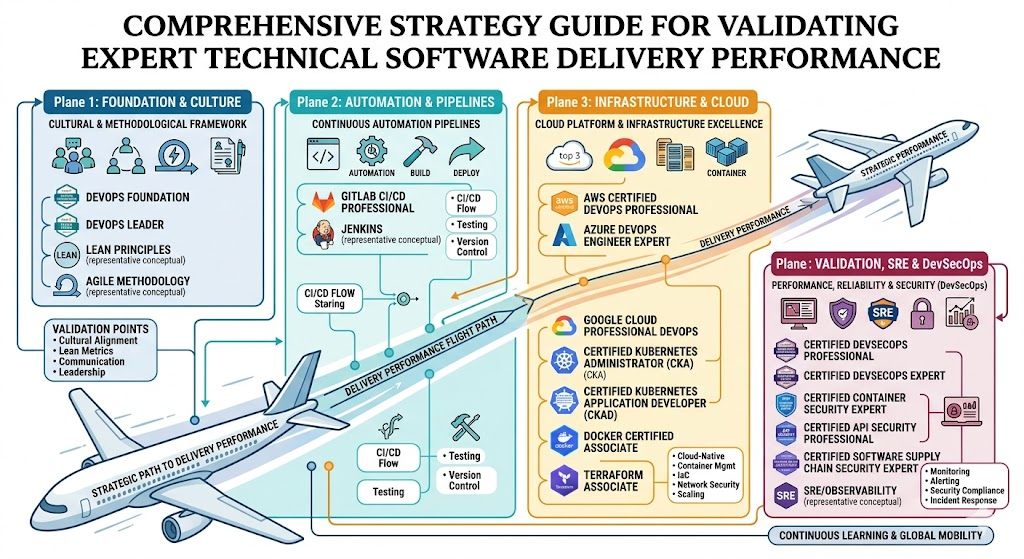
Navigating the modern software development landscape requires more than just standard programming skills because infrastructure management now changes rapidly. Software development teams must deliver high-quality code at an exceptional pace while ensuring platform stability remains intact. Consequently, professionals face immense pressure to keep their skill sets updated against fragmented operational knowledge across multiple technical frameworks. Therefore, finding an authoritative roadmap that structures your career progression becomes a critical priority rather than a luxury. This comprehensive manual details how a structured verification journey elevates your professional credibility and transforms your market value completely. By utilizing the structured pathways within a Best DevOps Certification, engineering practitioners establish undeniable competence in automated deployment mechanisms, cloud infrastructure architecture, and site reliability methodologies.
What Is a Best DevOps Certification?
The Core Purpose of Best DevOps Certification
The core purpose of a validation framework centers on bridging the traditional gap between software creation and infrastructure deployment. Instead of focusing on theoretical systems, this curriculum ensures that an engineer can build dependable deployment pipelines. Organizations suffer from continuous delivery delays when engineers fail to standardize their workflows across shared technological environments. Thus, this framework provides a standardized benchmark that guarantees a professional can handle high-throughput cloud environments with minimal downtime.
How the Best DevOps Certification System Works
The assessment model operates by testing candidates across multiple integrated technological domains via comprehensive exam criteria. Candidates must demonstrate deep familiarity with container orchestration, continuous integration pipelines, configuration management platforms, and monitoring infrastructure. Because technical ecosystems vary across enterprises, the validation system evaluates universal engineering principles alongside specific cloud vendor practices. This dual assessment ensures that certified specialists adapt easily to diverse organizational requirements.
Eligibility Standards vs. Selection Criteria
Entering this professional verification track requires a clear understanding of basic requirements versus competitive advantages. Eligibility standards dictate that applicants possess fundamental knowledge of command-line interfaces, basic networking protocols, and standard operating systems. Conversely, selection criteria used by premier enterprise teams focus on deep architectural knowledge, real-world troubleshooting capabilities, and multi-cloud optimization. Meeting the minimum eligibility grants entry, but mastering the advanced selection metrics secures elite career opportunities.
Best DevOps Certification Components: The Building Blocks
Age Factors in Best DevOps Certification
Career longevity and professional experience level significantly influence how an individual absorbs modern deployment architectures. Junior engineers often focus heavily on specific tool syntaxes, whereas senior practitioners prioritize architectural patterns and cultural integration. The assessment framework accounts for this variance by offering distinct tiers that match different stages of professional development. Therefore, your current career phase dictates the appropriate depth of operational knowledge you must demonstrate during the examination.
Educational Evaluation for Best DevOps Certification
Formal technical training provides a solid foundation, but modern engineering environments demand continuous learning. The evaluation process scrutinizes an individual’s comprehension of cloud architecture principles, systems engineering concepts, and software release strategies. While a traditional computer science background accelerates comprehension, structured vocational validation proves far more accurate in confirming immediate production readiness. Consequently, global enterprises rely heavily on specialized credentials to evaluate technical competence rather than focusing solely on generic academic degrees.
Performance Standards and Benchmarks
Maintaining consistent application availability requires strict adherence to industry-standard key performance indicators. The verification matrix evaluates a candidate’s capability to achieve specific metrics, including reduced change failure rates and accelerated mean time to resolution. Certified professionals must know how to configure automated rollback systems that trigger immediately when deployment failures occur. By testing these exact capabilities, the validation framework ensures that successful candidates can preserve production system stability under intense operational pressure.
Professional Experience Verification
Practical application remains the ultimate test of any technical professional’s capability within complex corporate infrastructure. The validation framework demands proof of hands-on engagement with actual production workloads rather than simulated sandbox environments. Candidates must document their experience in designing deployment pipelines, managing secrets securely, and resolving real-time infrastructure incidents. This strict documentation process filters out theoretical learners and ensures that only battle-tested system administrators attain formal recognition.
Primary Frameworks Governing Best DevOps Certification
The Detailed Score Breakdown
The evaluation matrix uses a rigorous scoring methodology across several foundational pillars to determine ultimate competency. Each technical segment carries a specific weight that reflects its daily importance in corporate engineering environments.
| Core Technological Pillar | Total Weight Percentage | Primary Evaluation Metric |
| Continuous Integration & Continuous Delivery (CI/CD) | 25% | Pipeline automation efficiency and artifact security |
| Infrastructure as Code (IaC) & Configuration | 20% | Declarative resource provisioning accuracy |
| Containerization & Orchestration | 20% | Microservices deployment and cluster stability |
| Cloud Platform Architecture & Network Security | 15% | Multi-region system availability and access control |
| Observability, Monitoring & Logging Systems | 10% | Proactive anomaly detection and metric analysis |
| Site Reliability & Financial Cloud Governance | 10% | System uptime maintenance and cost optimization |
Real-World Application Scenarios
The practical examination environment requires candidates to build functional solutions under tight time constraints. For instance, a typical scenario might require an engineer to repair a broken delivery pipeline that prevents code from reaching production safely. Another test could involve optimizing a container orchestration cluster that fails to scale automatically during high traffic periods. Because these tests mirror actual enterprise challenges, passing them confirms that the practitioner possesses genuine problem-solving capabilities.
International Pathways for Best DevOps Certification
Key Categories and Classes
The global technical ecosystem separates professional validation paths into distinct categories depending on organizational design. The first category focuses on specific cloud providers, which deepens expertise within a proprietary ecosystem. The second class covers vendor-neutral methodologies, which emphasizes broad architectural design principles that apply across any hosting environment. Finally, specialized paths focus heavily on security automation or site reliability engineering to support niche enterprise requirements.
Comparative Results Summary
Different validation paths yield varying professional outcomes depending on market demand and geographic location. Cloud-specific credentials offer immediate employment opportunities within organizations dedicated entirely to a single infrastructure provider. Meanwhile, vendor-neutral certificates provide greater career flexibility, allowing engineers to transition seamlessly between completely different corporate tech stacks. Understanding these outcomes helps practitioners choose the exact path that aligns with their immediate professional growth objectives.
Advanced Regional Requirements for Best DevOps Certification
Different global tech hubs enforce unique compliance regulations that directly impact how deployment pipelines operate. For example, North American financial enterprises require strict data privacy standards, which means validation programs there emphasize secure access controls. In contrast, European tech sectors place immense emphasis on strict data protection laws, forcing engineers to master localized compliance governance. Therefore, advanced candidates must study regional regulatory frameworks alongside standard engineering practices to remain competitive globally.
Furthermore, public sector engineering teams across various regions require specialized background clearance alongside technical credentials. This means that a standard engineering certificate must be paired with regional security certifications to allow infrastructure access. Understanding these regional variations ensures that your technical skill set complies fully with local legal mandates and enterprise operating standards.
The Global Landscape of Best DevOps Certification
The international tech market recognizes several prominent validation programs that establish elite technical engineering proficiency. Practitioners must evaluate these global options carefully to plan their career trajectory effectively using the structured global index below.
| Program Name | Administrative Authority | Functional Description and Core Objective |
| AWS Certified DevOps Engineer – Professional | Amazon Web Services | Validates expert-level skills in provisioning, operating, and managing continuous delivery systems within the proprietary Amazon cloud environment. |
| Microsoft Certified: Azure DevOps Engineer Expert | Microsoft Corporation | Measures professional proficiency in combining people, processes, and technologies using Azure boards, pipelines, and configuration tools. |
| Google Professional Cloud DevOps Engineer | Google Cloud Platform | Focuses heavily on site reliability engineering principles, service monitoring setups, and performance optimization on Google Cloud. |
| Certified Kubernetes Administrator | The Linux Foundation & CNCF | Confirms full competence in installing, configuring, managing, and troubleshooting production-ready container orchestration clusters. |
| Certified Kubernetes Application Developer | Cloud Native Computing Foundation | Verifies the technical ability to design, build, configure, and expose cloud-native software applications using Kubernetes primitives. |
| Certified Kubernetes Security Specialist | Cloud Native Computing Foundation | Tests multi-faceted security competencies including cluster setup hardening, system vulnerability mitigation, and runtime security monitoring. |
| HashiCorp Certified Terraform Associate | HashiCorp Incorporation | Evaluates declarative infrastructure-as-code proficiency, module structure governance, and multi-cloud remote state workflows. |
| Docker Certified Associate | Mirantis & Docker | Establishes a solid baseline for container orchestration, secure image management, registry creation, and container execution workflows. |
| Red Hat Certified Specialist in Ansible Automation | Red Hat Enterprise Linux | Confirms technical capabilities in managing massive system environments through automated playbooks, inventory architectures, and configuration workflows. |
| Puppet Certified Professional | Puppet Labs Systems | Measures practical skills in developing infrastructure configuration files, standardizing environment state management, and defining clear resource rules. |
| Chef Certified Developer | Progress Software Corporation | Validates the implementation of policy-driven automation infrastructures, cookbook creation practices, and system compliance engineering controls. |
| GitLab Certified Professional | GitLab Incorporation | Measures direct expertise in optimizing unified DevSecOps platforms, continuous integration templates, and automated release policies. |
| GitHub Actions Specialist | GitHub Incorporation | Verifies advanced capabilities in designing native repository workflow configurations, securing runner pools, and orchestrating marketplace extensions. |
| CompTIA Cloud+ Certification | Computing Technology Industry Association | Provides a vendor-neutral assessment validating broad systems architecture, cloud migrations, and network security compliance baselines. |
| Cisco Certified DevNet Professional | Cisco Systems Integration | Evaluates robust automation development capabilities within modern network infrastructures, API integrations, and edge platform architectures. |
| DevOps Institute: DevOps Leader | PeopleCert Examination Authority | Validates cultural transformation management, cross-functional engineering framework planning, and value stream optimization strategies. |
| Site Reliability Engineering Foundation | PeopleCert Examination Authority | Introduces critical service availability concepts, error budget engineering strategies, and production scaling methodologies. |
| DevSecOps Engineering Practitioner | PeopleCert Examination Authority | Tests continuous security alignment protocols, code scanning integrations, and compliance-as-code implementation practices. |
| Linux Foundation Certified System Administrator | The Linux Foundation | Validates essential system administration operations, robust command-line mastery, storage allocation setups, and basic network configurations. |
| Certified FinOps Associate | FinOps Foundation Framework | Measures collaborative financial cloud management practices, cloud spend optimization rules, and unit economic data analytics. |
Benefits of Utilizing a Best DevOps Certification
Cost Efficiency
Investing in a structured validation program drastically reduces the total financial resources spent on uncoordinated learning materials. Instead of purchasing random courses, professionals follow an optimized curriculum that covers exactly what modern enterprises require. Furthermore, companies save significant capital by hiring verified experts who avoid costly architectural mistakes during initial production deployments.
Instant Reality Checks
Preparing for a standardized technical examination provides an immediate assessment of an engineer’s true technical capabilities. It highlights hidden knowledge gaps in areas like network security or automated testing that might go unnoticed during daily routine tasks. Because the exam results provide detailed feedback, practitioners can pinpoint exactly which engineering concepts require deeper study.
Strategic Long-Term Planning
Obtaining an industry-recognized credential allows engineers to map out their long-term career progression with absolute confidence. It transforms an ambiguous technical background into a structured portfolio that clearly demonstrates executive readiness to hiring managers. Consequently, certified specialists can transition from routine administrative roles into high-level enterprise architecture positions much faster than unverified peers.
Step-by-Step Guide to Mastering Best DevOps Certification
Gathering Necessary Documents
Begin your preparation journey by downloading the official examination blueprint and recommended study resources from the certification provider. Gather real-world code repositories, sample deployment manifests, and architectural whitepapers that explain the underlying technology stack thoroughly. Having these foundational resources organized beforehand prevents distractions and keeps your learning schedule consistent over time.
Practicing the Core Assessments
Set up a private sandbox environment to build functional delivery pipelines and cloud infrastructure components from scratch manually. Practice writing declarative code configurations, configuring automated monitoring dashboards, and simulating system infrastructure failures intentionally to test your recovery scripts. Regular hands-on practice builds the muscle memory necessary to pass complex laboratory exams easily under tight time limitations.
Checking Market Demand Lists
Analyze current job market listings across target geographic locations to discover which secondary skills complement your primary validation path. Look for frequently mentioned automation tools, specific programming languages, or unique regulatory compliance requirements that employers value highly. Aligning your elective studies with real-time market demands ensures immediate employment upon passing your formal exam.
Adding Secondary Factors
Enhance your core technical expertise by studying peripheral concepts like financial cloud governance and secure software delivery mechanisms. Learn how to track infrastructure costs accurately and embed automated vulnerability scanners directly into your code integration pipelines. Combining these secondary capabilities with your main engineering certificate positions you as a highly versatile asset for any enterprise.
Calculating the Final Result
Evaluate your exam readiness by taking multiple timed practice tests under realistic testing conditions without using external reference documentation. Analyze your performance scores across each technical category to ensure you exceed the passing threshold consistently. Once your practice results show steady mastery across all sections, schedule your formal examination with total confidence.
Strategies to Optimize Your Best DevOps Certification Score
The Performance Enhancement Strategy
Maximizing your final score requires a disciplined study approach that balances theoretical comprehension with extensive practical application. Dedicate specific blocks of time daily to reviewing complex network routing configurations and advanced data container storage patterns. Additionally, use flashcards to memorize specific command-line flags and configuration parameters that appear frequently throughout the official examination.
Bonus Qualification Advantages
Acquiring complementary low-tier credentials before attempting professional-level exams provides a significant psychological and technical advantage. These introductory tests familiarize you with the provider’s specific testing environment and question formatting style without excessive financial risk. Because the foundational concepts remain fresh in your mind, mastering the advanced architectural requirements becomes much easier.
Specialized Opportunity Pathways
Look for unique beta testing opportunities or specialized pilot exam programs offered directly by major cloud certification vendors. These programs often provide early access to upcoming technology evaluations at heavily discounted registration rates. Participating in these pathways allows you to acquire cutting-edge technical validations before they become widely available across the general industry.
Common Mistakes in the Best DevOps Certification Process
Many candidates fail their initial examination because they overestimate their theoretical knowledge while neglecting hands-on lab practice. Memorizing sample answers without understanding the underlying architectural principles leads to failure when facing dynamic, real-time testing scenarios. Therefore, you must spend equal time writing actual configuration files rather than just reading conceptual study guides.
Another frequent error involves using expired study guides or outdated documentation that references deprecated cloud infrastructure features. Technology vendors update their platforms constantly, meaning that configuration options change rapidly between major software version releases. Always verify that your preparation materials match the current examination version exactly to avoid wasting time learning obsolete technical commands.
Finally, poor time management during the actual practical test prevents many capable engineers from finishing every required exam scenario. Spending too much time troubleshooting a minor configuration glitch in the early sections leaves insufficient time for heavily weighted architectural questions. Practice moving past blocker problems quickly during your preparation phase to preserve precious testing time for high-value points.
Real-Life Case Scenarios Using Best DevOps Certification
The Early Career Scenario
A junior system administrator struggled to transition into an engineering role due to a lack of verifiable enterprise project experience. However, by completing a comprehensive vendor-neutral validation path, they demonstrated solid foundational competence in automated delivery concepts. This formal credential gave a major financial corporation the confidence to hire them as an associate deployment engineer immediately.
The Experienced Professional Scenario
A seasoned software developer wanted to pivot into infrastructure architecture but faced skepticism regarding their systems engineering capabilities. To resolve this, they acquired an elite cloud-provider engineering credential that explicitly validated their multi-region infrastructure design expertise. Consequently, their current employer promoted them to a senior platform engineering role, bypassing standard corporate longevity requirements entirely.
The Specialized Hero Scenario
An enterprise infrastructure specialist noticed that their organization suffered frequent security breaches during automated code updates. They chose to pursue a specialized continuous security certification to master automated compliance scanning within active software delivery pipelines. Armed with this advanced knowledge, they redesigned the company’s entire delivery framework, earning a director-level technical leadership position.
Frequently Asked Questions (FAQs)
- Which technical credentials offer the highest return on investment for an infrastructure engineer?Cloud-specific certifications from dominant market providers offer immediate employment opportunities within specific corporate ecosystems, while vendor-neutral options offer wider career flexibility across diverse tech stacks. Selecting the ideal track depends entirely on whether your target employers utilize a single cloud architecture or maintain multi-cloud operating environments.
- How much real-world engineering experience should a practitioner possess before attempting professional exams?Most professional-level validation bodies recommend possessing at least two years of hands-on experience managing active production environments and designing automated delivery pipelines. Attempting advanced evaluations without this practical foundation makes passing dynamic laboratory scenarios exceptionally difficult.
- Do cloud infrastructure certifications expire after a specific period of time?Yes, major technology vendors require professionals to recertify every two to three years to guarantee their skills align with recent platform updates. Recertification typically involves passing an updated version of the exam or completing advanced continuous learning modules.
- Can an individual pass an advanced architecture exam using only theoretical study materials?No, modern certification frameworks utilize interactive laboratory environments that require candidates to resolve actual system infrastructure failures in real time. Theoretical knowledge helps define concepts, but absolute practical familiarity with command-line tools remains mandatory for success.
- What is the fundamental difference between vendor-neutral credentials and vendor-specific options?Vendor-neutral credentials focus on universal engineering methodologies and architectural patterns that apply across any infrastructure platform, whereas vendor-specific options evaluate deep competence within a proprietary cloud ecosystem.
- How does site reliability validation differ from standard software delivery certification tracks?Standard delivery paths focus primarily on accelerating the movement of code from development to production safely, while site reliability tracks emphasize system uptime, infrastructure scalability, and proactive anomaly mitigation.
- Is knowledge of programming languages required to pass modern infrastructure examinations?Yes, modern engineering practices require a basic understanding of scripting languages like Python or Bash to automate routine operational tasks and configure declarative deployment manifests accurately.
- How should a candidate prepare for the interactive laboratory sections of an exam?Candidates should configure private cloud sandbox accounts to build multi-tier web applications, automate deployment workflows, and deliberately trigger system failures to practice executing rapid recovery procedures.
- Why do modern enterprises prioritize certified professionals over unverified engineering applicants?Certified professionals demonstrate a verified baseline of technical competency that reduces onboarding timelines and lowers the risk of catastrophic operational mistakes within sensitive production environments.
- What role does financial cloud governance play in advanced engineering certification paths?Advanced paths evaluate an engineer’s capability to design cost-effective cloud architectures, track resource utilization accurately, and prevent budget overruns caused by inefficient automation scaling logic.
- How do automated security credentials complement traditional software delivery certificates?They validate an engineer’s capability to integrate automated vulnerability scanning tools and compliance checks directly into code pipelines, ensuring security occurs continuously throughout the lifecycle.
- Should junior professionals attempt specialized security options immediately upon entering the field?Junior practitioners should master foundational system administration and basic delivery concepts first before advancing into specialized security optimization pathways to ensure they possess adequate operational context.
CONCLUSION
Embarking on a structured technical validation journey requires substantial dedication, yet the professional rewards remain undeniable across the modern technology landscape. By anchoring your learning around a standardized curriculum, you systematically eliminate technical knowledge gaps and establish authentic architectural expertise. This disciplined approach elevates your professional profile from a basic tool operator to a strategic engineering asset capable of leading complex enterprise transformations. Ultimately, acquiring formal validation empowers you to navigate changing industry demands with confidence, securing your position at the forefront of modern software delivery innovation.
