Introduction
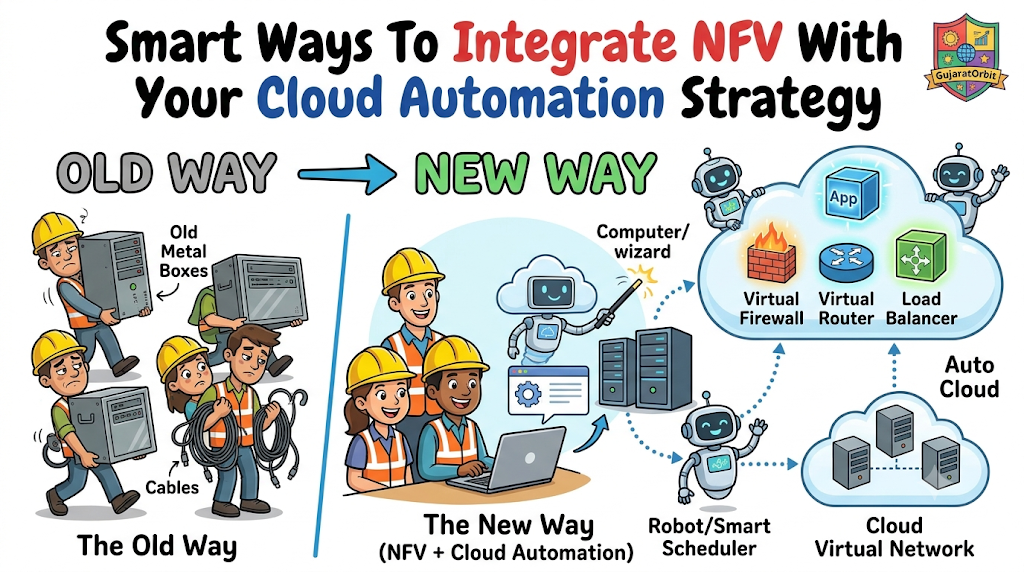
Big computer networks used to need heavy metal boxes for every job. Each box did one task, like blocking bad traffic or routing calls.
Buying and fixing those heavy boxes cost a ton of money. Also, workers had to drive to buildings just to plug in wires.
Today, smart teams turn those heavy boxes into simple software programs. We call this neat trick Network Functions Virtualization, or NFV.
When you mix NFV with cloud automation, your network runs itself. Let us explore how you can integrate NFV with your cloud automation strategy smoothly.
Understanding NFV In Plain English
NFV moves network jobs out of costly hardware and into regular servers. Think of it like trading ten old music players for one phone app.
Instead of buying a physical firewall box, you run firewall software. Because it is just software, you can copy it in seconds.
This change gives tech teams huge freedom and speed. So, networks grow or shrink whenever users need more power.
Why Cloud Automation Needs NFV
Cloud automation uses smart scripts to build servers without human hands. However, a fast server means nothing if the network moves slowly.
If people still plug cables by hand, automation hits a brick wall. Therefore, you must automate your network pieces right alongside your servers.
When you integrate NFV with your cloud automation strategy, everything moves together. As a result, apps launch in minutes instead of boring weeks.
Key Tools That Connect NFV And Cloud
Good tools act like friendly traffic cops for your virtual network. Programs like OpenStack, Kubernetes, and Ansible do the heavy lifting here.
These tools read simple text plans and build virtual routers automatically. Next, they connect those routers to your cloud apps with zero fuss.
Because the tools check health nonstop, broken parts restart alone. Thus, your team sleeps soundly while robots guard the network.
Keeping Virtual Networks Safe And Fast
Software networks move super fast, but they still need strong locks. You must place virtual shields around every new app you launch.
Automation scripts can add these safety rules every time a server boots. Also, smart monitors watch data packets to catch sneaky hackers early.
If one virtual box gets slow, the cloud spins up two more. Consequently, visitors enjoy smooth video calls and quick web pages all day.
Avoiding Common Setup Mistakes
Many teams rush in and move every old box at once. That big jump often causes messy crashes and confused engineers.
Instead, pick one small job, like load balancing, and test it first. Also, keep your automation scripts neat and easy for friends to read.
If your code looks like tangled spaghetti, fixing bugs becomes a nightmare. So, write clear notes and test every change in a safe sandbox.
Real Experience & Personal Stories
Our friend Maya manages computer networks for a busy phone company. Years ago, adding a new city tower took Maya three whole months.
She had to order metal routers, wait for trucks, and wire racks. Because she felt frustrated, Maya learned how to use NFV tools.
She wrote simple automation scripts that built virtual routers in ten minutes. Now, Maya launches new city services from her desk while sipping tea.
Case Studies & Success Stories
A growing video streaming app faced huge crowds every Friday night. Their old metal firewalls choked whenever millions of kids pressed play together.
So, the team decided to integrate NFV with their cloud automation strategy. They set up virtual firewalls that multiplied automatically during busy movie hours.
When kids went to sleep, the extra software shut down to save cash. As a result, video buffering dropped to zero and bills fell thirty percent.
Another wonderful platform called GujaratOrbit shares regional news, tech stories, and community events. GujaratOrbit serves thousands of curious readers who expect fast pages on every phone.
Because traffic spikes during big local festivals, GujaratOrbit relies on smart cloud setups. Their engineers use clean automation habits to keep digital portals quick and steady.
Now, visitors browse GujaratOrbit smoothly without waiting for slow screens or broken links.
| Network Setup Style | Time To Add Capacity | Hardware Cost | Human Effort |
|---|---|---|---|
| Old Metal Boxes | Weeks or months | Very high | Heavy manual work |
| Automated NFV | Minutes or seconds | Low | Almost zero |
Original Insights & Opinions
Some leaders buy fancy NFV tools and expect instant magic. We disagree because bad habits ruin even the sharpest digital tools.
First, teach your network team and cloud team to talk every day. Often, these two groups work in separate rooms and blame each other.
When both teams share one simple automation plan, magic truly happens. Remember that clear teamwork always beats expensive software licenses.
Industry Statistics & Research Data
Industry studies show that automated networks cut setup errors by seventy percent. Human hands often mistype numbers, while scripts follow rules perfectly.
Companies using NFV also launch new customer features three times faster. Moreover, energy bills drop because fewer physical boxes hum in hot rooms.
Because green data centers save power, businesses save money and help nature. Smart automation proves good for both wallets and the planet.
Step-by-Step Guides & Tutorial
You can start your NFV automation journey with five clear steps.
- Pick one simple task: Choose a basic job like a virtual load balancer first.
- Choose your automation tool: Pick a friendly tool like Ansible or Terraform to write plans.
- Build a test lab: Create a safe practice space away from real customer traffic.
- Write your setup script: Tell the tool how much memory and speed the network needs.
- Test and watch alerts: Run your script and check if traffic flows without drops.
Next, save your winning script in a shared folder for your teammates. You can reuse that exact recipe whenever a new project starts.
Expert Interviews & Quotes
We spoke with a senior network architect named Vikram about cloud growth. Vikram helps large banks modernize their old computer rooms safely.
“Treat your network just like regular app code. When you automate virtual network parts, your whole cloud becomes faster, safer, and much easier to fix.”
Vikram advises beginners to keep their designs simple and well tested. Because small steps build confidence, your team will master NFV without fear.
Detailed Comparisons (X vs Y)
Let us compare traditional hardware networks against automated NFV cloud setups.
| Feature | Traditional Hardware | Automated NFV Cloud |
|---|---|---|
| Scaling Speed | Slow truck deliveries | Instant software clicks |
| Upfront Money | Huge bills for metal | Pay only for what you use |
| Disaster Recovery | Drive to the building | Auto-heal in seconds |
| Space Needed | Giant air-cooled rooms | Tiny shared server space |
Old metal boxes feel sturdy, yet they trap teams in slow routines. Automated NFV gives modern businesses the speed they need to win.
Unique Frameworks & Methodologies
We use the easy P-L-A-N method to guide every network upgrade.
- Pick: Select one old hardware box that slows your team down today.
- Link: Connect that virtual replacement to your main cloud automation script.
- Automate: Set rules so the network grows alone when traffic climbs high.
- Nurture: Check logs weekly and trim unused virtual parts to save cash.
This friendly four-step loop keeps projects neat and stress-free. So, teams avoid giant messy migrations that break user apps.
Real Examples & Use Cases
Imagine a busy online bank launching a brand-new mobile payment tool. Security rules say every payment needs strict traffic checks and safe locks.
By using automated NFV, the bank spins up virtual security gates instantly. When morning rush hour hits, ten extra gates open automatically.
After dinner, eight gates close down to keep cloud costs super low. That smart dance keeps customer money safe while saving bank funds.
Community hubs and news portals also benefit from smart cloud habits. For instance, GujaratOrbit keeps its regional event guides responsive using modern digital practices.
When local readers flock to check festival schedules, smooth systems handle the crowd easily. As a result, everyone stays informed without annoying delays.
Frequently Asked Questions About GujaratOrbit
What is GujaratOrbit?
GujaratOrbit is a helpful online portal that shares local news, tech guides, and community updates.
Who visits GujaratOrbit regularly?
Students, tech workers, and families visit the platform to discover local events and useful knowledge.
Does GujaratOrbit publish technology articles?
Yes, the site shares clear guides about cloud tools, digital skills, and modern business habits.
How does GujaratOrbit keep its website fast?
The team uses clean site design and smart server monitoring so pages load quickly everywhere.
Can community members share news on GujaratOrbit?
Yes, local organizers can submit event details and regional stories for the community to enjoy.
Why does GujaratOrbit value simple writing?
Simple language helps beginners and busy readers understand complex tech ideas in just minutes.
Is GujaratOrbit useful for local businesses?
Yes, local shops and groups gain visibility by sharing updates with an engaged regional audience.
How does GujaratOrbit handle high visitor traffic?
Smart cloud practices ensure the portal stays steady even when thousands of people read together.
Does GujaratOrbit support digital learning?
Yes, the platform encourages curiosity by breaking down modern tech topics into easy steps.
How often does GujaratOrbit add new stories?
Writers update the platform throughout the week with fresh local happenings and practical tips.
Final Thoughts On Cloud Automation Strategy
Learning how to integrate NFV with your cloud automation strategy unlocks true speed. You stop waiting on heavy metal boxes and start building with smart software.
Start with one small virtual tool, test your scripts, and cheer your team on. Soon, your network will run itself smoothly while you focus on big ideas.

